

Wood siding adds warmth, character, and natural beauty to a home—but over time, exposure to moisture, sun, and weather can cause damage. Cracks, rot, peeling paint, and warped boards are common problems homeowners face, and ignoring them can lead to bigger structural issues. If you’ve noticed signs of wear on your exterior, learning how to repair wood siding properly can save money and protect your home.
Homeowners looking for reliable exterior repairs often don’t know where to start or when professional help is needed. In this guide, you’ll learn the causes of wood siding damage, how to assess the problem, repair methods by damage type, and when calling a professional contractor is the smartest choice.
For trusted wood siding repairs and expert advice, visit Brian M. LeBlanc Roofing. Our team provides professional solutions to keep your home safe, durable, and looking great.
What You’ll Learn in This Wood Siding Repair Guide?
This guide is designed for homeowners who want clear answers and long-term solutions. Here’s what you’ll learn:
- The most common causes of wood siding damage
- How to assess siding damage before starting repairs
- Proven repair methods for cracks, rot, and loose boards
- Step-by-step instructions for lasting wood siding repairs
- How to protect and maintain your siding after repairs
- When it’s time to call a professional contractor
This ensures both homeowners and search engines clearly understand the full scope of how to repair wood siding correctly.
Why Wood Siding Condition Matters for Your Home?
Your wood siding plays a major role in protecting your home from moisture, pests, and weather damage. It also affects energy efficiency and curb appeal. When siding is compromised, water can penetrate behind the walls, leading to mold growth, insulation damage, and even structural rot.
Environmental exposure speeds up deterioration. Rain, humidity, freezing temperatures, and prolonged sun exposure all weaken wood fibers over time. When damage is ignored, small repairable issues can turn into costly replacements. Addressing problems early keeps your home protected and preserves its long-term value.
Common Causes of Wood Siding Damage
Wood siding adds charm to homes but is vulnerable to weather, pests, and moisture. Understanding common causes of damage helps homeowners protect, maintain, and extend the life of their exterior siding.
Moisture and Water Intrusion
Water is the biggest enemy of wood siding. Poor drainage, clogged gutters, and improper flashing allow moisture to seep into boards, leading to rot and swelling.
Sun and UV Exposure
Constant sunlight dries out wood, causing cracking, fading, and splitting. Without proper paint or sealant, UV rays significantly shorten siding lifespan.
Insects and Pests
Termites, carpenter ants, and other insects burrow into untreated or damaged wood, weakening siding from the inside.
Poor Installation or Old Materials
Improper installation, low-quality wood, or aging siding materials are more prone to warping, gaps, and early failure.
Assessing the Damage
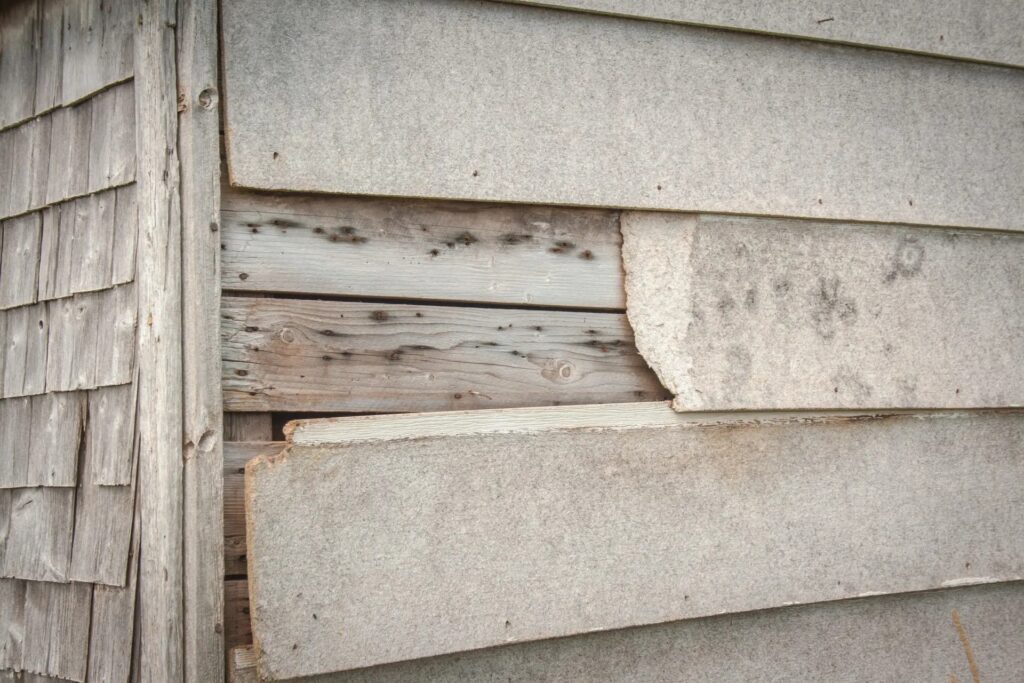
Before starting any repair, proper inspection is essential. Walk around your home and look closely at the siding surface. Check for soft spots by gently pressing on the boards. Soft or spongy wood usually indicates rot beneath the surface.
Pay attention to peeling paint, gaps between boards, cracks, or warped sections. Also inspect areas near windows, doors, and rooflines, where moisture damage often begins. Accurately identifying the damage helps determine whether a simple repair or professional intervention is required.
Repair Methods by Damage Type
Different types of wood siding damage require specific repair approaches. Identifying the exact damage type ensures effective restoration, prevents further issues, and maintains your home’s appearance and structural integrity.
Minor Cracks and Small Holes
Small surface cracks, nail holes, or hairline splits can usually be repaired with exterior-grade wood filler or putty. After filling, sanding and repainting or staining restores the siding’s appearance and protects it from moisture. Regular touch-ups help prevent cracks from expanding over time.
Localized Rot
When rot affects only a small area, the damaged section can be cut out and replaced with matching wood. Applying a wood preservative or sealant around the repair prevents recurrence and prolongs siding life. Early detection is key to avoiding larger, costlier repairs.
Warped or Loose Boards
Boards that pull away from the wall reduce structural integrity and may allow moisture or pests to enter. Refastening with corrosion-resistant nails or screws, and in some cases partial board replacement, restores stability and improves weather protection.
Severe or Widespread Damage
Extensive rot, termite or insect infestation, water damage, or multiple compromised boards may require professional siding repair or partial/full replacement. Experts can ensure proper installation, correct moisture barriers, and matching finishes, preventing further structural issues and maintaining curb appeal.
Step-by-Step Repair Instructions
Properly repairing wood siding ensures long-lasting protection and a polished appearance. Following step-by-step instructions helps homeowners address damage safely, prevent further issues, and maintain the home’s structural integrity.
Step 1: Remove dirt, loose paint, and debris from the damaged section. This ensures proper adhesion for any repair materials. A clean surface is key to long-lasting results. Always use a stiff brush or pressure washer for thorough cleaning.
Step 2: Carefully cut away rotted or broken wood, stopping at solid, healthy material. Removing all compromised wood prevents future damage. Check surrounding boards for any hidden rot before proceeding.
Step 3: Use exterior-grade wood filler for small cracks or holes. For larger damage, install a new wood section to restore the siding. Ensure the filler or board is level with the surrounding siding for a smooth finish.
Step 4: Once dry, sand the repaired area until it blends seamlessly with the surrounding siding. Smooth surfaces ensure proper paint adhesion and a professional finish. Remove all dust after sanding for the best results.
Step 5: Apply primer first, then finish with high-quality exterior paint. This protects against moisture, UV damage, and extends the life of your repair. Apply two coats of paint for maximum protection and durability.
Step 6: Following these steps ensures durable, professional-looking results when learning how to repair wood siding properly. Regular inspection and timely maintenance will keep your siding in top condition for years.
These steps ensure durable, professional-looking results when learning how to repair wood siding properly.
Finishing & Weatherproofing
Proper finishing is just as important as the repair itself. Sealing repaired areas with paint or weatherproof coating prevents moisture infiltration and extends siding life. High-quality exterior paints and sealants act as a protective barrier against rain, sun, and temperature changes.
Regularly inspect caulking around windows and trim to prevent water intrusion. Weatherproofing ensures your repairs remain strong and visually appealing for years.
Maintenance Tips After Repair
Routine maintenance helps protect your repaired wood siding and extend its lifespan. Follow these simple steps to keep your siding in top condition:
- Wash siding annually – Remove dirt, mildew, and debris to prevent surface damage and staining. Use a gentle pressure wash or soft brush with mild detergent.
- Keep gutters clean – Prevent water overflow that can cause siding rot and foundation issues. Regularly inspect downspouts and drainage paths.
- Trim nearby trees – Reduce moisture buildup and minimize insect activity near siding. Overhanging branches can scratch or damage boards during storms.
- Inspect siding yearly – Catch early signs of cracks, rot, or peeling paint before they become major problems. Prompt repairs save time and money.
Regular care and proactive inspections significantly reduce the need for costly repairs or full siding replacement.
When to Call a Professional?
While small repairs are manageable, some situations require expert attention. If damage is widespread, structural, or linked to water intrusion behind the siding, professional service is essential.
A licensed contractor can identify hidden problems, ensure proper repairs, and restore your home’s exterior safely. For homeowners unsure where to start, professional inspections provide peace of mind and long-term protection.
Common Mistakes to Avoid
Many homeowners unknowingly shorten the lifespan of their wood siding by making avoidable mistakes. These errors can cause repairs to fail quickly and lead to repeated damage. To ensure lasting results, avoid the following:
- Skipping primer – Painting directly on bare or repaired wood can reduce adhesion and protection.
- Using indoor fillers – Only use exterior-grade fillers designed to withstand weather conditions.
- Painting over moisture-damaged wood – Moisture trapped under paint causes peeling, rot, and mold.
- Ignoring underlying moisture issues – Failing to fix leaks or drainage problems leads to recurring damage.
- Attempting large repairs without proper tools – Improper cuts or fittings can compromise the repair.
- Neglecting professional help when needed – Some damage requires expert assessment for safe and durable results.
Following these guidelines ensures your siding repairs last longer and protect your home effectively.
Why Homeowners & Businesses Trust Brian M. LeBlanc Roofing?
Brian M. LeBlanc Roofing is a fully licensed and reputable contractor based in Leominster, MA, proudly serving homeowners and businesses across Leominster and the surrounding areas. With years of hands-on industry experience, we deliver dependable, long-lasting roofing and siding solutions, including professional cement siding repairs.
- Licensed, insured, and experienced with hundreds of roofs and siding projects in Leominster, MA
- Experts in durable, weather-resistant roofing and siding built for New England’s storms, snow, and seasonal weather
- Complete services: roof repair, roof replacement, vinyl siding repair, inspections, and maintenance
- Serving homes, offices, warehouses, and commercial properties throughout Leominster and nearby areas
- Honest, transparent, and customer-first service approach
Conclusion
Properly repairing and maintaining wood siding protects your home from moisture, pests, and weather damage. Following the right steps ensures repairs are durable, long-lasting, and visually appealing. Regular inspection and timely maintenance prevent costly future problems. When in doubt, hiring a professional guarantees safety, quality, and peace of mind.
For more details, check our GMB Profile. It provides additional tips, photos, and helpful resources to guide homeowners through keeping their homes in top condition.
Contact us today to schedule your inspection or get a free quote
FAQs
How do I know if my wood siding needs repair?
Check for cracks, rot, soft spots, peeling paint, or warping. Visible damage or water stains are signs that repairs are needed.
Can I repair wood siding myself?
Small cracks or holes can be repaired by homeowners. Larger rot or structural issues require professional help.
How often should I inspect my siding?
Inspect at least once a year, especially after storms or heavy rain. Early detection prevents bigger repairs.
What materials do I need for repairs?
You need exterior-grade wood filler, replacement boards, primer, paint, and basic tools. Quality materials ensure durability.
Should I paint over old damage without repairing it?
No, painting over damaged wood traps moisture. Always repair before painting for lasting results.