

Concrete siding is a durable and popular choice for many homes, but over time, it can develop cracks, chips, or water damage that compromise both its appearance and structural integrity. Repairing concrete siding may seem daunting, but with the right approach, homeowners can restore it effectively and extend its lifespan. This step-by-step guide walks you through assessing damage, choosing the appropriate repair method, applying patching materials, and finishing with proper protection and maintenance.
By understanding the causes of damage and following careful repair techniques, you can maintain your home’s exterior, prevent costly future repairs, and ensure your siding remains strong and visually appealing for years to come. At Brian M. LeBlanc Roofing, we provide expert guidance and services to help homeowners repair concrete siding effectively. By following our step-by-step techniques, you can restore your siding, protect your home, and prevent costly future repairs.
What You Will Learn in this Guide?
- How to assess and identify different types of concrete siding damage and understand how to repair concrete siding effectively.
- Step-by-step techniques for repairing cracks, chips, and water damage while maintaining the integrity of your siding.
- The importance of using proper materials, sealing, and regular maintenance to ensure long-lasting results.
- Tips to prevent future damage and keep your siding durable, attractive, and well-protected.
Common Causes of Concrete Siding Damage
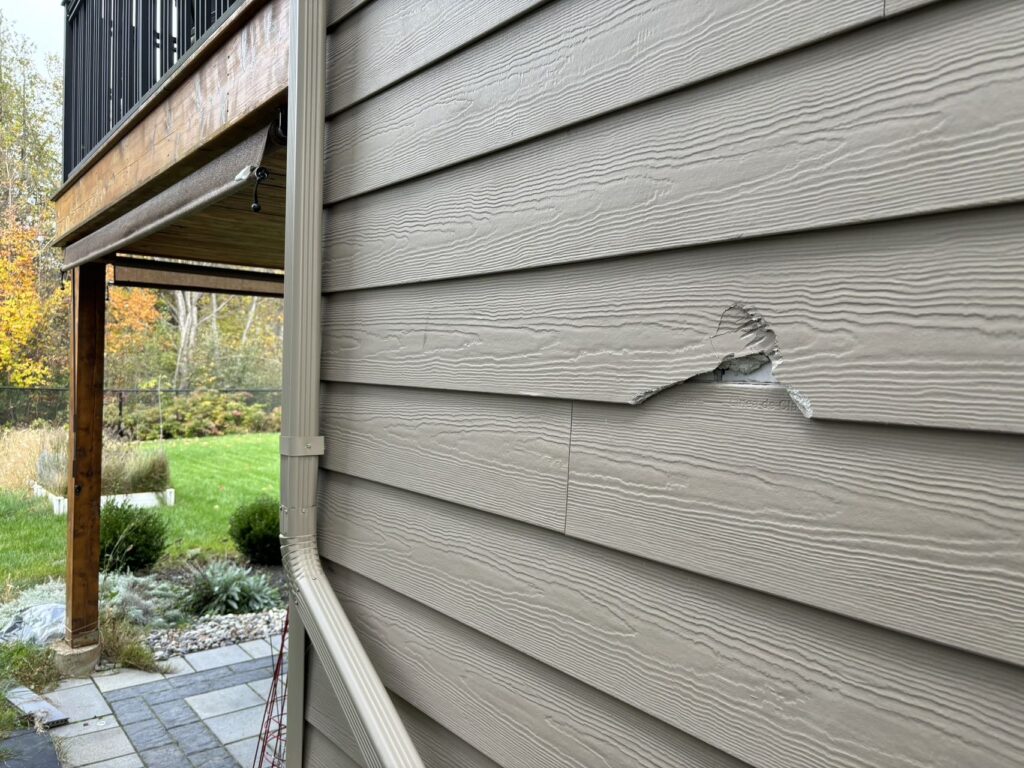
Concrete siding is known for its durability, but over time, it can experience wear and tear. Understanding the common causes of damage helps homeowners address issues effectively before they worsen.
Some frequent causes include:
- Weather exposure: Prolonged exposure to rain, snow, and UV rays can gradually weaken concrete, leading to surface cracks and fading.
- Moisture infiltration: Water seeping into siding can cause cracks, mold, and even structural issues.
- Impact damage: Falling branches, hail, or accidental bumps can chip or break concrete panels.
- Poor installation: Improper initial installation may result in uneven surfaces or weak spots that crack more easily.
- Aging materials: Over decades, concrete naturally deteriorates, making it more susceptible to damage.
Knowing the root cause of the damage ensures that repairs are both effective and long-lasting.
Assessing the Damage
Before starting any repair, a thorough inspection of the siding is essential. This ensures that minor issues are not mistaken for larger problems or vice versa.
When assessing damage:
- Examine cracks to determine if they are surface-level or structural.
- Look for areas where siding might be separating from the wall.
- Check for water stains, mold, or discoloration that could indicate moisture issues.
- Identify whether the damage is localized or affects large sections of siding.
A clear understanding of the damage will help in selecting the right repair method and materials.
Repair Methods by Damage Type
Concrete siding damage can vary, so it’s important to match the repair method with the type of damage:
Small Surface Cracks
For hairline cracks:
- Clean the area thoroughly.
- Apply a concrete filler or patching compound.
- Sand the surface once dry for a smooth finish.
Large Cracks or Structural Damage
For deeper cracks or damaged panels:
- Use epoxy injection or concrete patching with bonding agents.
- Reinforce with mesh or wire lath to strengthen the repair.
Chips or Broken Sections
For chipped or broken siding:
- Remove loose concrete pieces and clean the damaged area.
- Apply patching compound in layers, shaping to match the existing siding contour.
- Allow to dry completely before sanding and sealing.
Water or Mold Damage
For areas affected by water or mold:
- Treat mold-affected areas with fungicide.
- Repair cracks or gaps using waterproof patching products.
- Apply a water-resistant sealant after repairs to prevent future issues.
Step-by-Step Repair Instructions
1. Clean the damaged area:
Start by removing dirt, dust, loose concrete, and mold from the damaged siding. Cleaning ensures the patching material adheres properly and prevents future problems. A clean surface is key to a strong, long-lasting repair.
2. Prepare repair materials:
Select the right concrete patching compound or filler suitable for your siding type. Proper preparation ensures the repair blends with the existing siding and remains durable. Follow the manufacturer’s instructions carefully for best results.
3. Apply filler or compound:
Use a trowel to fill cracks or chips, pressing firmly to remove air pockets. Spread evenly to cover the damaged area and match the siding’s contour. Proper application prevents gaps and ensures a seamless finish.
4. Shape and smooth:
Shape the patch to match the surrounding siding for a natural look. Smooth edges carefully to avoid noticeable bumps or lines. This step ensures the repaired area blends perfectly with existing siding.
5. Allow curing time:
Let the patch dry and cure according to the manufacturer’s instructions. Proper curing is essential for strength and durability. Rushing this step may lead to cracking or weak repairs.
6. Sand and finish:
Once cured, sand the repaired area to smooth rough edges. Ensure uniformity with the adjacent siding for a seamless appearance. Finishing touches make the repair virtually unnoticeable.
7. Seal the repaired section:
Apply a waterproof sealant or concrete sealer over the patched area. This protects against moisture, weather, and future damage. Sealing ensures the repair lasts longer and maintains the siding’s integrity.
8. Final Note
Following these steps carefully guarantees a durable repair that blends seamlessly with existing concrete siding. Understanding how to repair concrete siding properly, including cleaning, applying patching compounds, finishing, and sealing, is essential for long-lasting results and a professional-looking finish.
Finishing & Protection Tips
After completing Concrete Siding repairs, proper finishing and protection are essential to prevent future damage and maintain curb appeal:
- Painting or Staining: High-quality exterior paint or stain helps blend repairs with existing siding while creating a protective barrier against moisture, insects, and sun exposure. UV-resistant coatings reduce fading and cracking.
- Waterproof Sealant Application: Applying a breathable, waterproof sealant shields siding from rain, humidity, and temperature changes, preventing rot, warping, and mold growth.
- Caulking & Joint Sealing: Sealing seams, joints, and fastener holes prevents water intrusion and air leaks, improving energy efficiency.
- Routine Inspections: Inspect repaired areas after heavy rain, storms, or seasonal temperature swings to catch early signs of wear or moisture intrusion.
These steps ensure repaired siding remains durable, weather-resistant, and visually consistent, protecting both your home’s structure and long-term value.
Maintenance Tips
Preventive maintenance significantly reduces the need for costly siding repairs and extends the life of your exterior:
- Annual Cleaning: Wash siding once a year using mild detergent and water to remove dirt, mold, and mildew. Avoid high-pressure washing, which can damage the surface and force moisture behind siding.
- Routine Inspections: Inspect siding every 6–12 months for cracks, chips, loose boards, or signs of moisture intrusion. Early detection helps prevent rot and structural damage.
- Trim Nearby Vegetation: Keep trees, shrubs, and vines trimmed away from siding to prevent impact damage, moisture retention, and pest access.
- Gutter & Drainage Maintenance: Clean and maintain gutters, downspouts, and drainage systems to ensure water flows away from siding and foundation, reducing moisture-related deterioration.
- Seal & Caulk as Needed: Reapply caulk around joints, windows, and doors to block water and air leaks.
- Monitor After Severe Weather: Check siding after storms, heavy rain, or temperature extremes for new damage or loose sections.
Consistent maintenance keeps siding structurally sound, energy-efficient, and visually appealing for years to come.
When to Call a Professional?
While DIY repairs may work for small cracks, chips, or surface blemishes, certain situations require professional expertise to prevent further damage and safety risks:
- Structural Damage or Large Cracks: Deep cracks, bowing, or shifting siding may indicate underlying structural issues that require expert assessment and repair.
- Persistent Water Infiltration: Ongoing moisture intrusion can lead to mold growth, wood rot, or interior wall damage, which professionals can properly diagnose and fix.
- Extensive or Widespread Damage: When multiple sections are damaged, partial or full siding replacement may be necessary to restore protection and appearance.
- Hidden Damage Behind Siding: Professionals can identify issues such as deteriorated sheathing, insulation problems, or pest infestations not visible from the exterior.
- Matching Materials & Finishes: Experienced contractors ensure repairs blend seamlessly with existing siding, preserving curb appeal and home value.
- Safety & Code Compliance: Professionals use proper tools, safety equipment, and follow local building codes, ensuring durable, long-lasting results.
When in doubt, calling Brian M. LeBlanc Roofing ensures your siding repair or replacement is safe, efficient, and long-lasting, protecting both your home and your investment
Weatherproofing and Water-Sealing Strategies
Protecting your siding from environmental damage is essential for long-term durability and home efficiency. Brian M. LeBlanc Roofing recommends these professional-grade strategies:
1. Apply High-Quality Water-Resistant Sealants
Use exterior-grade, UV-resistant sealants on repaired cracks, gaps, and joints to prevent moisture infiltration and reduce the risk of rot or mold.
2. Install Proper Flashing
Ensure windows, doors, rooflines, and transitions between siding materials are fitted with durable flashing to prevent leaks during rainstorms or snow melt.
3. Check Foundation Grading
Proper grading around your home directs water away from walls, protecting siding and the foundation from standing water or soil erosion.
4. Consider Additional Weatherproof Coatings
Areas exposed to harsh sun, heavy rain, or strong winds can benefit from water-repellent paints or clear weatherproof coatings, extending the lifespan of siding.
5. Routine Inspection After Severe Weather
Inspect your siding after storms, hail, or heavy rain to ensure sealants, flashing, and coatings remain intact. Early intervention prevents costly damage.
6. Professional Installation & Maintenance
Hiring Brian M. LeBlanc Roofing ensures sealants, flashing, and coatings are applied correctly using industry-approved tools and techniques, providing long-lasting protection.
Why It Matters: Proper weatherproofing not only prevents recurring problems but also improves energy efficiency, enhances curb appeal, and reduces future repair costs.
DIY vs. Professional Repair Considerations
DIY Repairs:
- Suitable for small cracks and minor chips.
- Cost-effective and immediate action.
Professional Repairs:
- Recommended for structural damage, large-scale repairs, or persistent water issues.
- Ensures quality workmanship and long-lasting results.
Choosing between DIY and professional repair depends on the severity of damage and your comfort level with tools and materials.
Tools and Materials Needed for Repair
Before starting repairs, gather the following tools and materials:
- Trowel and putty knife
- Concrete patching compound or filler
- Sandpaper or sanding block
- Wire brush or cleaning tool
- Waterproof sealant
- Safety gloves and goggles
Having the right tools ensures effective and safe repairs while producing a professional-looking finish.
Common Mistakes to Avoid During Siding Repair
Making siding repairs yourself can save money, but certain mistakes can compromise durability, safety, and appearance. Avoid these pitfalls:
- Ignoring Underlying Water Damage or Mold: Surface repairs won’t last if moisture, rot, or mold beneath the siding isn’t addressed. Always inspect and replace damaged wood or apply mold treatment before patching.
- Using the Wrong Type of Patching Compound: Selecting an incompatible filler can lead to cracking or peeling. Use exterior-grade wood filler or masonry repair products recommended for your siding material.
- Rushing the Curing Process: Sanding, painting, or sealing before the filler or patch has fully cured reduces adhesion and shortens the repair lifespan. Follow manufacturer drying times carefully.
- Failing to Match Texture or Color: Repairs that don’t blend with existing siding are noticeable and reduce curb appeal. Test stain or paint on a small area before full application.
- Skipping Protective Sealant or Weatherproof Coating: Without proper sealing, repaired areas remain vulnerable to moisture, UV damage, and temperature fluctuations. Apply water-resistant sealant or weatherproof coatings for long-term protection.
- Neglecting Flashing and Trim Areas: Overlooking edges around windows, doors, and rooflines can allow water intrusion, leading to recurring damage. Proper flashing installation is key.
- DIY Safety Oversights: Working at heights or using power tools without proper safety equipment increases injury risk. Professionals, like Brian M. LeBlanc Roofing, use harnesses, scaffolding, and certified techniques to protect homeowners and ensure quality.
✅ Pro Tip: Avoiding these mistakes ensures repairs are durable, weather-resistant, and visually seamless, preserving both your home’s structural integrity and value.
Why Homeowners & Businesses Trust Brian M. LeBlanc Roofing?
Brian M. LeBlanc Roofing is a fully licensed and reputable contractor based in Leominster, MA, proudly serving homeowners and businesses across Leominster and the surrounding areas. With years of hands-on industry experience, we deliver dependable, long-lasting roofing and siding solutions, including professional cement siding repairs.
- Licensed, insured, and experienced with hundreds of roofs and siding projects in Leominster, MA
- Experts in durable, weather-resistant roofing and siding built for New England’s storms, snow, and seasonal weather
- Complete services: roof repair, roof replacement, vinyl siding repair, inspections, and maintenance
- Serving homes, offices, warehouses, and commercial properties throughout Leominster and nearby areas
- Honest, transparent, and customer-first service approach
Conclusion
Repairing concrete siding is manageable when homeowners understand the causes, methods, and proper maintenance techniques. How to Repair Concrete Siding effectively involves following step-by-step instructions, using the right materials, and protecting repaired areas. Small cracks and chips can often be handled through DIY solutions, while structural damage and water infiltration may require professional assistance. By maintaining siding regularly, homeowners can preserve the beauty and integrity of their homes. Concrete siding, when properly repaired and cared for, can last decades while keeping your home safe and attractive.
For more details, check our GMB Profile. It provides additional tips, photos, and helpful resources to guide homeowners through keeping their homes in top condition.
Contact us today to schedule your inspection or get a free quote
FAQs
How do I fix small cracks in concrete siding?
Small cracks can be repaired using exterior-grade concrete patching compound. Clean the area, apply the patch, let it cure completely, then sand and paint or seal to match the surrounding siding.
Can I repair water-damaged concrete siding myself?
Minor water damage may be DIY-friendly, but extensive rot, mold, or structural issues require a professional. Addressing underlying moisture is crucial to prevent recurring problems.
How do I match the color and texture of repaired siding?
Test paint or stain on a small area first. Use textured patching products or add sand to paint to mimic the original surface. Professionals like Brian M. LeBlanc Roofing ensure seamless blending.
How long does a concrete siding repair take to cure?
Most concrete patching compounds require 24–48 hours to cure, depending on temperature and humidity. Avoid sanding, painting, or sealing before it’s fully set for lasting results.
When should I call a professional for siding repairs?
Call a professional if you notice large cracks, water infiltration, structural damage, or widespread deterioration. Experts ensure safe, durable repairs and proper weatherproofing, saving long-term costs.