
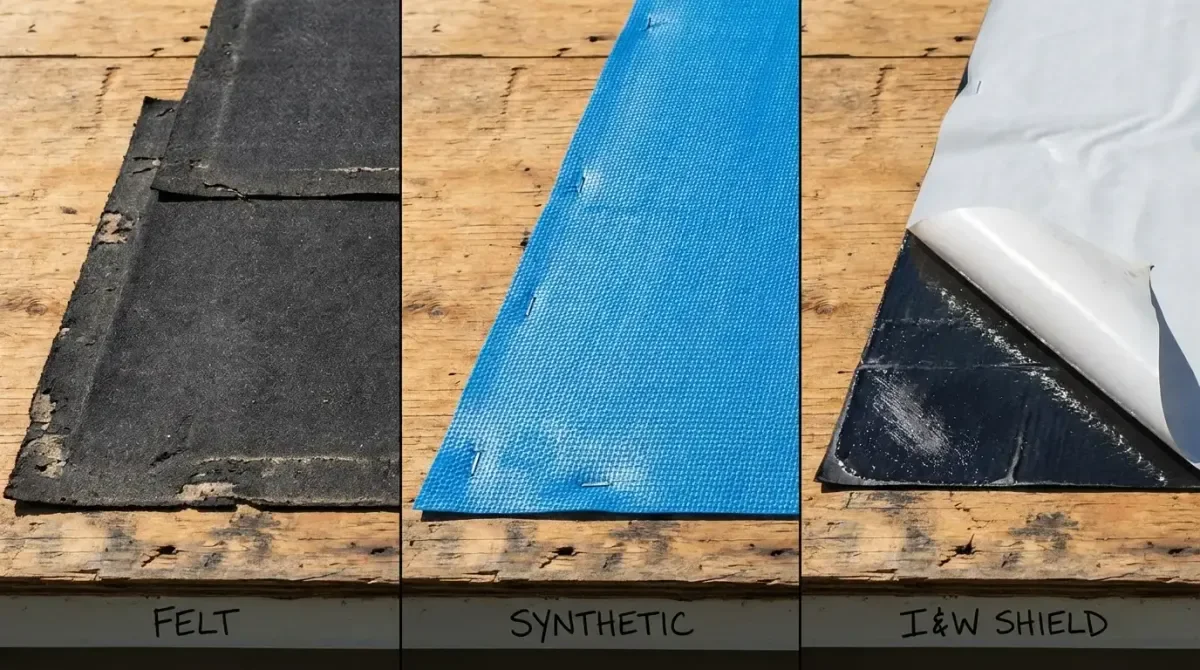
Quick answer: Roof underlayment types include felt, synthetic, and ice and water shield. Felt is budget-friendly but wears fast. Synthetic is tear-resistant and lasts 30 to 50 years. Ice and water shield is fully waterproof and required by Massachusetts code at eaves, valleys, and penetrations.
hoosing the right roof underlayment types protects your home from ice dams and wind-driven rain. Felt, synthetic, and ice and water shield each do a different job. This guide covers what each one does, what Massachusetts code requires, and what GAF’s warranty expects.
What Is Roof Underlayment?
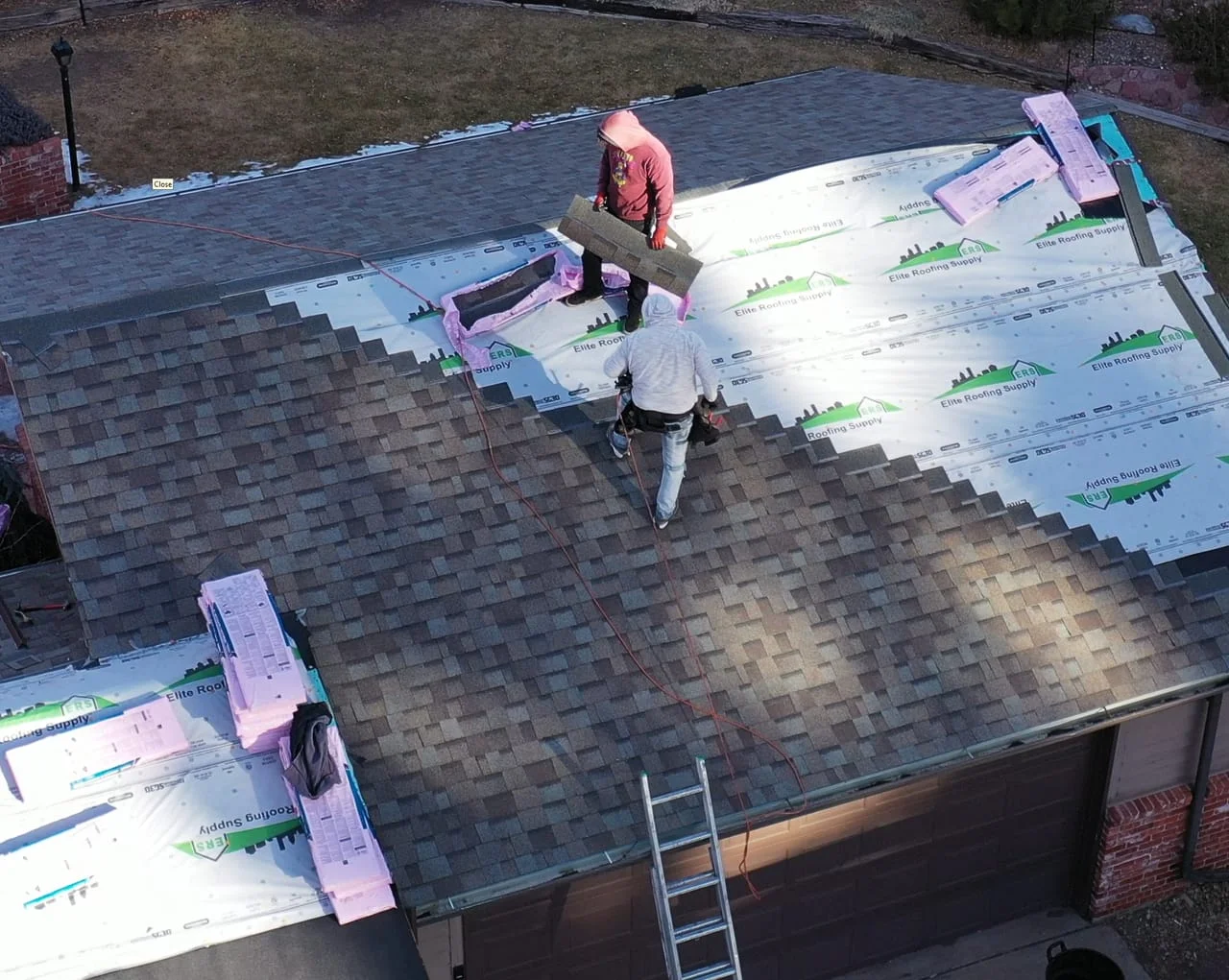
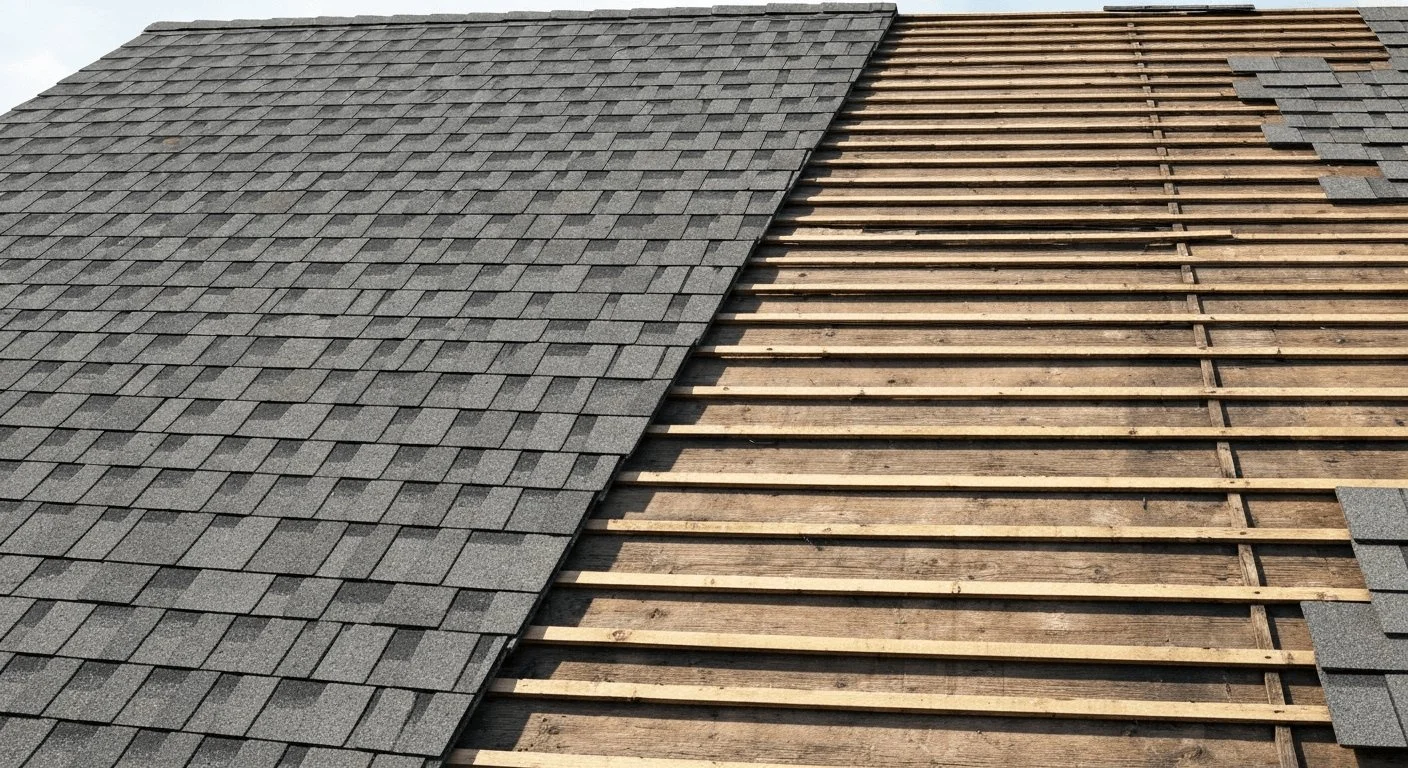
Roof underlayment is a water-resistant sheet installed on the roof deck. It sits directly under your shingles. Think of your shingles as a raincoat. The underlayment is the waterproof liner sewn inside it.
When wind lifts a shingle or an ice dam pushes water backward, underlayment stops that water from reaching your roof deck. Every professionally installed Massachusetts roof includes it. For homeowners planning a new roof, understanding the full roofing system is important. This includes the underlayment, shingles, flashing, ventilation, and other roofing accessories.
The Three Roof Underlayment Types
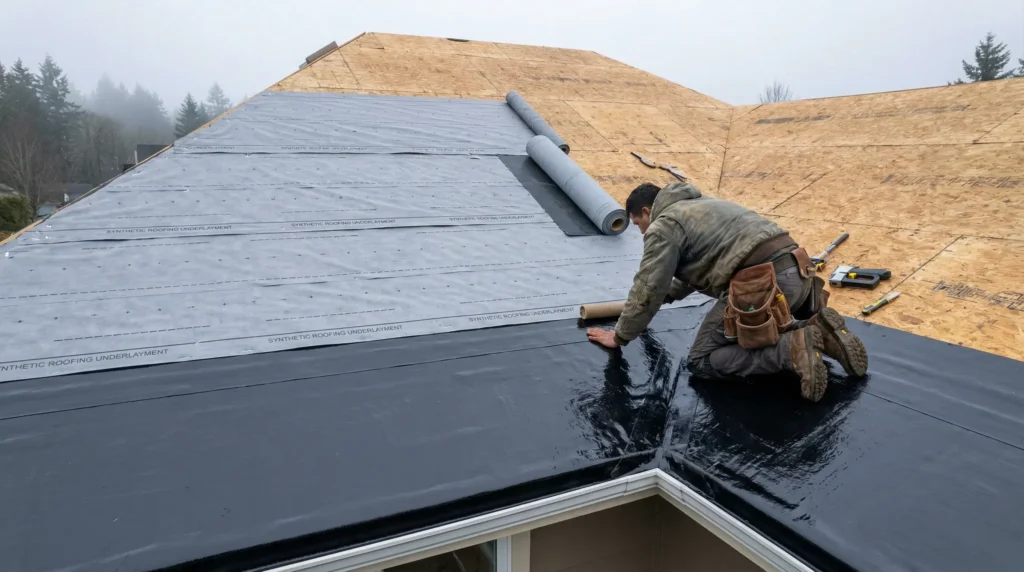
Most Massachusetts roofs actually use more than one underlayment type. A base layer covers the full deck. A stronger membrane protects the areas most likely to leak.
1. Felt Underlayment (Tar Paper)
Felt underlayment is the traditional option. It is an asphalt-saturated mat sold in two weights.
- 15-pound felt: thinner, cheaper, and largely phased out on quality roofs.
- 30-pound felt: about twice as thick, more tear-resistant, still code-compliant.
Felt absorbs water instead of shedding it. It wrinkles when wet and wears faster than synthetic underlayment.
2. Synthetic Underlayment
Synthetic underlayment is a woven polypropylene or polyethylene sheet. It has replaced felt as the standard base layer on most quality roofs.
- Tear resistance: roughly three times stronger than felt.
- Weather exposure: many brands resist UV damage for months if a storm delays installation.
- Coverage: lighter rolls that cover more square footage, so there are fewer seams.
- Walkability: a textured, non-slip coating that is safer on steep New England rooflines.
3. Ice and Water Shield
Ice and water shield is a rubberized asphalt membrane with a peel-and-stick backing. It is the only fully waterproof underlayment type.
It self-seals around nail holes, so the fastener never becomes a leak point. Felt and synthetic underlayment cannot do this.
Because of this, it goes in the areas that leak most often:
- Eaves, where ice dams push water backward under the shingles
- Valleys, where water from two slopes concentrates into one channel
- Around chimneys, skylights, and vent pipes
- Low-slope transitions and sidewall intersections on additions and dormers
When water intrusion involves a chimney or roof-to-chimney connection, proper flashing matters as much as the underlayment. Homeowners can learn more about chimney repair and common flashing problems.
Does GAF Require Synthetic Underlayment?
This depends on the warranty tier. GAF’s baseline shingle warranty accepts standard felt that meets code.
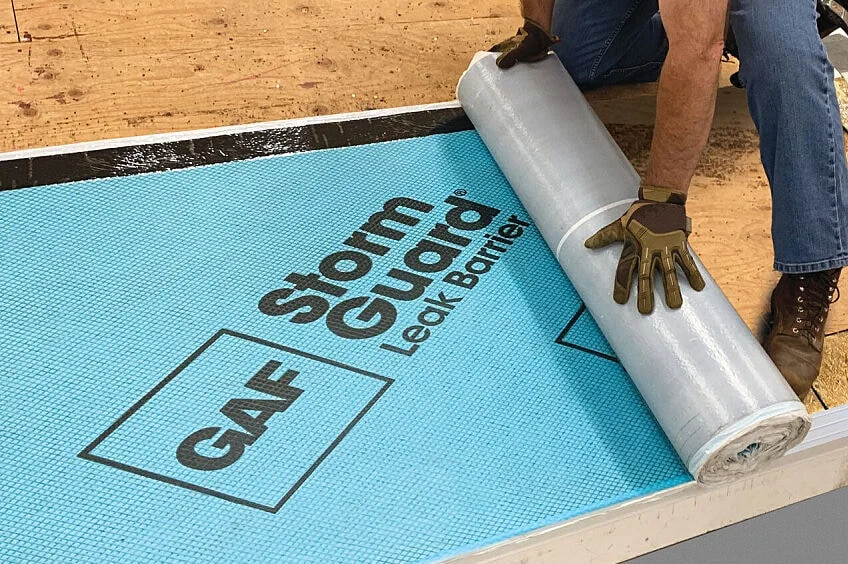
GAF’s enhanced system warranties require GAF-branded underlayment as part of the full roofing system. The underlayment, shingles, starter strip, and ridge cap must all match for the strongest coverage to apply.
As a GAF Master Elite contractor, Brian M. LeBlanc Roofing manages this detail on every project. Skipping matched underlayment can quietly downgrade the warranty a homeowner expects.
When the entire roofing system needs replacement rather than a limited repair, homeowners can also review the company’s roof replacement services.
Is Ice and Water Shield Required in Massachusetts?
Yes. This is state building code, not optional guidance.
Massachusetts code (780 CMR, based on the International Residential Code) requires an ice barrier at every home’s eaves.
- The ice barrier must extend at least 24 inches inside the interior wall line.
- On roofs sloped 8:12 or steeper, it must extend at least 36 inches up the slope.
- Most Central Massachusetts homes need roughly 3 to 6 feet of coverage along every eave.
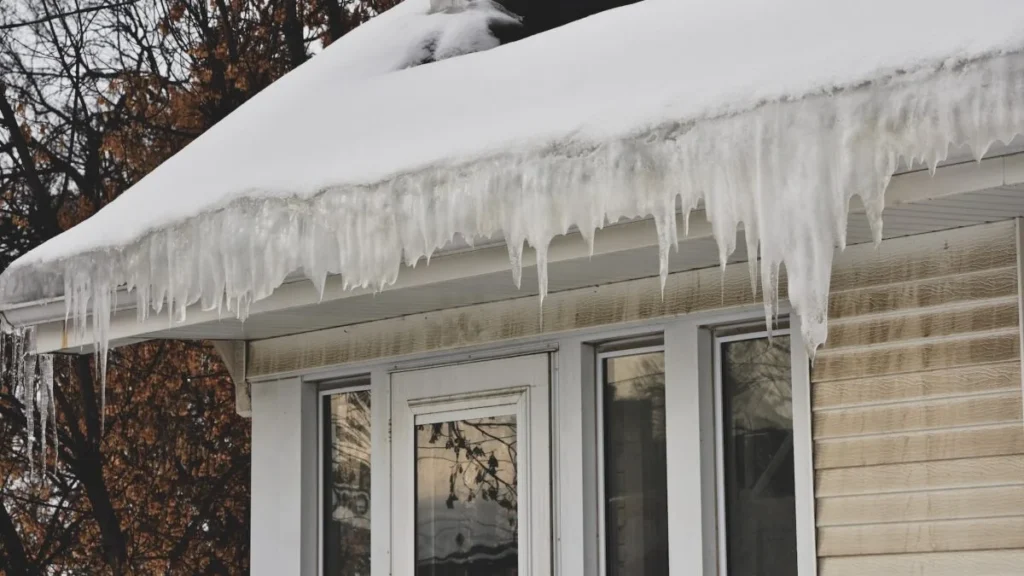
This rule exists because ice dams are a documented, recurring problem in Massachusetts. Heat escapes the attic, melts snow above, and the meltwater refreezes at the cold eave.
Reputable roofers also add it in every valley and around every penetration, since those spots fail almost as often as the eaves. During heavy Massachusetts winters, homeowners may also need professional roof snow removal to reduce excess snow weight and help prevent ice-dam-related problems.
How Long Does Synthetic Underlayment Last?
Properly installed synthetic underlayment lasts 30 to 50 years. It typically outlasts the shingles installed above it.
A few factors can shorten that lifespan:
- Poor attic ventilation: trapped heat and moisture accelerate wear on any underlayment.
- Extended UV exposure: most brands handle months of exposure, but indefinite delays cause breakdown.
- Repeated water exposure: from a failed ice dam or an unnoticed small leak.
Ice and water shield carries a similar 25-to-50-year lifespan. Felt typically lasts only 15 to 25 years, depending on weight and attic conditions.
If a homeowner is dealing with an active leak instead of planning a complete replacement, professional roof repair can address damaged shingles, flashing failures, and other roofing-system problems.
Roof Underlayment Cost in Massachusetts
Underlayment is one of the lower-cost materials on a roofing project. The type used still affects both price and long-term protection.
Cost by Type
- Felt: about $15 to $25 per roll, covering roughly 400 square feet.
- Synthetic underlayment: about $50 to $75 per roll, covering roughly 1,000 square feet.
- Ice and water shield: about $100 to $150 per roll, covering only 65 to 75 square feet.
Total underlayment materials on an average Massachusetts home typically run $700 to $1,500. Upgrading the full field from felt to synthetic usually adds only $100 to $250 to a full roof replacement.
Factors That Change Total Cost
- Roof size and complexity: more valleys and penetrations mean more ice and water shield.
- Roof pitch: steep slopes above 8:12 need extended ice barrier coverage under MA code.
- Decking condition: rotted or soft sheathing must be replaced before new underlayment goes down.
- Brand matching: matching underlayment to your shingle brand can unlock a stronger warranty.
A single ice dam or wind event can cause $500 to $5,000 in water damage. The right underlayment upgrade pays for itself the first time it prevents a failure.
Why Choose Brian M. LeBlanc Roofing
Brian M. LeBlanc Roofing is a licensed, insured, GAF-certified roofing company based in Leominster, MA. We serve homeowners and businesses throughout Central Massachusetts and Southern New Hampshire, including Leominster, Fitchburg, Gardner, Lunenburg, Worcester, Marlborough, and surrounding communities.
Here is what separates us from general contractors and national chains:
- Comprehensive roof inspections: Every roofing project begins with a detailed inspection to identify leaks, storm damage, ventilation issues, flashing failures, and other roofing concerns before work begins.
- Dedicated project manager: Every customer is assigned a dedicated project manager who oversees the project from inspection through final walkthrough, providing clear communication and personalized recommendations.GAF-certified roofing expertise: Our team is trained and certified by GAF and follows manufacturer installation standards to build roofing systems designed for long-term performance in New England weather.
- Licensed and insured: We are fully licensed and insured, giving homeowners confidence that every roofing project meets professional and safety standards.
- Industry-leading warranty protection: We install complete GAF roofing systems backed by up to a 50-year limited manufacturer’s warranty and a 10-Year Superior Craftsmanship Guarantee on labor.
- Experienced roofing professionals: Brian M. LeBlanc Roofing has more than 20 years of construction experience, supported by a highly trained team committed to quality workmanship and customer satisfaction.
- Transparent roofing process: From the initial consultation to the final quality inspection, we keep homeowners informed with detailed proposals, project updates, and quality assurance at every step.
Conclusion
Understanding these underlayment types helps you ask better questions before your next roof replacement. Felt, synthetic, and ice and water shield each protect your home differently. Massachusetts code requires ice and water shield at your eaves. GAF’s strongest warranty requires matched, certified installation.
For more details, connect with us on Facebook, Instagram, YouTube, and Google Business Profile.
Contact us today to schedule your inspection or get a free quote.
Frequently Asked Questions
1. What are the main types of roof underlayment?
The three main types are felt, synthetic, and ice and water shield. Each has a different cost, lifespan, and use on the roof.
2. Which roof underlayment type is best for Massachusetts homes?
Most Massachusetts homes need a mix: synthetic underlayment across the main field, plus ice and water shield at eaves, valleys, and penetrations.
3. Does GAF require synthetic underlayment for its warranty?
GAF's baseline warranty accepts standard felt. GAF's enhanced system warranty requires GAF-branded underlayment matched to the shingles.
4. Is ice and water shield required by Massachusetts building code?
Yes. Massachusetts code requires an ice barrier at the eaves, extending at least 24 inches inside the interior wall line.
5. How long does synthetic underlayment last?
Synthetic underlayment typically lasts 30 to 50 years when properly installed, often outlasting the shingles above it.