
Learn roof damage after snowstorm warning signs, leaks, ice dams, and snow load risks. Discover when to inspect your roof and call a professional roofer.
A winter storm may leave behind a beautiful snow-covered landscape, but it can also create hidden problems for your roof. Snow accumulation, ice formation, and freezing temperatures often damage roofing materials without immediate signs. Homeowners may only notice issues days later when the snow begins to melt.
Winter weather can severely impact your roof, especially shingles, through snow accumulation, ice dams, and freeze-thaw cycles. Heavy snow buildup adds stress to your roof structure while melting snow and ice can seep under shingles, causing leaks, water damage, and costly repairs.
Understanding the early warning signs of roof damage after snowstorm conditions can help homeowners prevent severe structural damage and expensive repairs. This guide explains how snow and ice affect roofs, the most common warning signs to watch for, and when professional help is necessary.
Brian M. LeBlanc Roofing provides trusted roofing inspections, repairs, and replacements for homeowners throughout Massachusetts. Our experienced team helps identify roof damage after snowstorms and ensures your roof stays strong through harsh New England winters.
Winter Weather and Your Roof
Winter Weather Affects Your Shingles
Your roof is your home’s first line of defense during winter storms. Asphalt shingles, flashing, and underlayment protect the interior from snow, freezing rain, and ice buildup. However, extreme winter conditions can weaken these materials over time.
Temperature fluctuations during winter are particularly damaging. During the day, sunlight or warmer temperatures melt snow on the roof surface. At night, freezing temperatures cause the water to refreeze. This freeze–thaw cycle gradually loosens shingles and opens small gaps where moisture can enter.
This process is one of the most common causes of roof damage after snowstorm events, especially in areas with frequent winter storms.
Your Roof and Winter Temperatures
Cold temperatures affect roofing materials differently than warm weather. Shingles become brittle in freezing temperatures, making them more susceptible to cracking or breaking when snow and ice shift on the roof.
As temperatures fluctuate, roofing components expand and contract repeatedly. Over time, this movement weakens sealants, flashing, and shingles, increasing the risk of leaks and structural damage.
Freeze–Thaw Cycles and Snow Damage
Freeze–thaw cycles are one of the biggest threats to roof durability during winter. Water from melting snow can seep into tiny cracks in shingles or flashing. When temperatures drop again, that water freezes and expands.
The expansion pushes materials apart, gradually widening cracks and allowing even more water to enter the roofing system. Over time, this cycle weakens the roof structure and may result in serious roof damage after snowstorm conditions.
Snow-Related Roof Damage Risks
Snow and Shingles: Understanding Winter Roof Risks
Snow may appear harmless on your roof, but it can create several risks when it accumulates. The weight of snow and the presence of moisture both contribute to roofing damage.
The most significant concern is snow load, the weight of snow resting on the roof structure. Fresh snow may seem light, but wet snow is much heavier and can place substantial pressure on roofing materials.
Managing Snow Buildup
Snow accumulation can quickly increase during consecutive storms. When snow remains on the roof for long periods, it can trap moisture against shingles and allow water to seep underneath roofing materials.
Regular roof inspections after heavy snowfall can help identify small problems early before they become larger issues related to roof damage after snowstorm events.
Snow Roof Collapse Risk
Heavy snow accumulation can also threaten the structural stability of a roof.
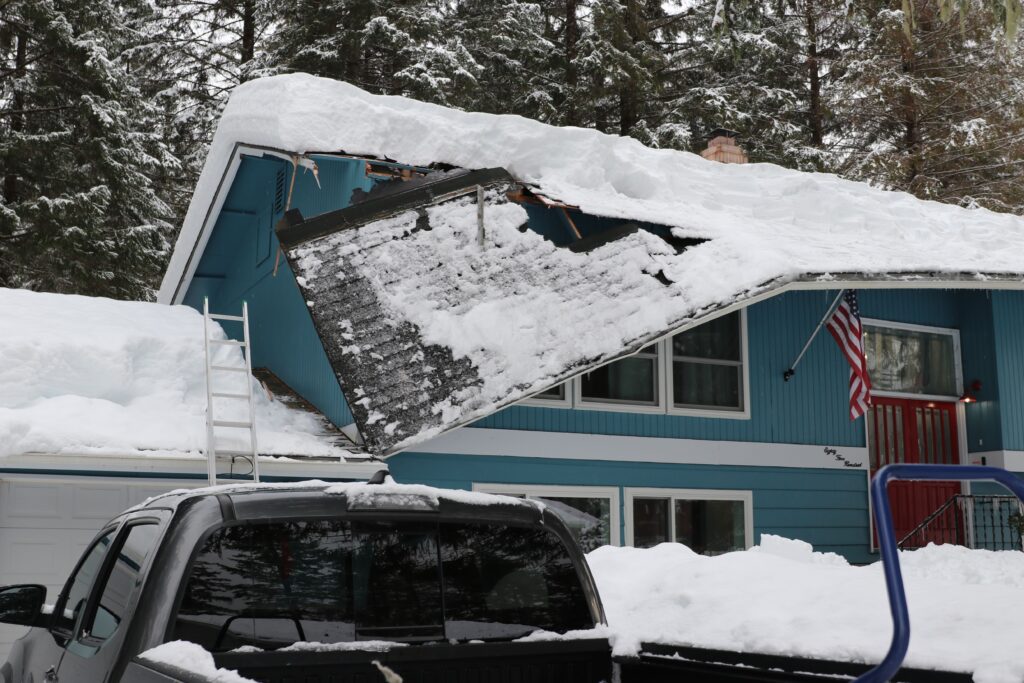
Snow load: Heavy, wet snow adds weight to your roof, particularly on older homes or low-slope areas
Ice dams: Snow melts, refreezes at the eaves, and blocks proper drainage
Freeze-thaw cycles: Water expands as it freezes, which can loosen shingles, flashing, and seals over time
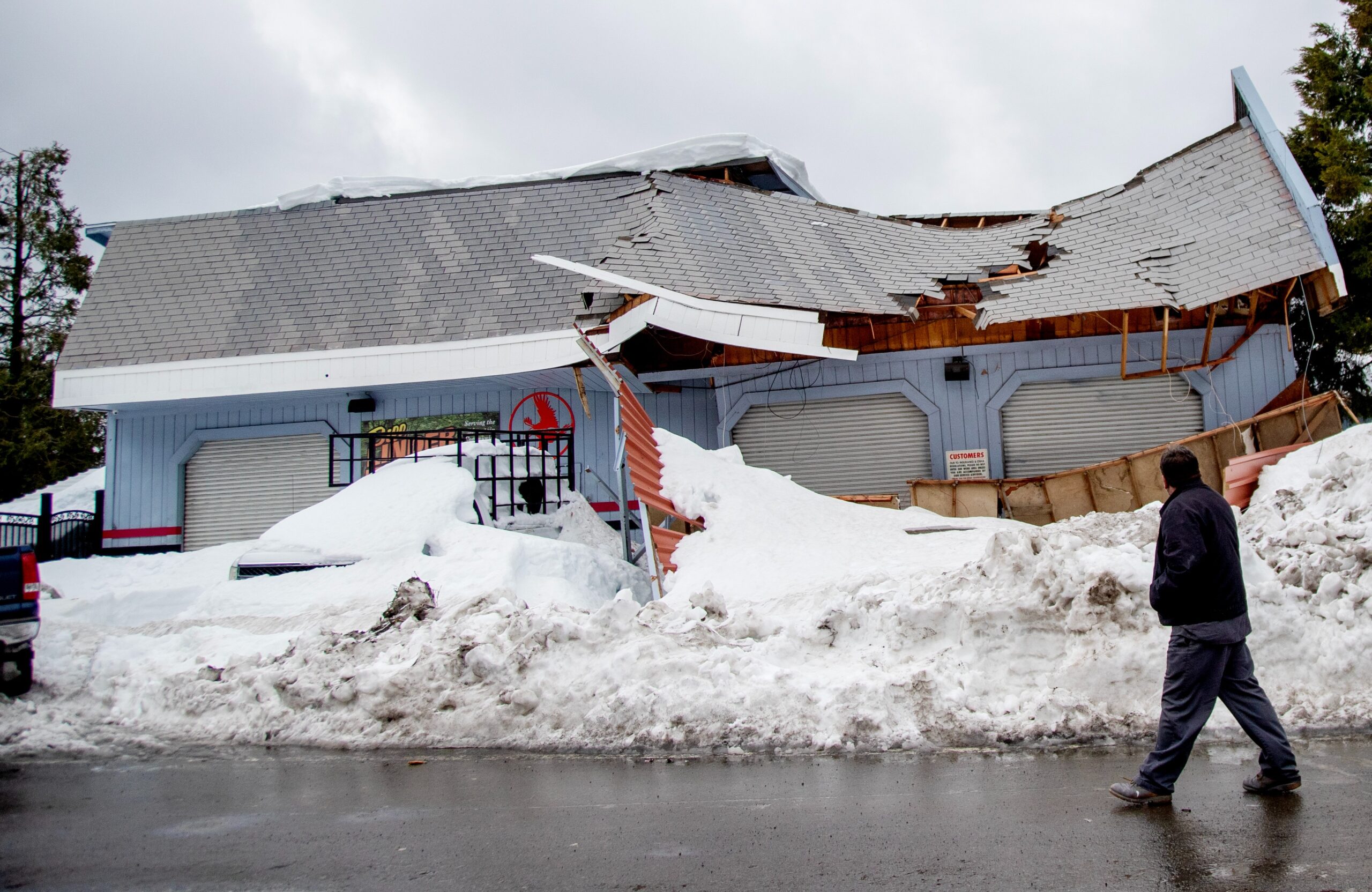
If the weight becomes excessive, it may cause roof sagging or even collapse. Older homes or roofs with structural weaknesses are particularly vulnerable.
Ice Dam Roof Damage
What Is an Ice Dam?
An ice dam is one of the most common winter roofing problems.
An ice dam is a ridge of ice that forms at the edge of a roof and prevents melting snow (water) from draining off the roof. The water that backs up behind the dam can leak into a home and cause damage to walls, ceilings, insulation and other areas.
Ice dams typically develop when warm air escapes from the attic and melts snow on the upper portions of the roof. The melted water flows downward until it reaches colder roof edges, where it refreezes and forms a ridge of ice.
How Ice Dams Damage Roofs
Once an ice dam forms, melting snow becomes trapped behind it. This trapped water can gradually seep beneath shingles and into the roofing structure.
Over time, this leads to interior leaks, damaged insulation, and mold growth. Ice dams are a leading cause of roof damage after snowstorm conditions in colder climates.
Preventing Ice Dams
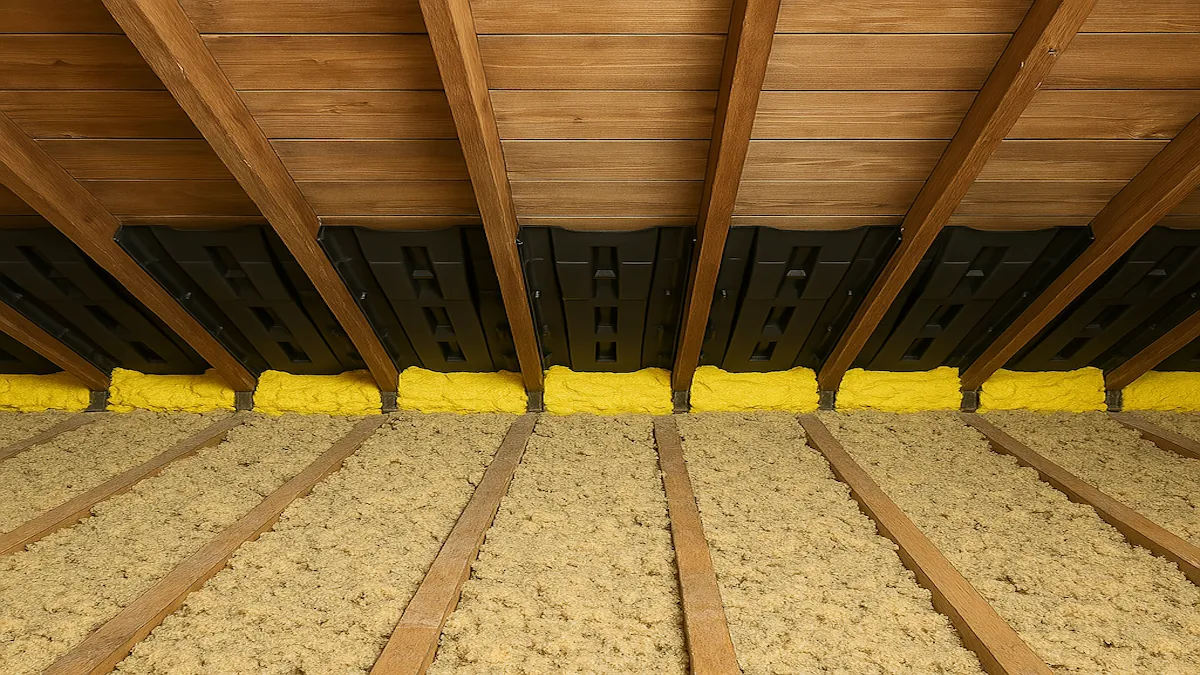
Preventing ice dams involves improving attic insulation and ventilation. Proper airflow keeps the roof surface colder, reducing the temperature differences that cause melting and refreezing.
Sealing air leaks in the attic and ensuring adequate insulation also helps maintain consistent roof temperatures.
Roof Leaking After Snow
Why Roofs Leak After Snow
If your roof started leaking after a snowstorm, you are not alone and this is not something to ignore.
Many homeowners assume roof leaks happen during storms. In reality, snow-related roof leaks usually show up after the snow starts melting, often days later. By the time water is dripping into your home or staining your ceiling, damage may already be spreading.
This guide explains why your roof is leaking after snow, what to do immediately, and when it’s time to call a professional roofer.
Melting snow often finds weak points in roofing materials such as cracked shingles, damaged flashing, or exposed nail holes.
These leaks are one of the most common indicators of roof damage after snowstorm events.
Signs Inside Your Home
Interior warning signs often appear before exterior damage becomes visible.
Common indicators include:
- Ceiling stains
• Bubbling or peeling paint
• Water dripping from the ceiling
• Damp attic insulation
These signs usually indicate moisture entering the roof system.
Is a Roof Leak an Emergency?
Any roof leak should never be ignored. Even minor leaks can damage insulation, drywall, and the structural wood inside your home. Addressing the issue quickly helps prevent further deterioration and keeps repair costs from increasing after a snowstorm.
Exterior Warning Signs After a Snowstorm
Shingles or Roofing Debris on the Ground
Finding roofing materials in your yard after a storm is often a clear sign that the roof experienced damage. Missing shingles expose the underlying roof structure to moisture.
Damaged Gutters and Drainage Systems
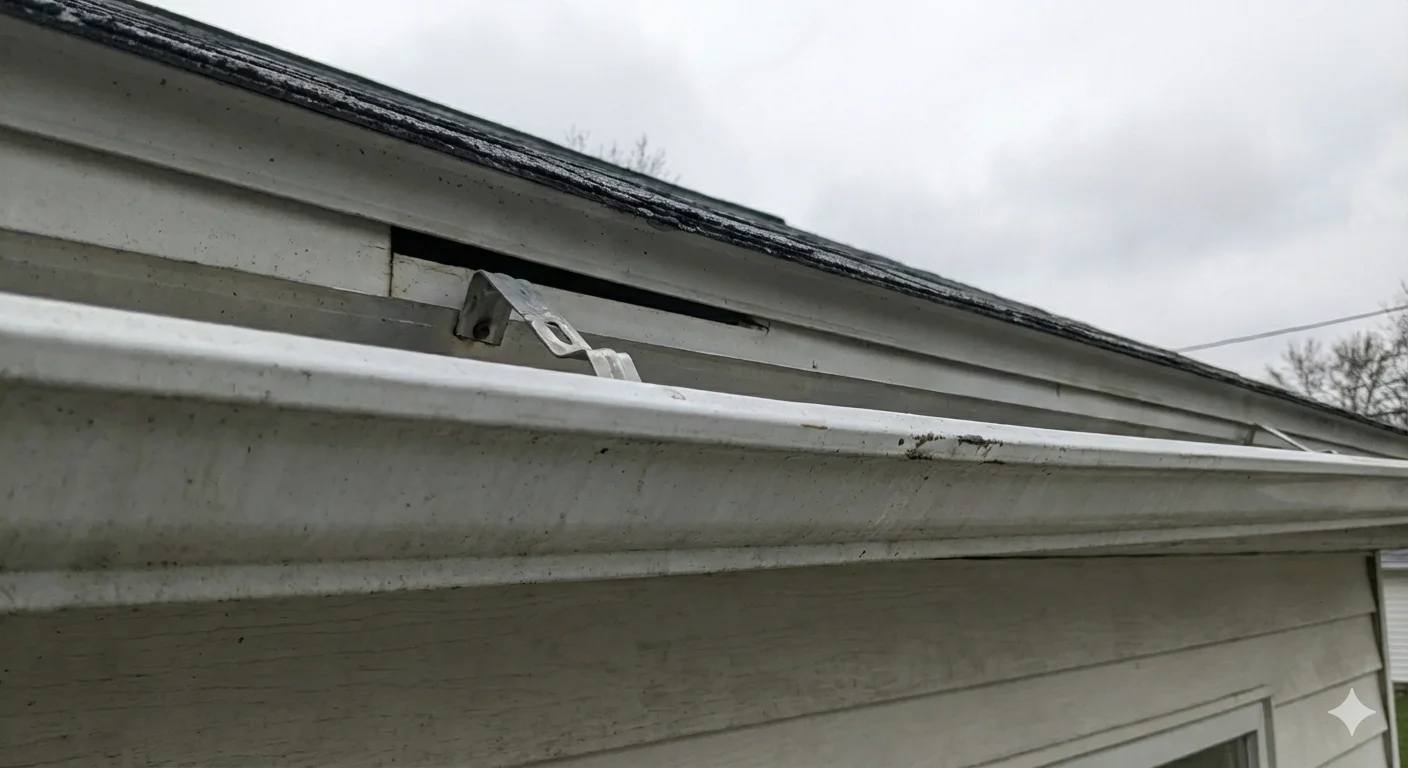
Snow and ice buildup can bend gutters or pull them away from the roofline. When gutters fail, melting snow may not drain properly, increasing the risk of water intrusion.
Sagging Gutters or Heavy Icicles
Large icicles may look harmless but often indicate excessive ice buildup. This added weight can damage gutters and fascia boards.
Damage to Roof Vents and Skylights
Roof penetrations such as vents and skylights are vulnerable during winter storms. Snow and ice expansion can damage flashing around these areas, allowing water to enter.
Structural and Energy Warning Signs
Cracks in Walls or Ceilings
Cracks appearing in your walls or ceilings could mean more than just settling. Heavy snow buildup and ice can damage roofing, placing extra stress on your roof and causing it to shift and strain your home’s structure. Seeing new or widening cracks after a snowstorm could indicate a serious problem with your roof’s structural integrity.
These cracks may appear days after severe winter weather and can signal serious roof damage after snowstorm conditions.
Increased Energy Bills
If your heating bills suddenly rise during winter, it may indicate insulation problems caused by roof leaks or attic moisture.
Damaged roofing systems allow warm air to escape, forcing heating systems to work harder to maintain indoor temperatures.
Top Signs of Winter Roof Damage
The top signs of cold-weather roof damage after winter storms are ceiling stains, ice dams along eaves, missing or lifted shingles, loose or bent gutters, rusted or gapped flashing, excessive granules in gutters, attic frost or damp insulation, sagging ridgelines, hail dents on metal, and ponding water on flat roofs. Schedule a post-storm roof inspection if any appear.
These indicators frequently appear after severe winter storms and should be inspected quickly to prevent serious roof damage after snowstorm.
Safe Inspection and What NOT to Do
Homeowners should avoid climbing onto the roof after a snowstorm. Snow and ice create slippery surfaces that increase the risk of accidents.
Instead, perform a ground-level inspection and look for visible signs such as sagging gutters, missing shingles, or icicles.
If damage is suspected, contacting a professional roofer is the safest option.
Emergency Roof Repair After Snow
Some situations require immediate professional attention. Homeowners should contact a roofing contractor if they notice:
- Active roof leaks
• Large ice dams
• Structural sagging
• Interior water damage
Quick action can reduce the severity of roof damage after snowstorm situations and protect the home’s structure.
Preventing Winter Roof Damage
Preventive maintenance is the most effective way to reduce winter roofing risks.
Important steps include:
- Cleaning gutters before winter
• Improving attic insulation
• Ensuring proper ventilation
• Scheduling annual roof inspections
Regular maintenance helps protect roofs from recurring roof damage after snowstorm events.
Why Property Owners in Leominster Choose Brian M. LeBlanc Roofing
Brian M. LeBlanc Roofing is a trusted, fully licensed roofing and siding contractor proudly serving residential and commercial clients throughout Leominster, MA, and the surrounding communities. Backed by years of hands-on industry experience, the company is known for delivering durable, long-lasting roofing and exterior solutions, including expert cement siding repairs tailored to New England properties.
Homeowners and business owners continue to rely on their team for several key reasons:
- Fully licensed and insured professionals with extensive experience completing hundreds of roofing and siding projects across Leominster, MA
- Specialized knowledge in installing and repairing weather-resistant roofing and siding systems designed to withstand New England’s heavy snow, strong winds, and seasonal temperature shifts
- Comprehensive exterior services, including roof repairs, full roof replacements, vinyl siding repair, routine inspections, and preventative maintenance
- Reliable service for residential homes, office buildings, warehouses, and other commercial properties in and around Leominster
- A customer-focused approach built on honesty, transparency, and clear communication from project start to finish
Their commitment to quality craftsmanship and dependable service makes them a go-to roofing contractor for property owners seeking long-term protection and value.
Conclusion
Winter storms can create hidden roofing problems that appear long after the snowfall ends. Ice dams, heavy snow loads, freeze–thaw cycles, and moisture infiltration all contribute to roofing damage.
Recognizing early warning signs allows homeowners to act quickly and prevent serious structural problems. Professional inspections and timely repairs are essential for maintaining roof safety and durability.
If you notice any warning signs after a winter storm, scheduling an inspection is the best way to protect your home and prevent costly roof damage after snowstorm repairs in the future.
For more details, check our GMB Profile. It provides additional tips, photos, and helpful resources to guide homeowners through keeping their homes in top condition.
Contact us today to schedule your inspection or get a free quote
FAQs
1. What are the first signs of roof damage after snowstorm conditions?
Common signs of roof damage after snowstorm events include ceiling stains, ice dams on roof edges, missing shingles, bent gutters, attic frost, and roof leaks when melting snow begins.
2. Why does a roof start leaking after the snow melts?
A roof leaking after snow usually happens when melting snow flows under damaged shingles or flashing. Freeze-thaw cycles open gaps that allow water to enter the roof system.
3. What is ice dam roof damage, and why is it dangerous?
Ice dam roof damage occurs when melting snow refreezes at the roof edge and blocks drainage. Water backs up under shingles and leaks into ceilings, insulation, and attic areas.
4. Can heavy snow cause a roof collapse risk?
Yes. Heavy snow increases the risk of snow roof collapse, especially on older homes or low-slope roofs. Wet snow adds weight and can cause sagging rooflines or structural stress.
5. What are the warning signs of attic condensation and winter roof problems?
Attic condensation winter roof problems often show as frost on nails, damp insulation, mold smell, or water stains in the attic. Poor ventilation and insulation usually cause it.