
Blizzard Roof Damage Repair: Causes, Warning Signs, and Emergency Solutions for Homeowners
Winter storms can be beautiful to watch, but they can also cause serious structural problems for homes. One of the most vulnerable parts of any house during extreme winter weather is the roof. Heavy snow, freezing temperatures, ice buildup, and strong winds can combine to create severe structural stress. When these elements work together, they can cause blizzard roof damage that may go unnoticed until leaks or structural issues appear inside the home.
Snowstorms and blizzards affect thousands of homes every winter across the United States. In regions with frequent snow accumulation, roofs must withstand not only heavy snow loads but also freeze-thaw cycles and wind-driven debris. If damage occurs, homeowners may face problems such as sagging roof decks, leaking ceilings, or even partial roof collapse.
Understanding how winter storms affect roofing systems is essential for protecting your property. This guide explains the causes of blizzard roof damage, the warning signs homeowners should watch for, and the emergency repair solutions that can prevent costly structural damage.
Brian M. LeBlanc Roofing is a trusted roofing company serving homeowners throughout Lancaster and surrounding Massachusetts communities with reliable roof repair, replacement, and inspection services. Our experienced team focuses on durable workmanship and professional service to help protect homes from storm damage and harsh New England weather.
How Snowstorms and Blizzards Affect the Life of a Roof
Blizzards are extreme winter storms characterized by heavy snowfall, strong winds, and limited visibility. These storms place enormous stress on roofing systems. Snow accumulation alone can weigh several tons on a large roof surface, and when combined with ice and wind, it can significantly shorten a roof’s lifespan.
Snow covering your roof may seem harmless, but it can lead to significant damage. Heavy snow buildup adds to the snow load on your roof surface, potentially straining its structural integrity. Snow melts during the day, and ice dam formation can occur when freezing temperatures return overnight.
Repeated winter storms gradually weaken roofing materials. Moisture infiltration, expansion from freezing water, and strong wind pressure can compromise shingles, flashing, and structural components. Over time, this can lead to serious blizzard roof damage that requires professional repair.
Excessive Weight from Snow, Ice, and Water Accumulation
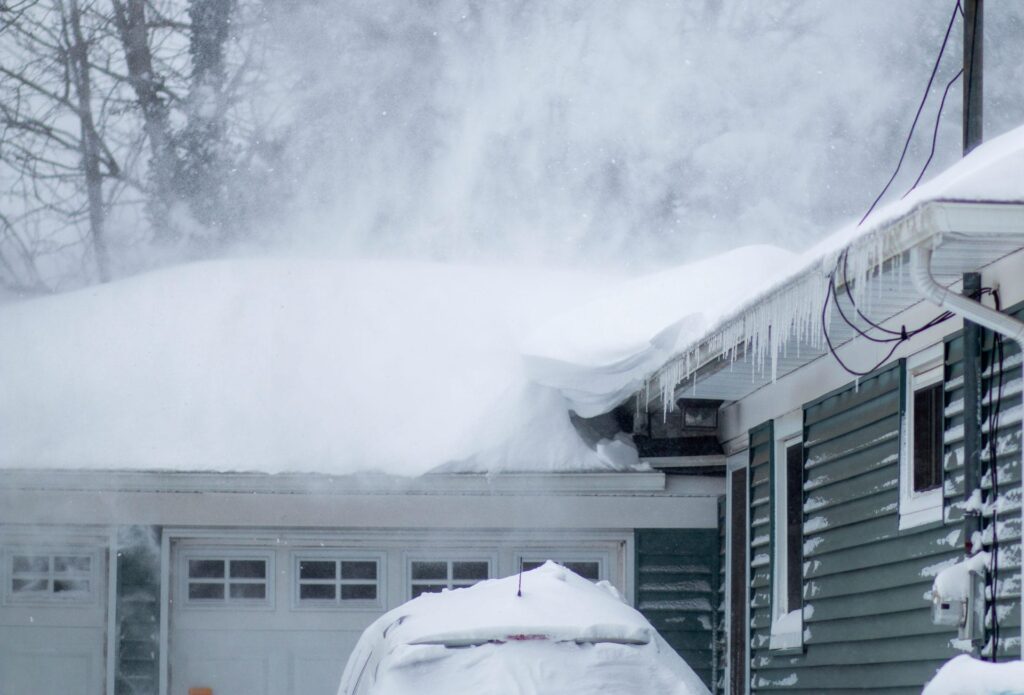
One of the biggest threats during winter storms is the sheer weight of accumulated snow and ice. Snow might appear light and fluffy, but when it piles up across an entire roof surface, the combined weight can become enormous.
Wet snow is especially dangerous because it is much heavier than dry snow. When snow begins to melt and refreeze, it can trap water beneath the surface layers. This mixture of snow, ice, and water adds significant pressure to the roof structure.
Heavy snow roof damage often occurs when the accumulated snow exceeds the structural load capacity of the roof. If the weight continues to increase, the roof deck can sag, structural beams can bend, and in severe cases, sections of the roof may collapse.
Heavy Snow Load and Unbalanced Snow Loading on Roofs
Snow does not always accumulate evenly across a roof. Wind can push snow into certain areas, creating large drifts that concentrate weight in one section.
According to FEMA snow safety guidelines, one of the biggest contributors to snow-related roofing issues is ‘unbalanced snow loading’. This occurs when drifting snow piles in one section of the roof rather than distributing its load evenly across the roof structure.
When this happens, one part of the roof carries far more weight than another. This uneven distribution increases the risk of blizzard roof damage and can cause structural beams to bend or fail under pressure.
Flat roofs and low-slope commercial buildings are particularly vulnerable to snow load roof damage because snow tends to accumulate instead of sliding off.
Freeze–Thaw Cycles and Roofing Material Degradation
Winter storms not only damage roofs during snowfall. The freeze-thaw cycle that follows can also create serious problems.
Exterior Damage from Ice Dams & Freeze-Thaw Cycles
After the storm, the secondary damage began.
Freeze-thaw cycles create expansion within small cracks in siding, flashing, roofing systems, and foundation walls.
Ice dams formed along roof edges caused melting snow to back up under shingles — forcing water into attic spaces and wall cavities.
Over time, these cycles weaken roofing materials and increase the likelihood of blizzard roof damage. Small cracks grow larger as water freezes and expands, eventually allowing moisture to penetrate deeper into the roofing system.
Common Causes of Blizzard Roof Damage
Several factors contribute to roof damage during winter storms. The most common causes include snow accumulation, ice formation, and wind pressure.
Heavy Snow Roof Damage and Snow Load Roof Damage
Heavy snowfall is the most obvious cause of winter roof problems. As snow accumulates, it adds weight to the roof surface. If the roof is older or poorly maintained, this added pressure can lead to structural stress.
Snow load roof damage occurs when the roof structure cannot support the combined weight of snow and ice. This may lead to sagging rafters, cracked decking, or collapsed roof sections.
Ice Dams and Water Intrusion
Ice dams are ridges of ice that form along roof edges. They prevent melting snow from draining properly through gutters. When water becomes trapped behind the ice, it can seep beneath shingles and enter the home.
Water infiltration from ice dams can damage insulation, ceilings, walls, and electrical systems.
Wind Damage During Winter Storms
Strong winds are another major cause of winter storm roof problems.
Wild Winter Winds
Blizzard winds qualify as any that clock in at 35 mph or more and last for a sustained period (usually a few hours). A lot of roof damage can be done in that time, and the first things to go will be any loose shingles, flashing, tiles, or slats.
Not only will those be torn off with ease by winter storms, but even the tightest roofing materials could also take a buffeting strong enough to pry them loose.
Winter storm winds are also packed with snow, hail, or sleet, which only adds more power to their punch. Rock-hard granules of ice and other debris pounding a roof for hours on end can at the very least ruin the appearance of a home, and at worst, punch holes straight through the top.
These conditions frequently lead to blizzard roof damage, especially on older roofs or those with pre-existing structural weaknesses.
Types of Winter Storm Roof Problems Homeowners Should Watch For
Winter storms can cause multiple types of roof damage. Some problems appear immediately, while others develop slowly over time.
Snow Damage to Shingles
Snow accumulation can loosen shingles or cause them to crack. When shingles become damaged, the roof becomes vulnerable to water intrusion.
Flashing and Gutter Damage
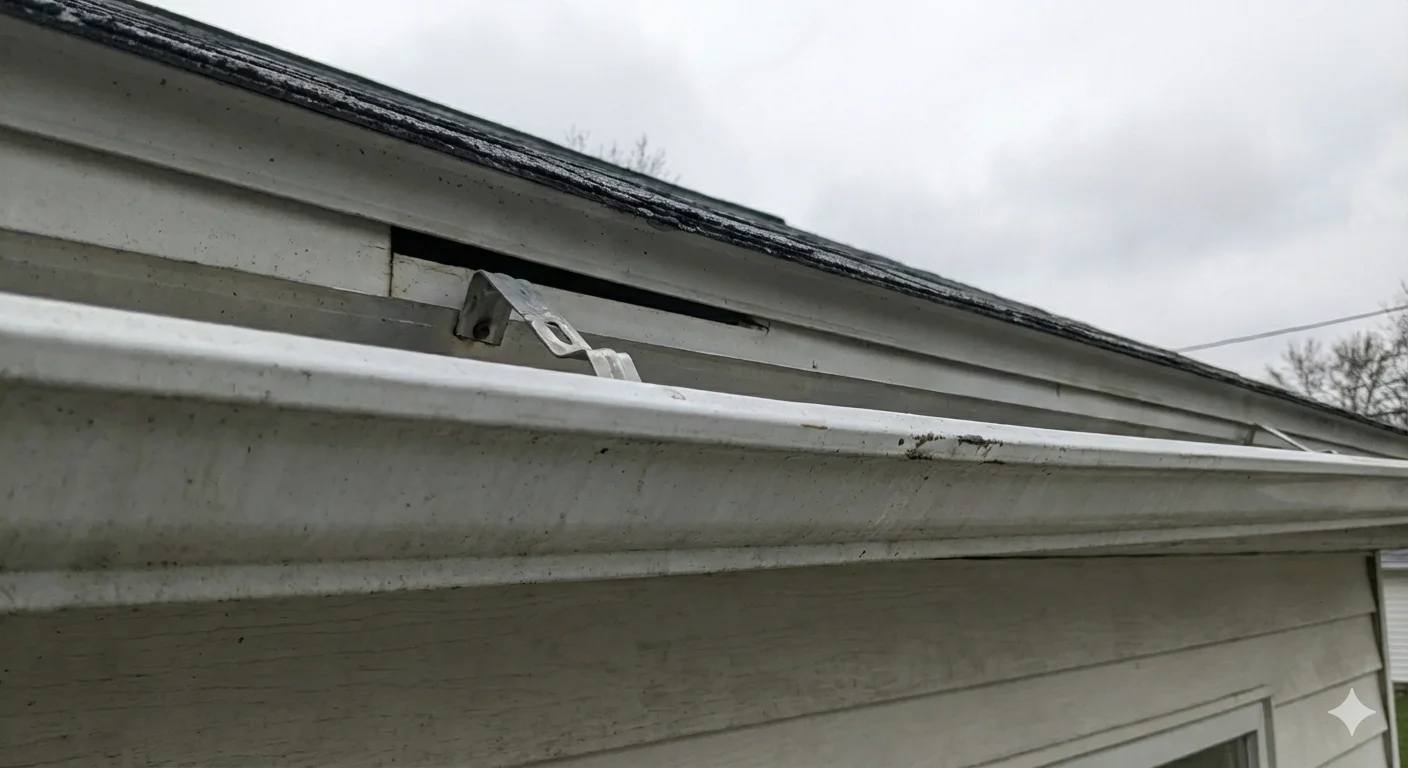
Heavy snow and ice buildup can strain gutters and flashing systems. Ice dams can pull gutters away from the roof edge or bend flashing around chimneys and vents.
Roof Structural Damage from Snow Pressure
Roof structural damage, snow events often involve sagging roof lines or weakened beams. If left unaddressed, this damage can eventually lead to collapse.
Risk of Roof Collapse
Severe snow accumulation can cause partial or complete roof collapse. This type of blizzard roof damage is rare but extremely dangerous and requires immediate professional attention.
Warning Signs of Blizzard Roof Damage
Recognizing early warning signs can help homeowners prevent severe structural problems.
Sagging Roof Lines
A sagging roofline often indicates excessive weight from snow accumulation. This may be one of the earliest signs of blizzard roof damage.
Ice Dams and Large Icicles
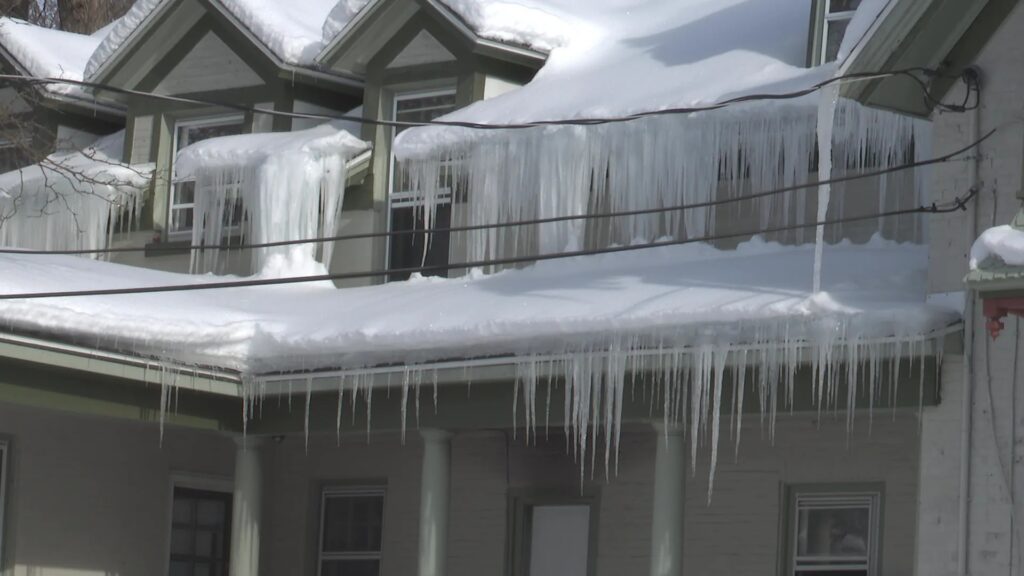
Large icicles hanging from gutters may indicate ice dam formation. These ice ridges can trap water and cause leaks inside the home.
Interior Water Stains
Ceiling stains or dripping water often appear after the snow begins melting. These signs suggest that water has already penetrated the roofing system.
Structural Warning Signs
Other warning signs include cracking sounds in the attic, sticking doors, and visible wall cracks. These may indicate structural stress caused by snow load roof damage.
Emergency Steps to Take After Blizzard Roof Damage
If a winter storm causes roof damage, homeowners should take immediate action to prevent further problems.
Perform a Safe Visual Inspection
After the storm passes, inspect the roof from the ground if possible. Look for missing shingles, sagging areas, or fallen branches.
Document the Damage
Take photos of visible damage to support insurance claims and repair estimates.
Prevent Additional Water Intrusion
If leaks appear inside the home, place buckets under dripping water and move furniture away from affected areas.
Contact Professional Roofers
For severe blizzard roof damage, professional inspection and repair are essential.
Safe Snow Removal Practices for Roof Protection
Removing excess snow from a roof can reduce structural stress, but it must be done carefully.
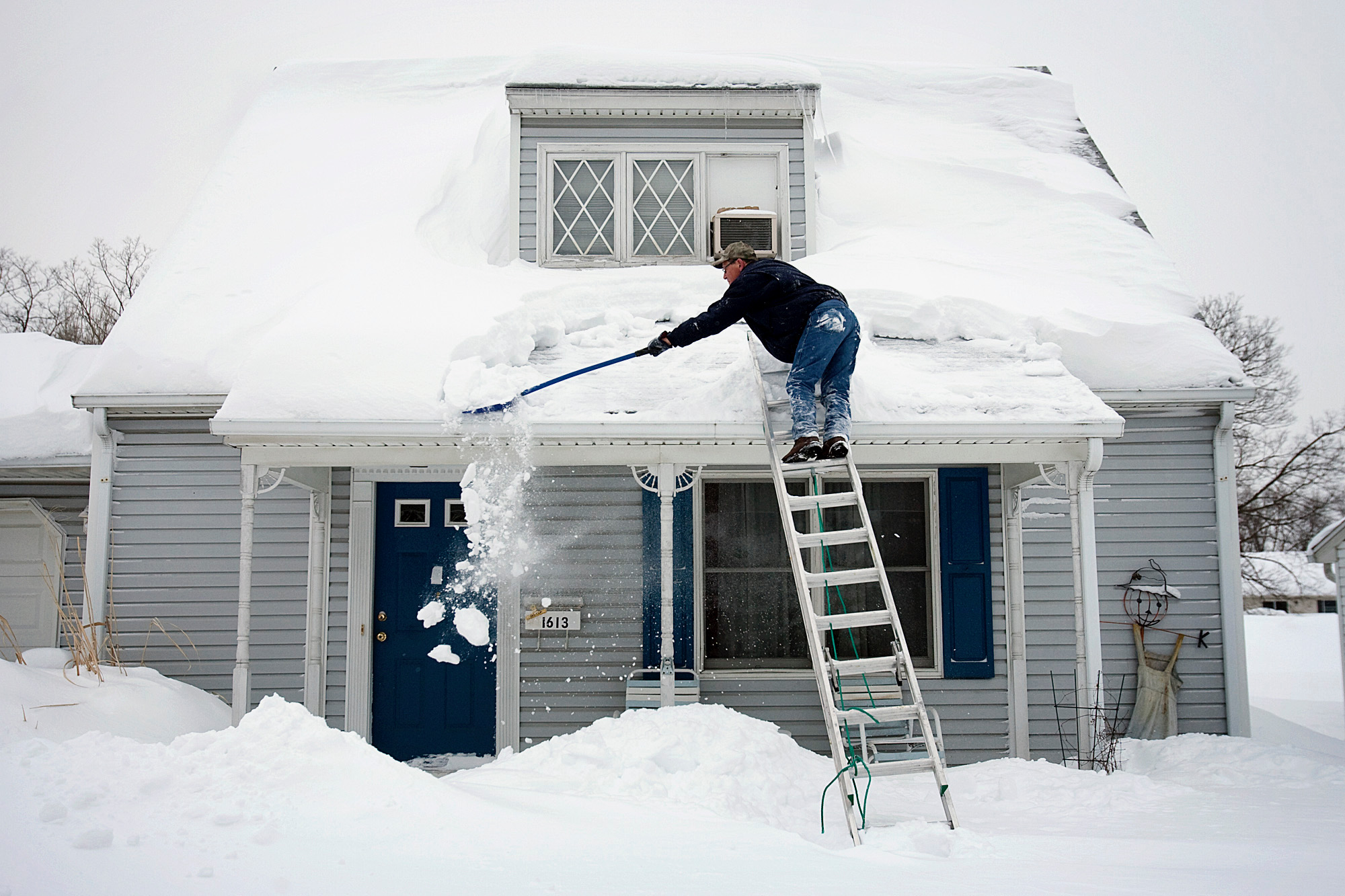
Using roof rakes from the ground is the safest method for removing snow from the roof edges. Homeowners should avoid climbing onto icy roofs because slips and falls are common during winter conditions.
Professional snow removal services may be necessary for large snow loads or complex roof structures.
Emergency Blizzard Roof Damage Repair Solutions
Once damage has been identified, repairs should be completed as quickly as possible.
Temporary leak protection methods, such as tarping damaged areas, can prevent additional water intrusion. However, these solutions should only be used until permanent repairs can be completed.
Roofing professionals can repair damaged shingles, replace flashing, and reinforce structural components affected by blizzard roof damage.
In some cases, whole or partial reroofing may be necessary after a blizzard, and some homeowners may even choose to invest in this before the worst weather strikes. It’s a sound investment that makes for both a tougher roof and an improved exterior effect.
How to Prevent Blizzard Roof Damage in the Future
Preventative maintenance is the best way to protect your roof from winter storms.
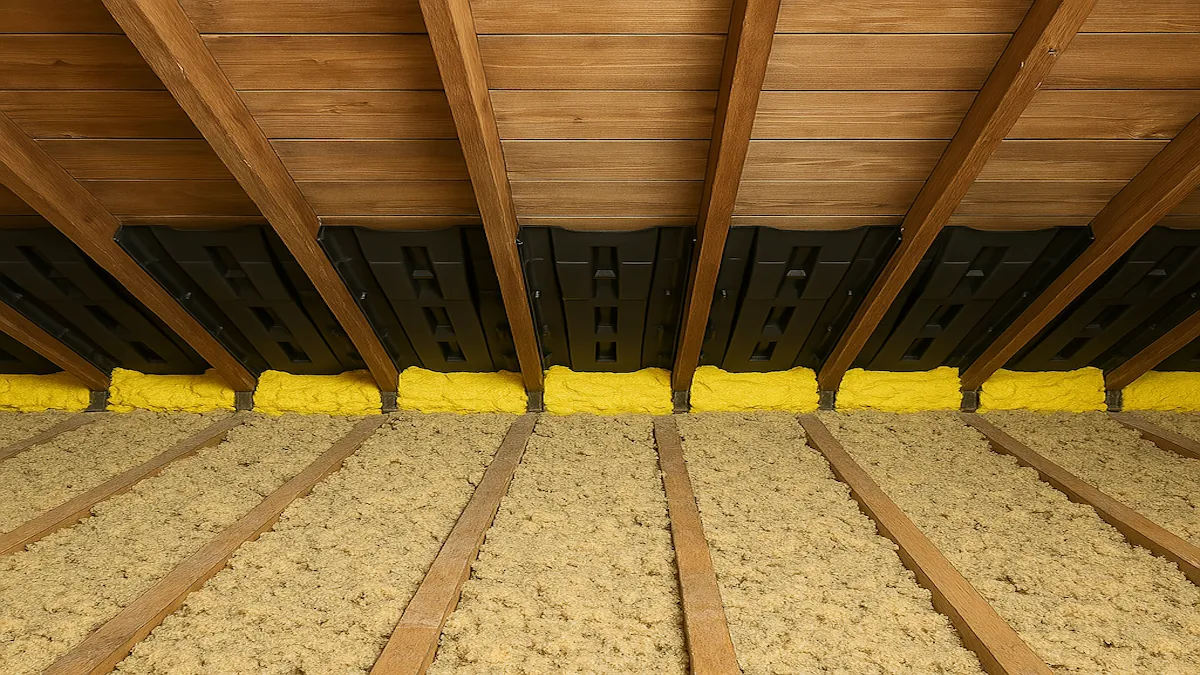
Proper insulation and ventilation reduce the risk of ice dam formation. Clearing gutters before winter ensures water can drain properly during snowmelt.
Regular inspections can identify minor issues before they become severe blizzard roof damage problems.
Installing durable roofing materials designed for cold climates can also improve the roof’s resistance to heavy snow and wind.
Blizzard Roof Damage Repair Cost in Lancaster
The cost of repairing blizzard roof damage can vary depending on the severity of the damage, roof size, materials, and structural issues. Minor repairs may only require replacing a few shingles, while severe winter storm damage may involve structural reinforcement or even a full roof replacement.
Heavy snow accumulation, ice dams, and wind-driven debris can all increase repair costs. That is why homeowners should schedule an inspection quickly after a storm to prevent small issues from turning into expensive repairs.
Below is a general estimate of common winter storm roof repair costs.
Repair Type | Description | Estimated Cost |
Minor Roof Repair | Replacing a few damaged shingles or sealing small leaks | $300 – $900 |
Ice Dam Removal | Professional ice dam removal and drainage restoration | $400 – $1,200 |
Flashing or Gutter Repair | Repairing damaged flashing or gutters from snow and ice | $500 – $1,500 |
Moderate Roof Repair | Fixing larger sections of shingle or flashing damage | $1,000 – $3,500 |
Structural Roof Repair | Repairing roof decking or rafters damaged by snow load | $3,000 – $8,000 |
Roof Replacement | Full roof replacement after severe winter storm damage | $8,000 – $18,000+ |
Actual costs may vary depending on the extent of damage and roofing materials used. A professional inspection is the best way to determine the exact repair needs and ensure your roof remains safe after severe winter storms.
Why Homeowners in Leominster Trust Brian M. LeBlanc Roofing
Brian M. LeBlanc Roofing is a reliable and fully licensed roofing and siding company serving homeowners and businesses across Leominster, MA, and nearby communities. With many years of hands-on industry experience, the team has built a strong reputation for providing durable roofing systems and exterior solutions that are designed to perform well in New England’s demanding climate. From roof repairs to siding services, their work focuses on long-term protection and quality craftsmanship.
Property owners continue to choose Brian M. LeBlanc Roofing for several important reasons:
- Licensed and insured professionals with extensive experience completing hundreds of roofing and siding projects throughout Leominster and the surrounding areas.
- Expertise in weather-resistant roofing and siding systems designed to withstand heavy snow, strong winds, and seasonal temperature changes common in New England.
- Comprehensive exterior services, including roof repair, full roof replacement, vinyl siding repair, roof inspections, and preventative maintenance solutions.
- Trusted support for residential and commercial properties, including homes, office buildings, warehouses, and other structures throughout the Leominster region.
- A customer-focused approach built on clear communication, honest recommendations, and reliable service from the first consultation to project completion.
Through consistent workmanship and dependable service, Brian M. LeBlanc Roofing has become a trusted choice for property owners who want durable roofing and exterior solutions that protect their investment for years to come.
Conclusion
Winter storms place significant stress on roofing systems, especially in regions that experience heavy snowfall and strong winds. Snow accumulation, ice dams, freeze-thaw cycles, and wind damage can all contribute to blizzard roof damage that weakens your home’s structural protection.
Recognizing early warning signs and addressing problems quickly can help homeowners avoid costly repairs and dangerous structural failures. Regular inspections, preventative maintenance, and professional repairs are essential for protecting your roof during harsh winter weather.
If you notice signs of storm damage, scheduling a professional inspection and repair service can ensure your home remains safe and protected throughout the winter season.
For more details, check our GMB Profile. It provides additional tips, photos, and helpful resources to guide homeowners through keeping their homes in top condition.
Contact us today to schedule your inspection or get a free quote.
FAQs
1. What causes blizzard roof damage during winter storms?
Blizzard roof damage often happens when heavy snow, ice dams, and strong winds hit the roof. These winter storm roof problems can cause cracks in shingles and leaks. A roof inspection can find damage early.
2. How does heavy snow damage to the roof affect a home?
Heavy snow roof damage adds weight to the roof. This can strain beams and decking. Over time, snow load roof damage may cause sagging or leaks if repairs are delayed.
3. What are the early signs of blizzard roof damage?
Common signs include sagging roof lines, ice dams, ceiling stains, and loose shingles. These warning signs may mean blizzard roof damage is already affecting your roof structure.
4. Can snow load roof damage cause roof collapse?
Yes. Severe snow load roof damage can stress rafters and roof decking. If the weight becomes too heavy, it may lead to partial or full roof collapse.
5. How do ice dams lead to winter storm roof problems?
Ice dams form when melting snow refreezes at the roof edges. This traps water under shingles. The water can leak into ceilings and walls, causing blizzard roof damage.