
Learn how to remove snow from roof safely with practical roof snow removal tips, ensure safe snow removal from the roof, and prevent ice dams and winter roof damage.
Winter storms can transform neighborhoods into beautiful landscapes, but heavy snow accumulation on rooftops can quickly become a serious concern for homeowners. Snow buildup places pressure on roofing structures, increases the risk of water intrusion, and contributes to dangerous ice dam formation. Understanding how to remove snow from roof areas safely is essential for protecting both your home and your family during cold weather months.
Many homeowners search for practical roof snow removal tips when winter storms begin piling snow onto their homes. However, snow removal from a roof is not always straightforward. Removing too much snow can damage shingles, while ignoring heavy buildup can lead to structural stress or leaks.
Learning how to remove snow from roof surfaces safely helps reduce these risks while preventing long-term roofing damage. This guide explains when snow should be removed, how to do it safely, which tools work best, and when it is better to call a professional roof snow removal service near me.
Brian M. LeBlanc Roofing provides reliable roofing and exterior services for homeowners and businesses across Leominster, MA, and surrounding communities. With years of hands-on experience, the team delivers durable roofing solutions designed to withstand New England’s harsh weather conditions.
Why Roof Snow Removal Matters
Snow accumulation may appear harmless at first, but over time, it can place significant strain on roofing systems. Roofs are designed to withstand snow loads, but excessive buildup increases the risk of structural damage.
Heavy snow can affect several parts of a home. It can strain rafters and trusses, damage gutters, and cause water to seep beneath roofing materials. In extreme situations, snow buildup can even cause partial roof collapse.
Another major reason homeowners research roof snow removal tips is the risk of ice dams. These formations occur when melting snow refreezes along the roof edge, trapping water behind the ice barrier. When this happens, water can back up beneath shingles and leak into the home.
Regular monitoring and controlled removal help reduce these risks while protecting roofing materials from long-term winter damage.
Do You Really Need to Remove Snow From Your Roof?
Not every snowfall requires immediate removal. Many roofs are engineered to handle normal snow loads without issue. In fact, a thin layer of snow can even act as insulation by reducing heat loss from the home.
However, the problem occurs when snow accumulates repeatedly without melting. Multiple storms can cause layers of snow to compress and increase in weight.
Homeowners often begin researching how to remove snow from roof areas when snow piles begin to look excessive compared to nearby homes. Instead of relying on visual comparison alone, it is better to understand the conditions that make snow removal necessary.
If snow begins to accumulate in thick layers, especially after several storms, it may be time to start planning for safe snow removal from roof areas to reduce structural stress.
How Much Snow Is Too Much on a Roof?
The amount of snow considered dangerous depends largely on its density. Light, fluffy snow weighs far less than wet, compacted snow.
Dry snow can weigh roughly 5–10 pounds per square foot per foot of depth, while wet snow may weigh more than twice that amount. When multiple snowfalls occur, the lower layers compress and increase in weight.
Many roofing experts suggest monitoring snow buildup once it reaches roughly 12 inches. Heavy wet snow can create even more pressure, which is why monitoring snow depth and condition is important when learning how to remove snow from roof areas safely.
When in doubt, homeowners should reduce at least some of the weight from the roof edges rather than allowing snow to accumulate indefinitely.
Warning Signs Your Roof Has Too Much Snow
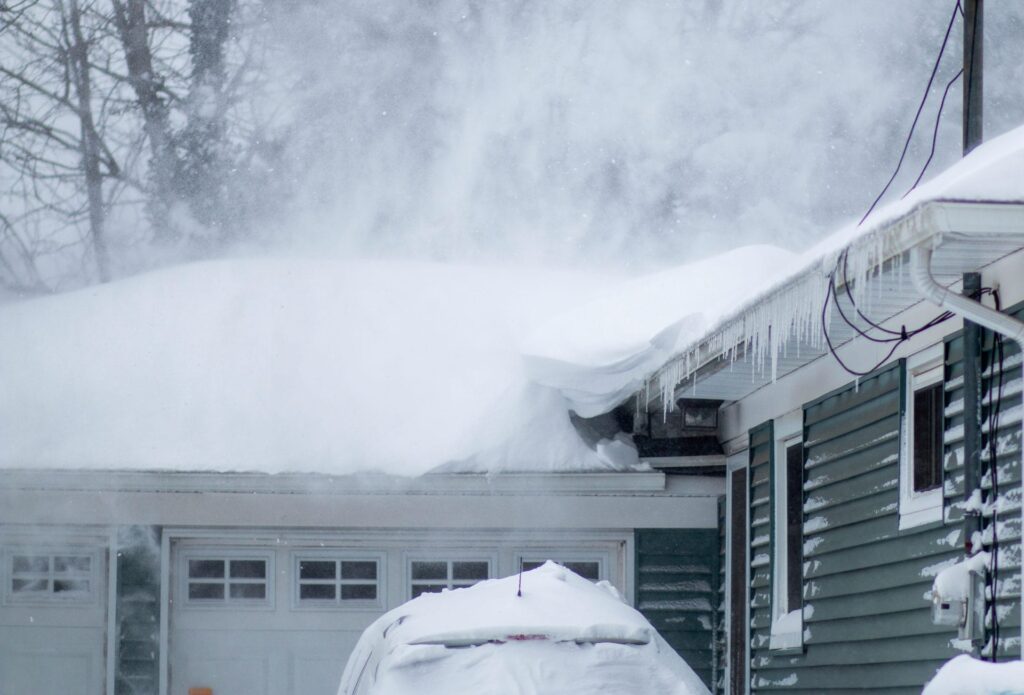
Sometimes, a home itself gives warning signals when the snow load becomes excessive.
Strange noises, such as creaking or popping from the ceiling structure, can indicate stress on the roof framing. Sagging ceilings, new cracks in drywall, or doors that suddenly become difficult to close may also suggest structural pressure.
When these warning signs appear, immediate action may be required. At that point, homeowners often look for a roof snow removal service near me to ensure the problem is addressed safely.
Factors That Increase Roof Snow Risk
Several factors influence how dangerous roof snow accumulation can become. The design of the roof plays a major role.
Flat roofs and low-slope roofs tend to collect snow more easily because snow cannot slide off naturally. Older homes may also be more vulnerable if structural components have weakened over time.
Roof material also affects snow buildup. Metal roofing typically sheds snow quickly, while asphalt shingles tend to hold snow longer because of their textured surface.
Understanding these factors helps homeowners determine how to remove snow from roof areas safely when snow begins building up.
When You Should (and Shouldn’t) Remove Snow From a Roof
Timing plays an important role in safe roof maintenance. Snow removal is generally recommended when the buildup becomes heavy enough to stress the roof structure or create ice dams.
However, homeowners should avoid attempting snow removal during active storms or when icy conditions make outdoor work dangerous.
If snow becomes extremely heavy or the roof structure shows warning signs of stress, it may be safer to search for a professional roof snow removal service near me rather than attempting the work alone.
Safe Roof Snow Removal Methods
There are two ways to remove snow from your roof: raking and shoveling. Never use salt to remove snow and ice from your roof. The salt will stain your roof, and it will kill the plants around your downspouts when it washes off.
Most professionals recommend raking snow from the ground whenever possible. This approach minimizes the risk of falling and reduces the chance of damaging roofing materials.
For homeowners researching how to remove snow from roof areas, the key principle is safety first. Removing small sections gradually is much safer than trying to remove large amounts at once.
How to Remove Snow From a Roof Using a Roof Rake
Roof Rake:
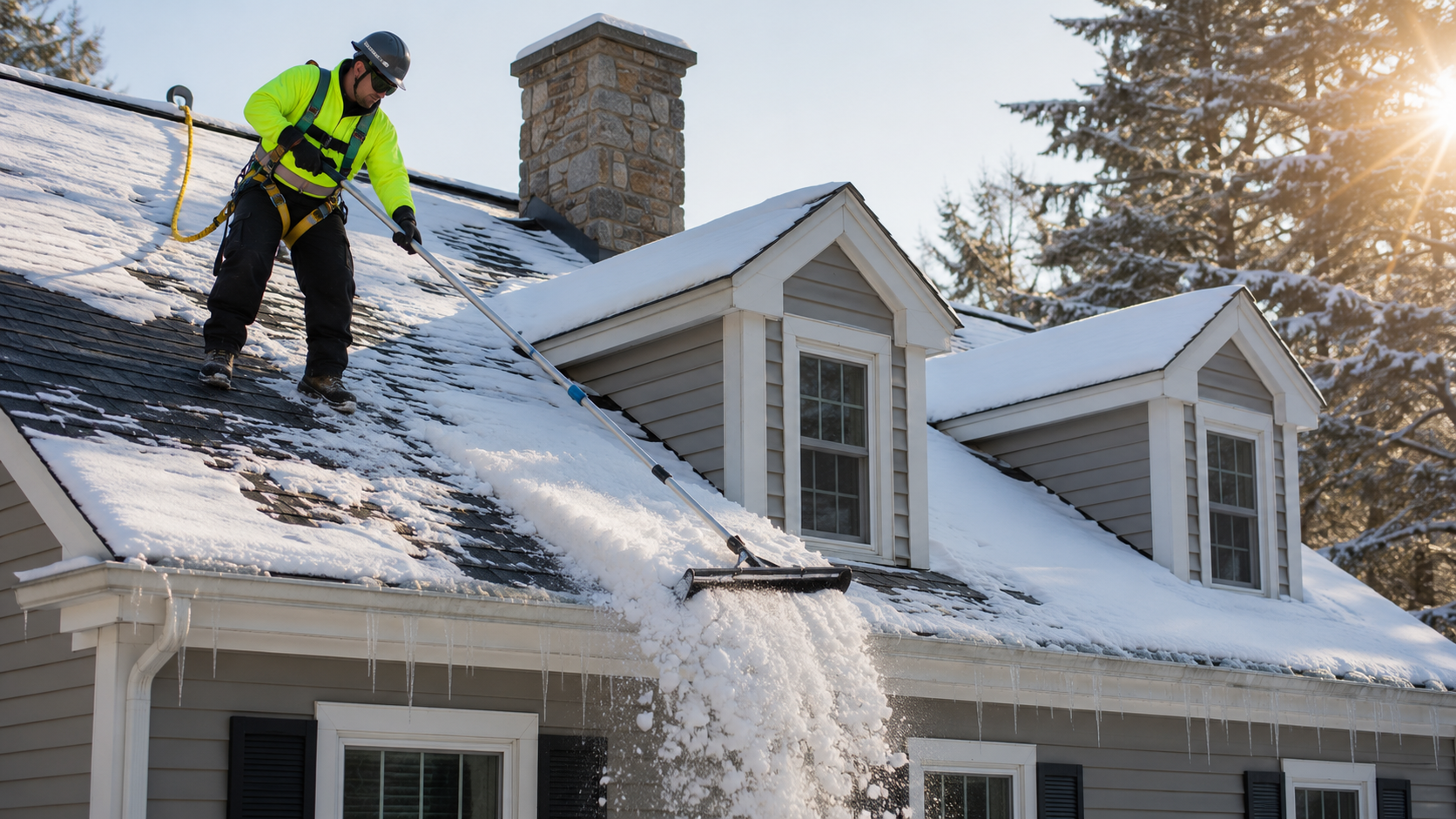
Having a roof rake on hand is an easy way to remove snow quickly and safely. With a roof rake, you are able to extend a shovel across your roof and pull down snow smoothly. Make sure the roof rake you get features rollers that help prevent shingle damage.
The trusty roof rake:
To manage the Maine winter and any amount of snowfall, you should have the right tools. The best tool for safely removing snow from your roof is a high-quality rake with an adjustable handle.
Many homeowners learning how to remove snow from roof areas safely find that a telescoping roof rake makes the process easier and safer.
Step-by-Step Roof Snow Removal Process
Step 1: Stay on the Ground
In most cases, you can remove enough snow while standing safely on the ground using a roof rake.
Step 2: Avoid Using a Ladder When Possible
Using a roof rake from the ground is much safer than climbing a ladder.
Step 3: Secure the Ladder if You Must Use One
If a ladder is necessary, make sure it is firmly secured.
Step 4: Watch for Ice on the ladder.
Always check ladder rungs for ice buildup.
Step 5: Do Not Climb Onto the Roof
Avoid stepping onto the roof whenever possible.
Step 6: Apply De-Icer Along the Eaves
Applying de-icer can help reduce ice buildup.
Step 7: Start Removing Snow From the Edges
Begin clearing snow from the roof edges first.
Step 8: Remove Snow in Small Sections
Remove small sections gradually to prevent large snow slides.
Ice Dams and Snow Removal
Ice jams and icycles:
Ice jams occur when the snow and ice on the roof melt. This melt occurs from escaping indoor heat or from outdoor temperature fluctuations. The melting snow moves toward the eaves, where it refreezes and forms ice buildup.
This water can back up under the shingles and seep into your home. Removing snow early and understanding how to remove snow from roof areas properly helps eliminate this risk.
Trusted Roofing & Siding Services in Leominster, MA
Brian M. LeBlanc Roofing is a fully licensed and dependable roofing and siding company that serves homeowners and businesses throughout Leominster, MA, and the surrounding communities. With many years of hands-on industry experience, the company has developed a strong reputation for delivering durable roofing systems and exterior solutions that are built to perform in New England’s demanding climate. Whether the project involves roof repairs or siding services, the team focuses on long-term protection, reliable materials, and quality craftsmanship.
Property owners across the Leominster area continue to choose Brian M. LeBlanc Roofing for several key reasons.
- Licensed and insured professionals with extensive experience completing hundreds of roofing and siding projects across Leominster and nearby communities.
- Specialized knowledge in weather-resistant roofing and siding systems designed to handle heavy snow, strong winds, and seasonal temperature changes that are common throughout New England.
- Comprehensive exterior services, including roof repair, full roof replacement, vinyl siding repair, roof inspections, and preventative maintenance solutions that help extend the life of roofing systems.
- Reliable support for residential and commercial properties, including homes, office buildings, warehouses, and other structures throughout the Leominster region.
- A customer-focused approach built around clear communication, honest recommendations, and dependable service from the first consultation through the completion of the project.
Through consistent workmanship and reliable service, Brian M. LeBlanc Roofing has become a trusted choice for homeowners and property managers who want durable roofing and exterior solutions designed to protect their investment for years to come.
Conclusion
Winter weather can be unpredictable, but homeowners who understand how to remove snow from roof areas safely are better prepared to prevent costly damage. Snow accumulation may look harmless at first, but excessive buildup can create serious structural pressure and lead to leaks or ice dams.
Learning how to remove snow from roof areas properly and using the right tools can help protect your home throughout the winter season.
For more details, check our GMB Profile. It provides additional tips, photos, and helpful resources to guide homeowners through keeping their homes in top condition.
Contact us today to schedule your inspection or get a free quote.
FAQs
1. How do I remove snow from roof safely in winter?
To remove snow from the roof safely, use a roof rake for snow while standing on the ground. Pull small layers of snow from the edge. This helps prevent ice dams from winter damage and reduces roof stress.
2. What are the best roof snow removal tips for homeowners?
Good roof snow removal tips include clearing snow early, using a roof rake for snow, and removing only small sections. This supports safe snow removal from roof surfaces and lowers ice dam risks.
3. What tool is best for safe snow removal from roof areas?
A roof rake for snow is the safest tool for homeowners. It allows safe snow removal from roof edges while standing on the ground, reducing fall risk and helping prevent ice dams from winter buildup.
4. When should I search for a roof snow removal service near me?
If snow is very heavy, your roof is steep, or you see sagging or cracks, search for a roof snow removal service near me. Professionals can remove snow safely and inspect for winter damage.
5. How does snow buildup cause ice dams in winter?
Snow melts from attic heat and refreezes near the roof edge. This creates ice dams in winter problems. Safe snow removal from roof areas helps stop water from backing up under shingles.