
Direct Answer: To read a roofing estimate, confirm it lists tear-off, decking, underlayment, shingle brand and quantity, flashing, ventilation, permits, cleanup, payment terms, and both warranty types as separate items. Compare these line items across bids, not just the total price.
Roofing quotes can look confusing, especially when three bids for the same job show three different prices. This guide explains how to read a roofing estimate so you can compare bids with confidence. It covers every line item, common red flags, and what drives cost differences for homeowners in Leominster, Fitchburg, and Holden.
Why Learning How to Read a Roofing Estimate Matters
A roofing estimate is a project plan, not just a number. It shows the materials, labor, and protections included in your job.
Homeowners who skip the details often end up comparing two very different projects as if they were the same. Our team at Brian M. LeBlanc Roofing believes learning how to read a roofing estimate prevents that mistake.
Roofing Estimate Line Items Explained
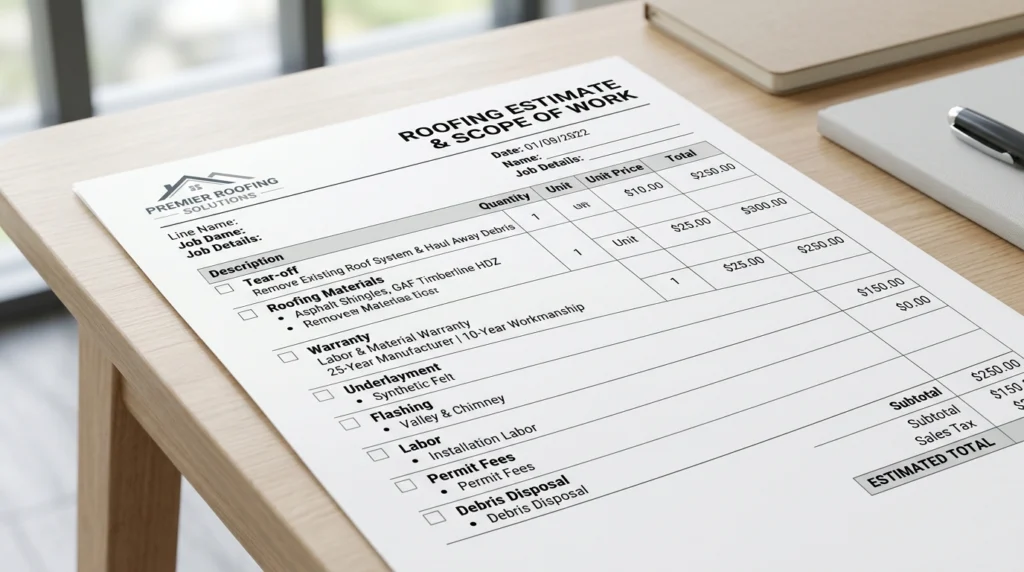
A complete, itemized roofing estimate breaks the job into clear sections. Each one should be specific, not vague, the way every Brian M. LeBlanc Roofing estimate is written.
Tear-Off and Disposal
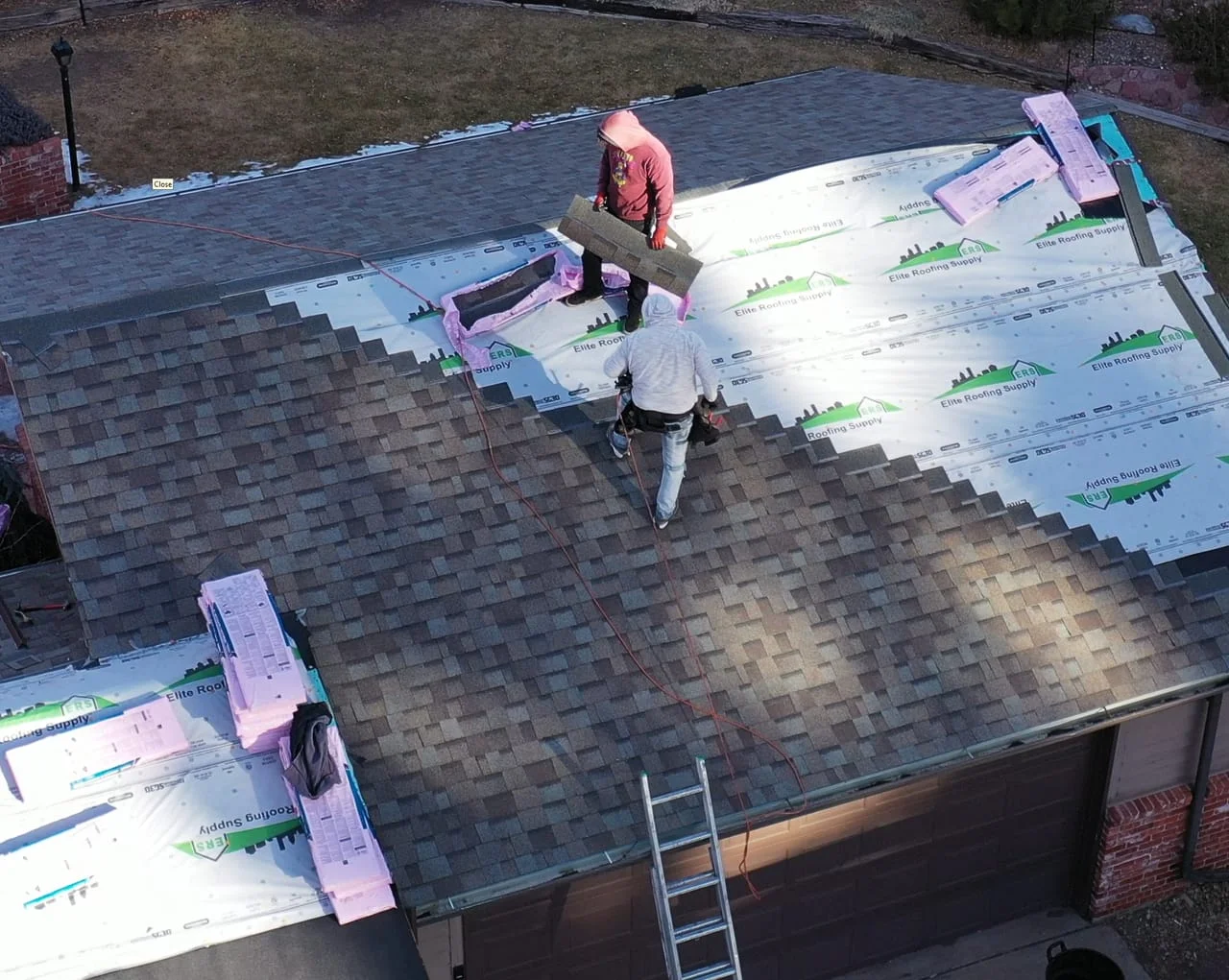
This line covers removing old roofing material and hauling debris away. Homes with two or three old layers cost more to strip, which is common on older roofing projects across the region.
Decking Inspection and Repair
Decking is the wood base under your shingles. A good estimate lists a per-sheet price for replacing any rotted sections, similar to how our roof repair team documents damage before starting work.
Underlayment
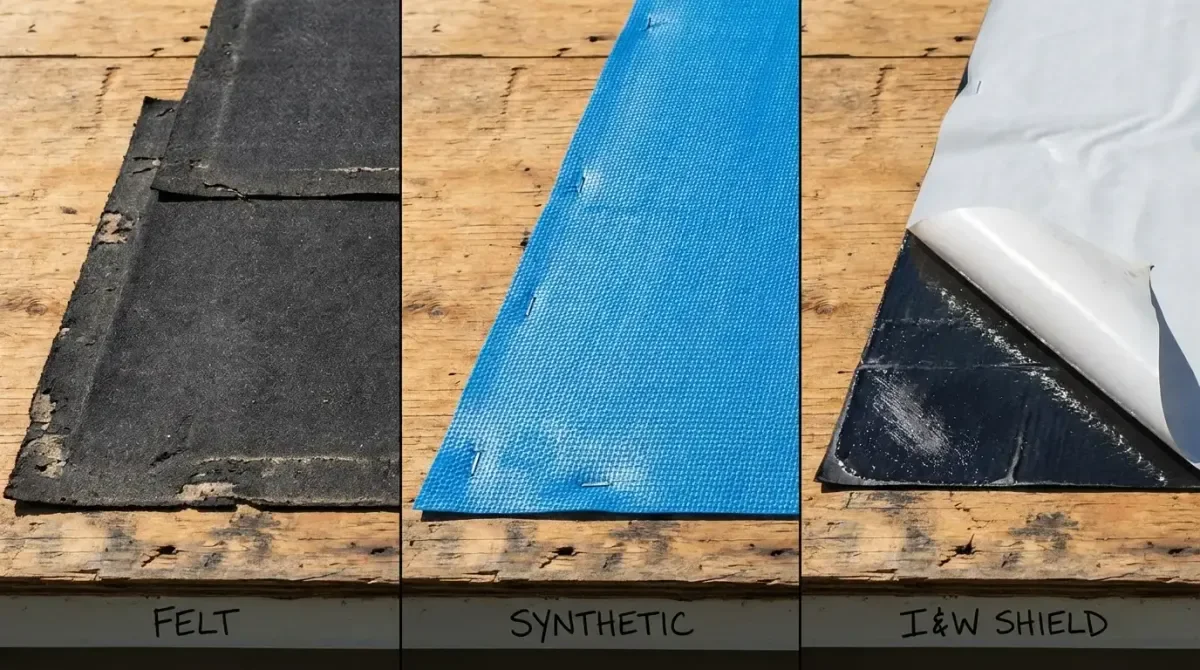
This water-resistant layer sits beneath the shingles. The estimate should name the underlayment type and note ice and water shield areas.
Shingles and Squares
This section names the shingle brand, line, and color. It should also state the quantity in squares, where one square equals 100 square feet, matching the GAF Master Elite roofing systems installed on every project.
Flashing and Pipe Boots
Flashing seals joints around chimneys and walls. Pipe boots seal around vents, and both are common sources of roof leaks when left unreplaced.
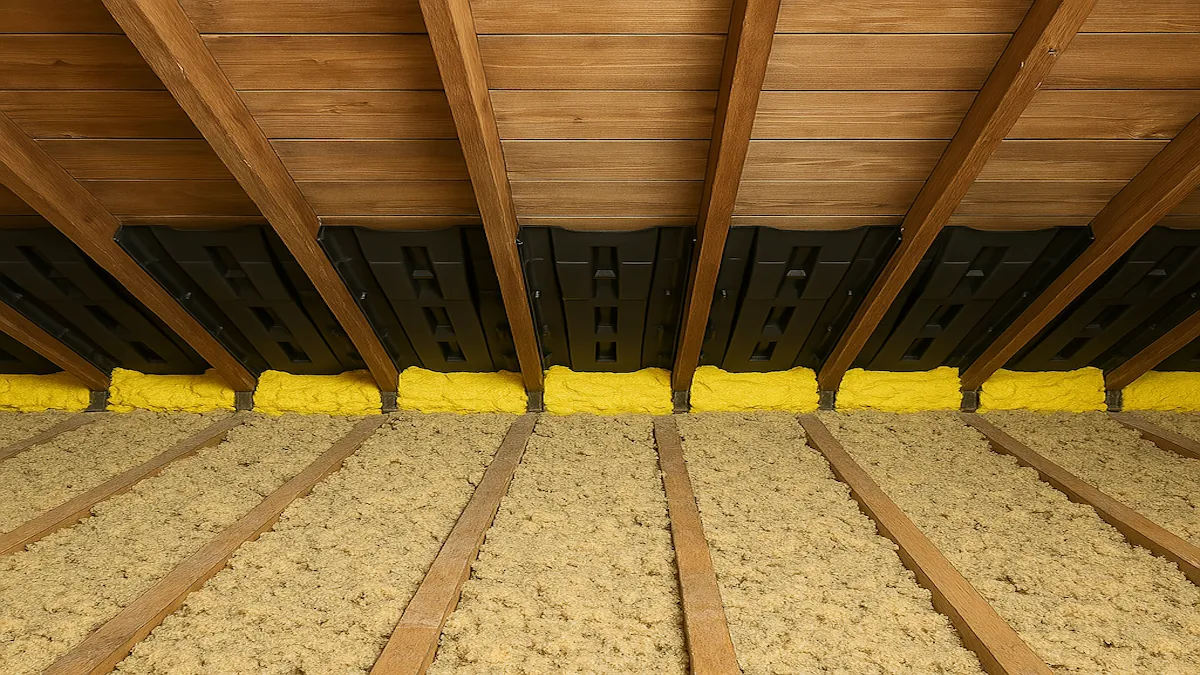
Ventilation
Proper attic ventilation prevents heat buildup and ice dams. The estimate should name the ventilation system being installed.
Starter Strips and Ridge Caps
These are specialized shingles used at roof edges and peaks. They should appear as their own line, not folded into the shingle total.
Permits
Massachusetts towns generally require a building permit for roof replacement. Pulling it should always be the contractor’s job, stated in writing.
Cleanup and Site Protection
Look for tarps to protect landscaping and a magnetic sweep for stray nails. This line protects your property during the job.
Payment Terms
This section lists the deposit, payment schedule, and final balance due date. Homeowners who need flexible financing options can ask about payment plans before signing.
Warranty Section
Two warranties should appear here. The manufacturer’s warranty covers material defects, while the workmanship warranty backs the installation itself.
Why Is One Roofing Quote Cheaper Than Another?
Price gaps usually come down to a handful of specific factors. Review each one before assuming a lower bid is a better deal.
- Material grade: Basic shingles cost less than architectural or designer lines.
- Warranty length: A longer workmanship warranty reflects added confidence and cost.
- Licensing and insurance: Fully licensed and insured crews cost more than uninsured labor.
- Scope gaps: Skipped flashing, permits, or pipe boots lower the price artificially, which is why our roof repair estimates list every item.
- Overhead: Established, insured companies carry costs that others may skip.
- Decking allowance: Some bids assume no repairs are needed; others plan for likely damage.
- Demand and reputation: Busier, established contractors may price differently than newer ones.
Roof Estimate Red Flags
Watch for these warning signs, and get a second opinion before signing anything you are unsure about.
- A single lump-sum price with no itemized breakdown
- Vague terms like “standard materials” or “as needed”
- No mention of who pulls the building permit
- Pressure to sign the same day for a special discount
- A bid dramatically lower than every other estimate received
- A request for full payment before work begins
- No proof of licensing or insurance when asked
- No written workmanship warranty

Cost Factors in Central Massachusetts and Southern New Hampshire
Several regional factors shape roofing prices beyond the basic material and labor costs.
- Roof size and pitch affect labor time and material overlap.
- Layers of old shingles increase tear-off cost.
- Decking condition, especially in older homes, can add repair cost.
- Ice and water shield is often needed for New England winters.
- Permit fees vary by town, including Leominster and Fitchburg.
- Roof features like chimneys and skylights add labor complexity.
A physical inspection is the only reliable way to get an accurate number for your home. You can schedule a physical inspection with Brian LeBlanc Roofing at no cost.
Why Choose Brian M. LeBlanc Roofing
Brian M. LeBlanc Roofing is a licensed, insured, GAF-certified roofing company based in Leominster, MA. We serve homeowners and businesses throughout Central Massachusetts and Southern New Hampshire, including Leominster, Fitchburg, Gardner, Lunenburg, Worcester, Marlborough, and surrounding communities.
Here is what separates us from general contractors and national chains:
- Comprehensive roof inspections: Every roofing project begins with a detailed inspection to identify leaks, storm damage, ventilation issues, flashing failures, and other roofing concerns before work begins.
- Dedicated project manager: Every customer is assigned a dedicated project manager who oversees the project from inspection through final walkthrough, providing clear communication and personalized recommendations.GAF-certified roofing expertise: Our team is trained and certified by GAF and follows manufacturer installation standards to build roofing systems designed for long-term performance in New England weather.
- Licensed and insured: We are fully licensed and insured, giving homeowners confidence that every roofing project meets professional and safety standards.
- Industry-leading warranty protection: We install complete GAF roofing systems backed by up to a 50-year limited manufacturer’s warranty and a 10-Year Superior Craftsmanship Guarantee on labor.
- Experienced roofing professionals: Brian M. LeBlanc Roofing has more than 20 years of construction experience, supported by a highly trained team committed to quality workmanship and customer satisfaction.
- Transparent roofing process: From the initial consultation to the final quality inspection, we keep homeowners informed with detailed proposals, project updates, and quality assurance at every step.
Conclusion
Knowing how to read a roofing estimate is the best way to protect your budget and your home on a major investment. Use the line items, red flags, and cost factors in this guide to compare any bid with confidence.
For more details, connect with us on Facebook, Instagram, YouTube, and Google Business Profile.
Contact us today to schedule your inspection or get a free quote.
Frequently Asked Questions
1. How do you read a roofing estimate?
Check that it lists tear-off, decking, underlayment, shingle brand and quantity, flashing, ventilation, permits, cleanup, payment terms, and both warranties as separate items. Compare those details across bids rather than the total price alone.
2. What should a roofing estimate include?
It should include tear-off and disposal, decking repair pricing, underlayment type, shingle brand and quantity, flashing and pipe boot work, ventilation, permits, cleanup, payment terms, and both warranty types.
3. Why is one roofing quote cheaper than another?
Price differences usually come from material grade, warranty length, crew licensing and insurance, and whether the scope includes permits and full flashing replacement.
4. What are common roof estimate red flags?
Watch for lump-sum pricing with no breakdown, vague material descriptions, no permit responsibility listed, pressure to sign fast, and bids far below every other quote.
5. What is the difference between a manufacturer's warranty and a workmanship warranty?
A manufacturer's warranty covers defects in the shingles or materials themselves. A workmanship warranty, provided by the contractor, covers installation errors like improper flashing.