
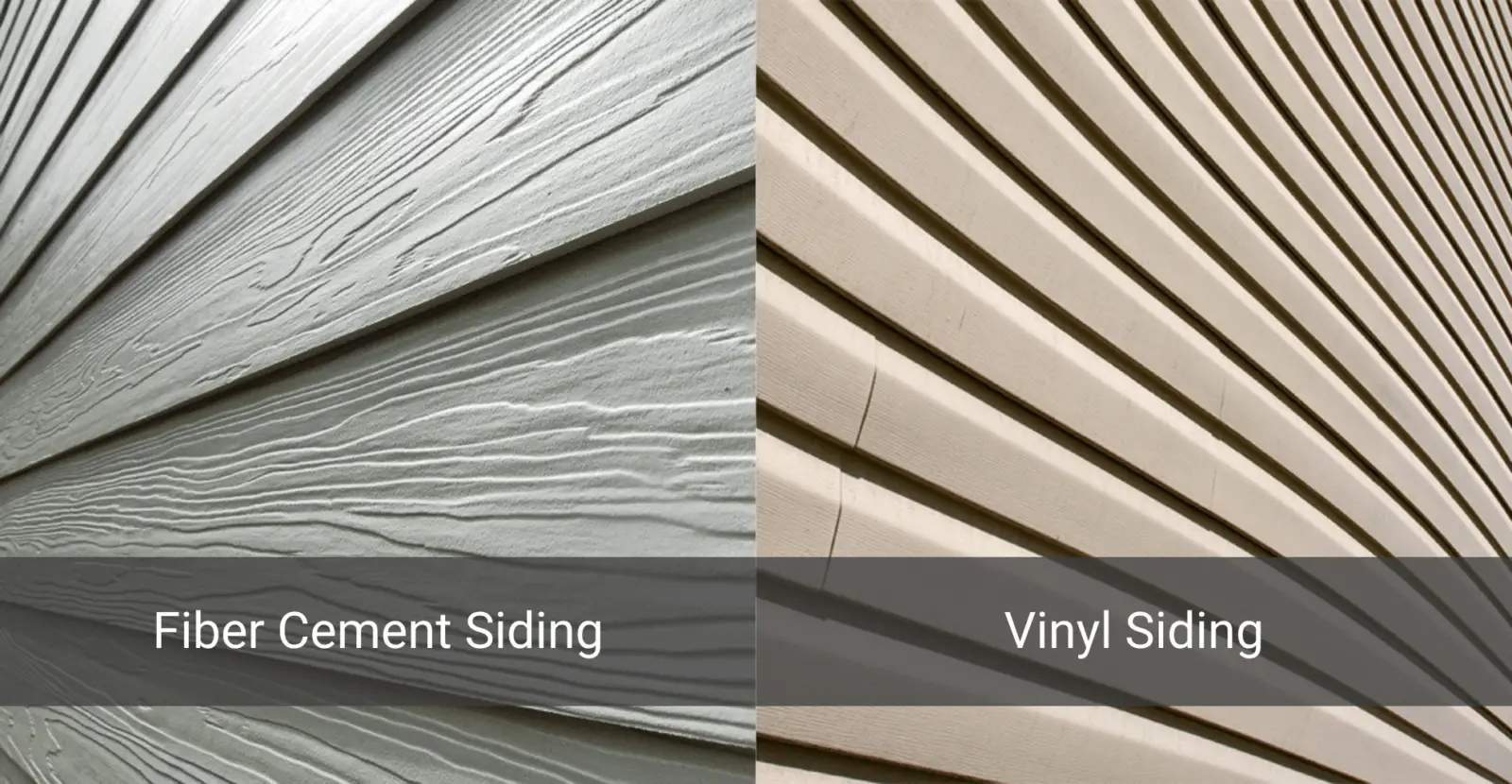
Fiber cement siding generally outlasts vinyl and handles Massachusetts winters better, but it costs more upfront. Vinyl siding costs less and needs almost no maintenance. Choose fiber cement for maximum durability and resale value. Choose vinyl for a lower budget and easier upkeep.
Choosing between vinyl vs fiber cement siding is one of the biggest decisions Massachusetts homeowners make. Both materials protect your home from harsh New England weather. This guide compares cost, lifespan, and maintenance so you can decide with confidence before requesting a siding replacement quote.
What Is the Difference Between Vinyl and Fiber Cement Siding?
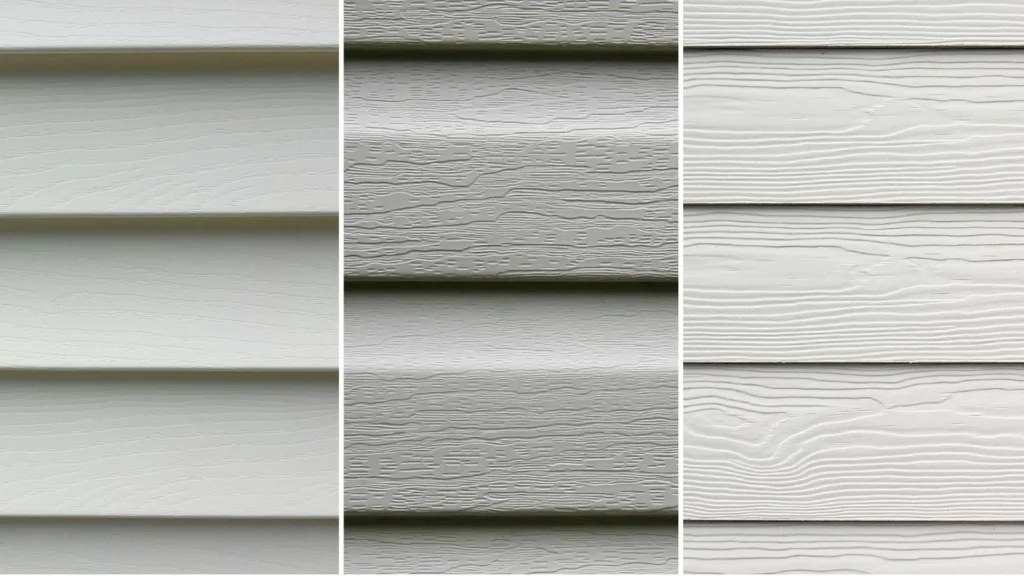
Vinyl siding is made from PVC plastic panels. Fiber cement siding is made from cement, sand, and cellulose fibers. This fundamental difference drives every comparison in the vinyl vs. fiber-cement siding debate.
Vinyl Siding Basics
Vinyl is lightweight and budget-friendly. The color runs through the panel, so it never needs painting. Insulated vinyl options add a foam backing for extra energy efficiency.
Fiber Cement Siding Basics
Fiber cement is heavier and more rigid than vinyl. It is often sold under brand names like James Hardie. It mimics painted wood without the rot risk, and if your current siding already shows damage, our siding repair team can assess it first.
Which Siding Lasts Longer: Vinyl or Fiber Cement?
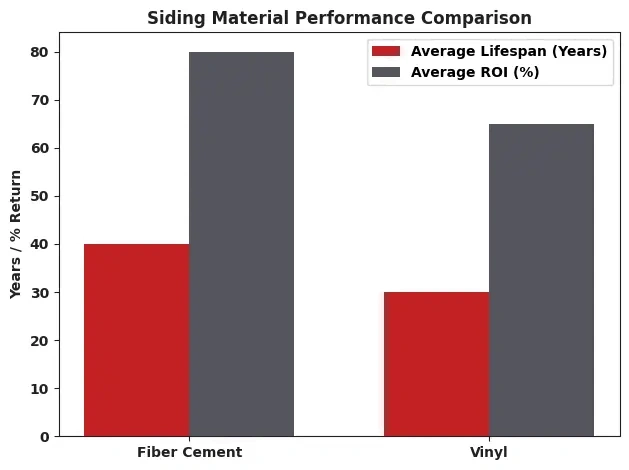
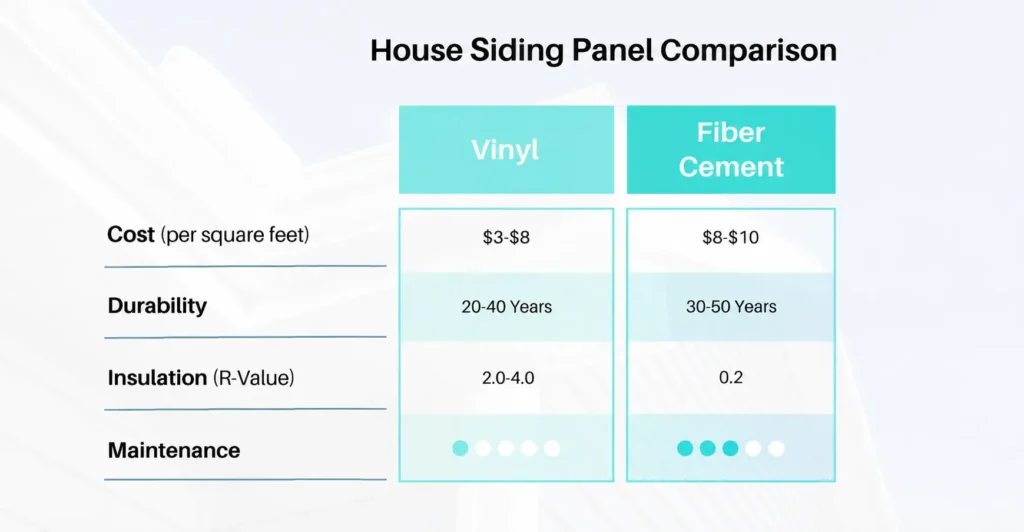
Fiber cement siding lasts 30 to 50 years with proper care. Vinyl siding typically lasts 20 to 30 years. Installation quality affects lifespan more than the material label.
Vinyl siding can crack in extreme cold if panels were installed too tightly. Fiber cement resists cracking, warping, and impact damage far better. This is why fiber cement usually wins the durability comparison.
Best Siding for Massachusetts Winters
Central Massachusetts winters bring repeated freeze-thaw cycles. That cycle stresses exterior materials more than steady cold ever could.
How Vinyl Performs in Winter
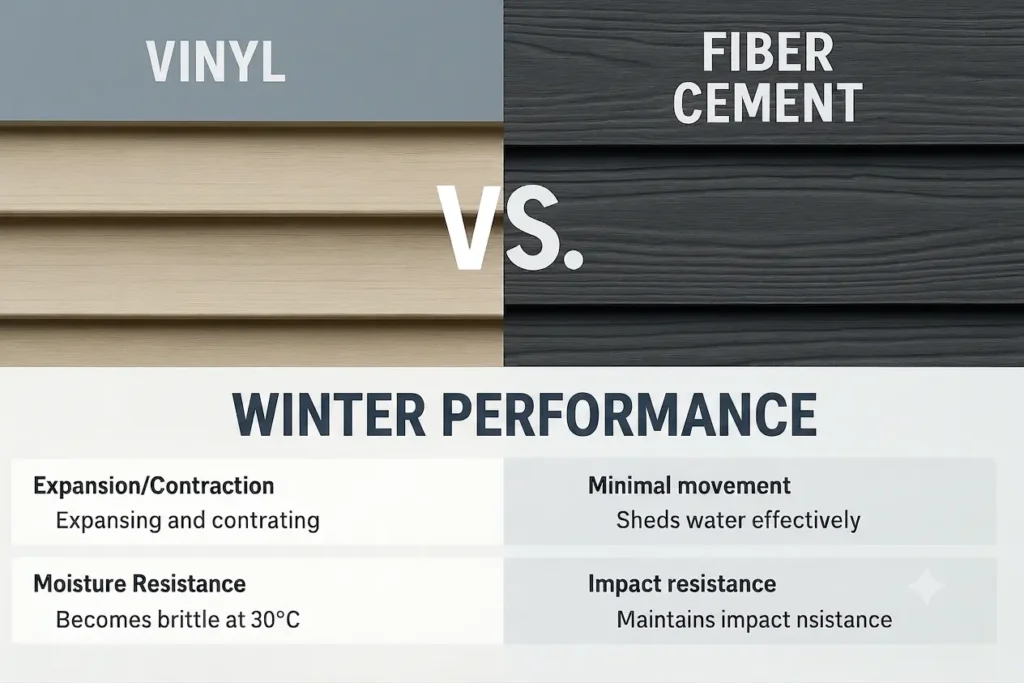
Vinyl resists moisture well. Extreme cold can make it brittle and prone to cracking on impact. Panels without proper expansion gaps may buckle during high temperature swings; the same freeze-thaw stress affects your roof too, so see our winter roof maintenance checklist for prevention tips.
How Fiber Cement Performs in Winter
Fiber cement stays rigid through freeze-thaw cycles. It does not expand or contract like vinyl. It is also non-combustible, which adds a safety benefit.
For homes in Fitchburg, Gardner, and Worcester County, fiber cement is often the stronger winter performer. Proper installation still matters more than the material choice alone.
James Hardie vs Vinyl Siding Cost
Cost is usually the deciding factor for most homeowners. Below are typical installed price ranges for a single-family home in Central Massachusetts.
- Vinyl siding installed: roughly $6 to $12 per square foot. A typical home runs $15,000 to $20,000 total.
- James Hardie fiber cement installed: roughly $9 to $16 per square foot. A typical home runs $20,000 to $28,000 total.
Why James Hardie Siding Costs More
- Fiber cement is heavier and slower to cut and fasten.
- Specialized blades and safety gear are required for cutting.
- Factory-finished ColorPlus panels cost more than standard vinyl colors.
- Trim and corner detail work takes longer to finish cleanly.
Always ask what is included in your quote. Our team provides a free, itemized estimate for every siding project. Tear-off, sheathing repair, and flashing scope all affect your final price.
Fiber Cement Siding Maintenance
Fiber cement siding needs periodic upkeep to protect its long lifespan. Follow this simple maintenance schedule.
- Every 6 to 12 months: rinse the siding with a hose and mild detergent.
- Every 1 to 2 years: inspect and re-caulk joints around windows and doors.
- Every 5 to 15 years: repaint or refinish the surface, depending on sun exposure.
South- and west-facing walls fade faster in direct sun. Check these elevations first during your annual inspection.
Vinyl Siding Maintenance
Vinyl siding maintenance is simple by comparison. A yearly rinse with soap and water is usually enough. Watch for loose or warped panels after major storms, and learn how to repair a hole in vinyl siding before small damage spreads.
Which Siding Should You Choose?
- Choose vinyl if you want the lowest upfront cost.
- Choose vinyl if you want minimal maintenance and a fast installation.
- Choose fiber cement if you want maximum durability through Massachusetts winters.
- Choose fiber cement if resale value and fire resistance matter most to you.
Why Choose Brian M. LeBlanc Roofing
Brian M. LeBlanc Roofing is a licensed, insured, GAF-certified roofing company based in Leominster, MA. We serve homeowners and businesses throughout Central Massachusetts and Southern New Hampshire, including Leominster, Fitchburg, Gardner, Lunenburg, Worcester, Marlborough, and surrounding communities.
Here is what separates us from general contractors and national chains:
- Comprehensive roof inspections: Every roofing project begins with a detailed inspection to identify leaks, storm damage, ventilation issues, flashing failures, and other roofing concerns before work begins.
- Dedicated project manager: Every customer is assigned a dedicated project manager who oversees the project from inspection through final walkthrough, providing clear communication and personalized recommendations.GAF-certified roofing expertise: Our team is trained and certified by GAF and follows manufacturer installation standards to build roofing systems designed for long-term performance in New England weather.
- Licensed and insured: We are fully licensed and insured, giving homeowners confidence that every roofing project meets professional and safety standards.
- Industry-leading warranty protection: We install complete GAF roofing systems backed by up to a 50-year limited manufacturer’s warranty and a 10-Year Superior Craftsmanship Guarantee on labor.
- Experienced roofing professionals: Brian M. LeBlanc Roofing has more than 20 years of construction experience, supported by a highly trained team committed to quality workmanship and customer satisfaction.
- Transparent roofing process: From the initial consultation to the final quality inspection, we keep homeowners informed with detailed proposals, project updates, and quality assurance at every step.
Conclusion
There is no single winner in the vinyl vs fiber cement siding decision. Vinyl offers a lower cost and easier upkeep. Fiber cement offers longer life and stronger winter performance. The right choice depends on your budget and priorities. Proper installation matters more than the material you pick.
For more details, check our Google Business Profile. It provides additional tips, photos, and helpful resources to guide homeowners through keeping their homes in top condition.
Contact us today to schedule your inspection or get a free quote.
Frequently Asked Questions
1. What is the difference between vinyl and fiber cement siding?
Vinyl siding is made from PVC plastic. Fiber cement siding is made from cement, sand, and cellulose fibers. Fiber cement is heavier, more durable, and costs more to install.
2. Which siding lasts longer, vinyl or fiber cement?
Fiber cement siding lasts longer, typically 30 to 50 years. Vinyl siding typically lasts 20 to 30 years. Installation quality affects both materials significantly.
3. Is fiber cement siding worth the extra cost?
Fiber cement siding is worth the cost for homeowners who want maximum durability and resale value. It resists fire, pests, and Massachusetts freeze-thaw cycles better than vinyl.
4. How much does vinyl siding cost installed in Massachusetts?
Vinyl siding typically costs six to twelve dollars per square foot installed. A full project usually runs fifteen thousand to twenty thousand dollars for an average home.
5. How much does James Hardie siding cost installed in Massachusetts?
James Hardie fiber cement siding typically costs nine to sixteen dollars per square foot installed. A full project usually runs twenty thousand to twenty-eight thousand dollars.