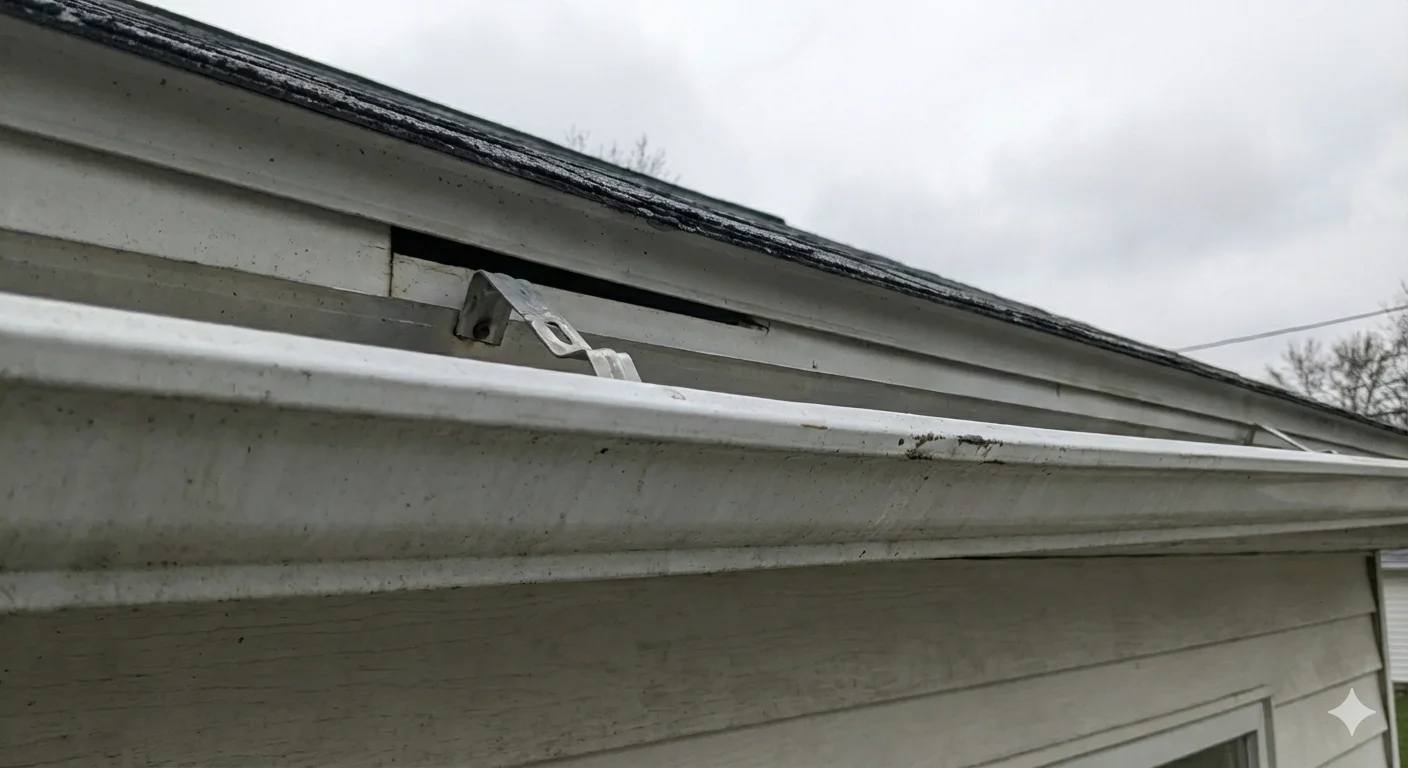

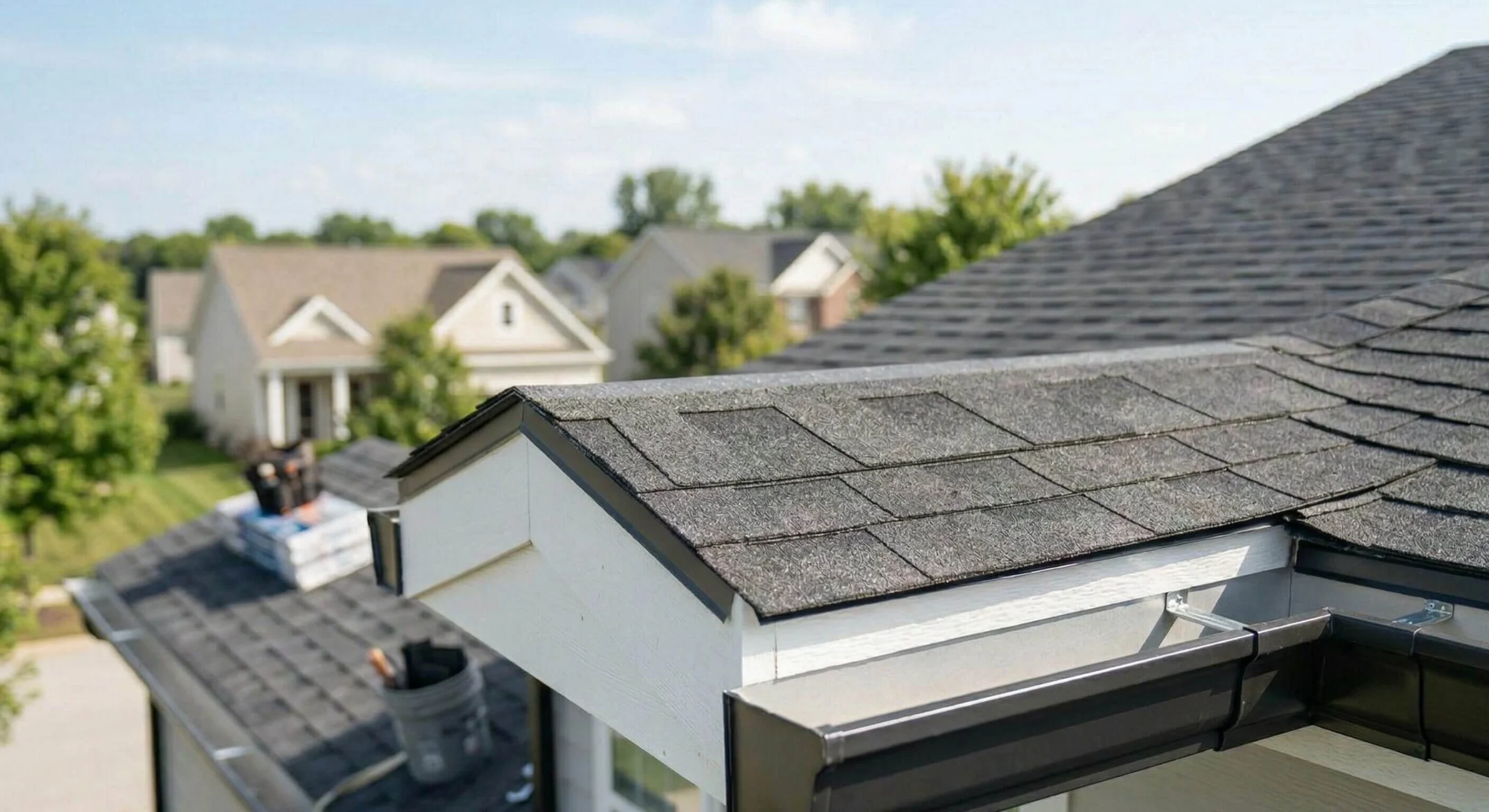
Drip edge is a metal flashing strip installed along roof eaves and rakes. It directs water into gutters and away from the fascia board. Yes, you need drip edge. Massachusetts building code requires it on every asphalt shingle roof.
Drip edge is a small metal strip, but it protects your entire roof edge. Many Leominster homeowners ask what a drip edge is and do you need it after a home inspection or storm. This guide gives you a clear, direct answer, plus every detail you need.
What Is Drip Edge?
Drip edge is a thin strip of metal flashing along your roof’s edges. It slides under the first row of shingles. The metal hangs slightly past the roof deck. This directs rainwater into the gutter instead of behind the fascia.
Without it, water clings to the shingle edge. Over time, this rots the fascia board and roof deck.
Drip Edge Materials
- Aluminum is the most common and affordable choice for Massachusetts roofs.
- Galvanized steel – more rigid, often used on steep or large roofs.
- Copper – a premium option for historic or high-end homes.
Drip Edge Profile Types
- Type C (L-Style): A simple 90-degree bend. Works well on lower-slope roofs.
- Type D (T-Style): A hemmed edge that pulls water further from the fascia. Recommended for most homes.
- Type F (Gutter Apron): A longer flange built to guide water straight into gutters.
Do You Need Drip Edge? Massachusetts Code Requirements
Yes, drip edge is required by code on every new roof in Massachusetts. This answer is a drip edge required by code for most Leominster homeowners.
The 2021 International Residential Code, Section R905.2.8.5, requires drip edge at eaves and gables. Massachusetts has adopted this code statewide.
Key Installation Requirements
- Drip edge must extend at least 1/4 inch below the roof sheathing.
- It must extend back at least 2 inches onto the roof deck.
- Adjacent pieces must overlap by a minimum of 2 inches.
- Nails must be spaced 12 inches apart or closer.
- At eaves, the drip edge goes under the underlayment. At rakes, it goes over it.
Exceptions to the Rule
- Homes with pre-bent aluminum fascia that already sheds water.
- Certain rake molding designs are built to serve the same purpose.
Outside these cases, any roof replacement in Central Massachusetts needs a drip edge. A licensed roofer includes it in every estimate.
Drip Edge vs. Gutter Apron: What's the Difference?
This comparison answers the drip edge vs gutter apron question, a common point of confusion for homeowners. A gutter apron is technically a type of drip edge. It’s simply built for one specific job.
Standard Drip Edge
- Installed at both the eaves and rakes.
- Shorter flange, focused on protecting the fascia.
- Required by code on every shingle roof.
Gutter Apron (Type F)
- Installed only at the eaves, above the gutter line.
- Longer flange that directs water into the gutter trough.
- Useful for older homes with shifted fascia or gutters.
Bottom line: all gutter aprons are drip edge, but not all drip edge is a gutter apron.
Signs of Missing or Failed Drip Edge
Here are the clearest signs of a missing or failed drip edge to check for at home.
- Water streaks running down the fascia board.
- Soft or spongy fascia and soffit wood.
- Peeling paint near the roofline.
- Rust spots or gaps in the existing metal drip edge.
- Pests entering through the attic or eaves.
- Water pooling at the foundation near the roof corners.
- Recurring ice dams every winter season.
Notice any of these? Have a local roofer inspect your roof’s edge soon. Small drip edge repairs cost far less than fascia or deck repairs.
Drip Edge Installation Cost
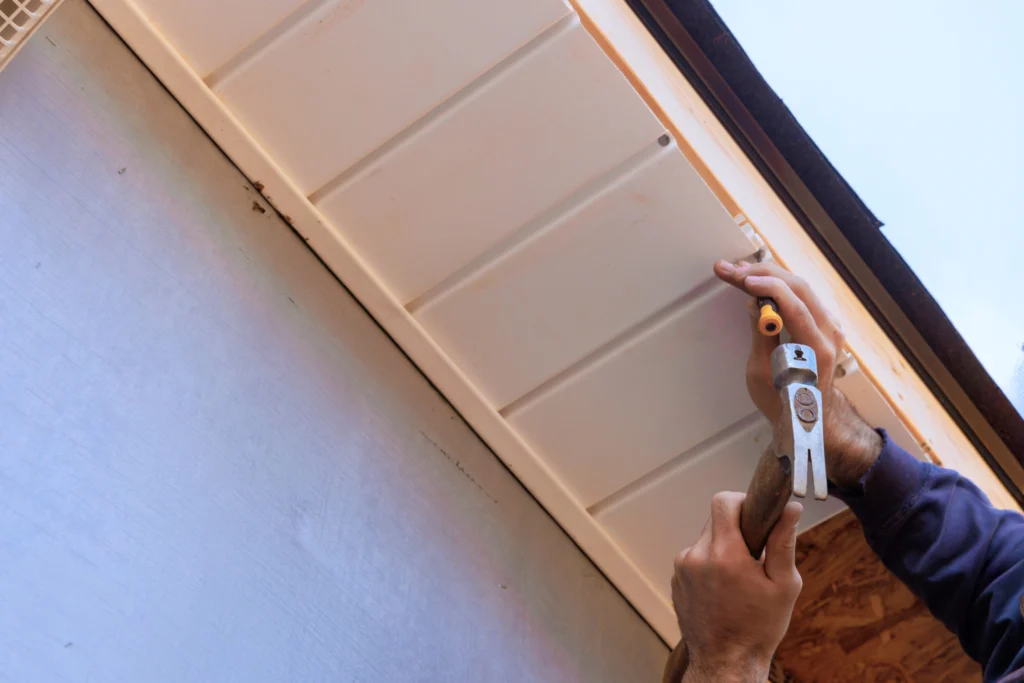
Homeowners often ask about drip edge installation cost before scheduling repairs or a full replacement.
Typical Price Ranges
- Standalone drip edge replacement: about $6 to $12 per linear foot.
- Bundled with a full roof replacement: minimal added cost since crews are already on the roofline.
- Gutter apron upgrade: slightly higher due to precise fit near gutters.
What Affects Your Price
- Material choice: aluminum, steel, or copper.
- Roof size, pitch, and number of roof lines.
- Roof accessibility and ladder access.
- Existing fascia or soffit damage.
- Whether it’s a repair or a full-length replacement.
The most cost-effective time to add drip edge is during a scheduled roof replacement. Waiting until rot sets in costs more.
Why Choose Brian M. LeBlanc Roofing
Brian M. LeBlanc Roofing is a licensed, insured, GAF-certified roofing company based in Leominster, MA. We serve homeowners and businesses throughout Central Massachusetts and Southern New Hampshire, including Leominster, Fitchburg, Gardner, Lunenburg, Worcester, Marlborough, and surrounding communities.
Here is what separates us from general contractors and national chains:
- Comprehensive roof inspections: Every roofing project begins with a detailed inspection to identify leaks, storm damage, ventilation issues, flashing failures, and other roofing concerns before work begins.
- Dedicated project manager: Every customer is assigned a dedicated project manager who oversees the project from inspection through final walkthrough, providing clear communication and personalized recommendations.GAF-certified roofing expertise: Our team is trained and certified by GAF and follows manufacturer installation standards to build roofing systems designed for long-term performance in New England weather.
- Licensed and insured: We are fully licensed and insured, giving homeowners confidence that every roofing project meets professional and safety standards.
- Industry-leading warranty protection: We install complete GAF roofing systems backed by up to a 50-year limited manufacturer’s warranty and a 10-Year Superior Craftsmanship Guarantee on labor.
- Experienced roofing professionals: Brian M. LeBlanc Roofing has more than 20 years of construction experience, supported by a highly trained team committed to quality workmanship and customer satisfaction.
- Transparent roofing process: From the initial consultation to the final quality inspection, we keep homeowners informed with detailed proposals, project updates, and quality assurance every step of the way.
Conclusion
So, what is a drip edge, and do you need it? It’s required flashing, and yes, your Massachusetts roof needs it.
Skipping drip edge risks fascia rot, pest entry, and costly repairs down the road. Installing it correctly protects your entire home. If you’re in Leominster or nearby, Brian M. LeBlanc Roofing offers free estimates. We’ll inspect your drip edge and roofline at no cost.
For more details, check our Google Business Profile. It provides additional tips, photos, and helpful resources to guide homeowners through keeping their homes in top condition.
Contact us today to schedule your inspection or get a free quote.
Frequently Asked Questions
1. What is a drip edge, and do you need it?
Drip edge is metal flashing along your roof's edges. Yes, you need it, since the Massachusetts code requires it on every shingle roof.
2. Is a drip edge required by code in Massachusetts?
Yes. IRC Section R905.2.8.5 requires a drip edge at eaves and gables on all asphalt shingle roofs.
3. What is the difference between a drip edge and a gutter apron?
A gutter apron is a type of drip edge with a longer flange. It directs water straight into the gutter trough.
4. What are the signs of a missing or failed drip edge?
Common signs include fascia staining, rotting wood, peeling paint, rust, pests, and recurring ice dams.
5. How much does drip edge installation cost?
Standalone drip edge typically costs $6 to $12 per linear foot. Bundling it with a roof replacement lowers the added cost.