
Short Answer: To prevent ice dams in Carlisle, MA, keep your roof cold. Seal attic air leaks. Add insulation to about R-49 to R-60. Balance soffit and ridge ventilation. Install ice and water shield at the eaves. Rake snow after storms. Use heat cables only as a backup.
Learning how to prevent ice dams in Carlisle, MA starts with one fact: ice dams are a heat problem, not an ice problem. Warm attic air melts roof snow, and the water refreezes at the eaves. This guide from Brian M. LeBlanc Roofing shows the steps that break that cycle.
What Is an Ice Dam, and Why Do Ice Dams Form in Carlisle?
An ice dam is a ridge of ice along the roof edge or inside the gutters. It blocks melting snow from draining. Trapped water then backs up under the shingles and into your home.
Carlisle sits in Middlesex County, where winter temperatures swing above and below freezing. Those swings feed the melt-and-refreeze cycle that builds ice dams.
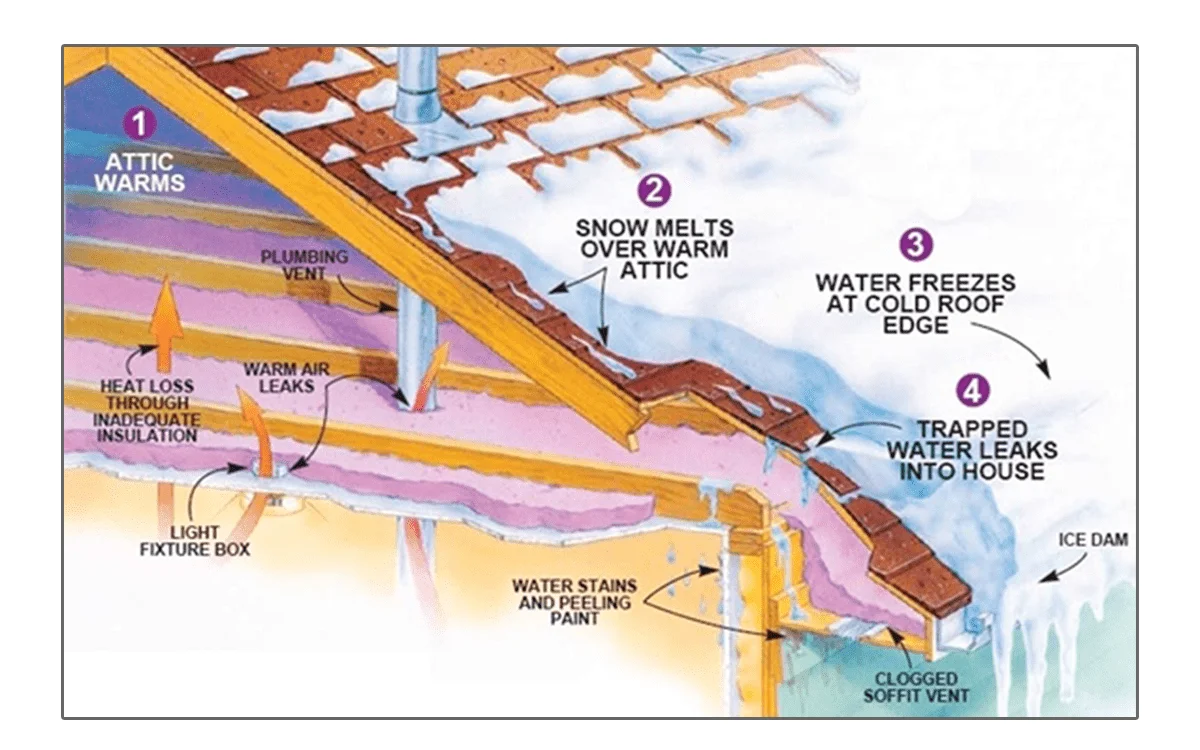
How an Ice Dam Forms, Step by Step
- Warm air from the living space leaks into the attic.
- The roof deck warms, and snow on the upper roof melts.
- Meltwater runs down to the cold eave overhang.
- The water refreezes and forms a ridge of ice.
- New meltwater pools behind the ridge and seeps under the shingles.
Gutters and shingles play a part, but heat loss is the real engine. That is why chipping ice off every winter never fixes the cause.
Why New England Roofs Are at Risk
- Freeze-thaw swings: daytime melting and nighttime freezing repeat all winter.
- Snow cover: a thick layer acts like a blanket and traps heat against the roof deck.
- Older homes: many have thinner insulation and more air leaks.
- Complex rooflines: valleys, dormers, additions, and cathedral ceilings are harder to keep cold.
Knowing these risks helps you prevent ice dams before the first snow.
Warning Signs You Already Have a Problem
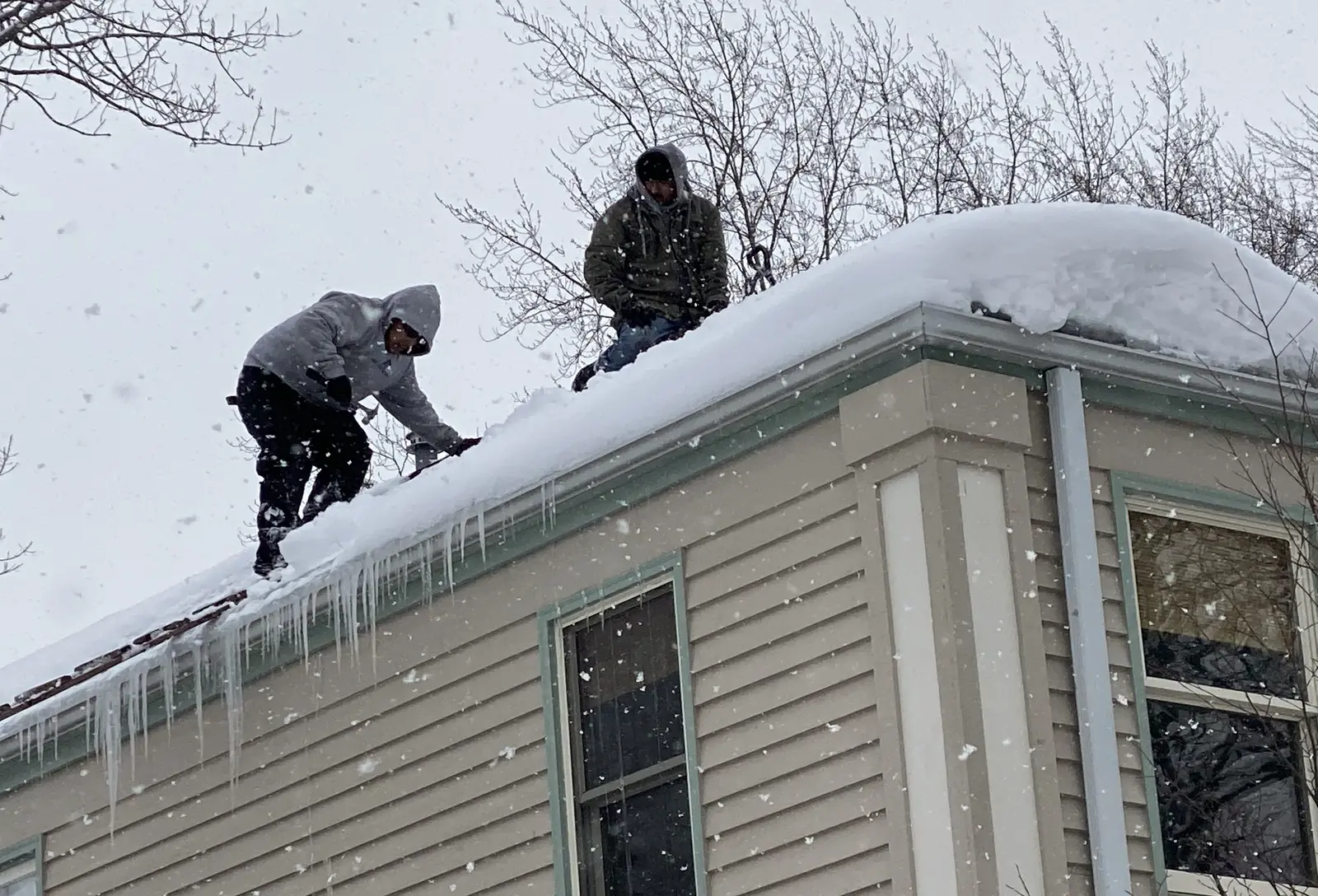
- A thick ridge of ice along the roof edge or inside the gutters
- A continuous row of large icicles, or icicles forming from the soffit or siding
- Water stains or peeling paint on ceilings near exterior walls
- Damp insulation, or frost on the underside of the roof deck
- Gutters that sag or pull away from the house after a storm
A few small icicles are normal. A full row of large icicles along the eave often signals heat loss above. Spot these signs early to prevent ice dams from causing damage.
How to Prevent Ice Dams on Your Roof: The 5-Step Fix
The goal is simple: keep the roof cold, and keep water out if ice still forms. These steps work together, so follow them in order.
Step 1: Seal Air Leaks to Prevent Ice Dams
Most heat escapes through gaps, not through the insulation itself. Sealing those gaps is the cheapest fix, so do it first. Check these spots:
- Attic hatch or pull-down stairs: add weatherstripping and an insulated cover.
- Recessed can lights: use fire-rated covers or sealed fixtures.
- Plumbing stacks and wire holes: fill gaps with caulk or foam.
- Chimney chase: use a fire-rated sealant made for high heat, never regular foam.
- Bath fans and ducts: seal the connections and vent them outdoors, not into the attic.
Step 2: Add Attic Insulation to Prevent Ice Dams
Once the leaks are sealed, insulation slows the heat that remains. In cold climates like ours, many pros aim for about R-49 to R-60 on the attic floor. That is roughly 14 to 20 inches of loose-fill insulation, depending on the material.
Mass Save, offered through Massachusetts utilities, provides home energy assessments. Ask which insulation incentives are available now. Never let insulation block the soffit vents at the eaves. Use baffles to keep that airflow path open.
Step 3: Balance Attic Ventilation to Prevent Ice Dams
Ventilation removes the heat that still gets through. It is your second line of defense. The next section explains how it works.
Step 4: Install Ice and Water Shield at the Eaves
Ice and water shield is a sticky, waterproof membrane that goes under the shingles. It does not stop ice dams from forming. It stops the water behind the dam from reaching your roof deck.
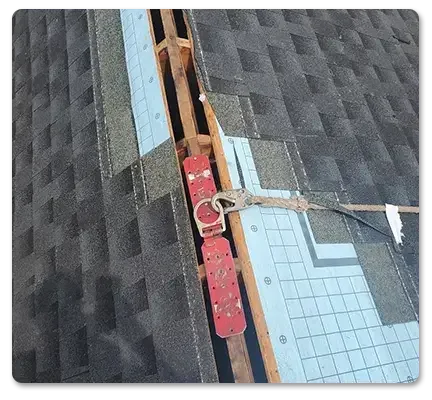
Model building codes call for an ice barrier at the eaves in areas with a history of ice dams. It should extend at least 24 inches inside the exterior wall line. Our team follows manufacturer installation standards and Massachusetts building codes.
The easiest time to add this membrane is during a roof replacement, when the old shingles are already off.
Step 5: Remove Snow Safely to Prevent Ice Dams
Clear the first three to four feet of snow from the roof edge right after a storm. This gives melting snow less to feed an ice dam.
- Use a long-handled roof rake from the ground, with a plastic or nylon blade.
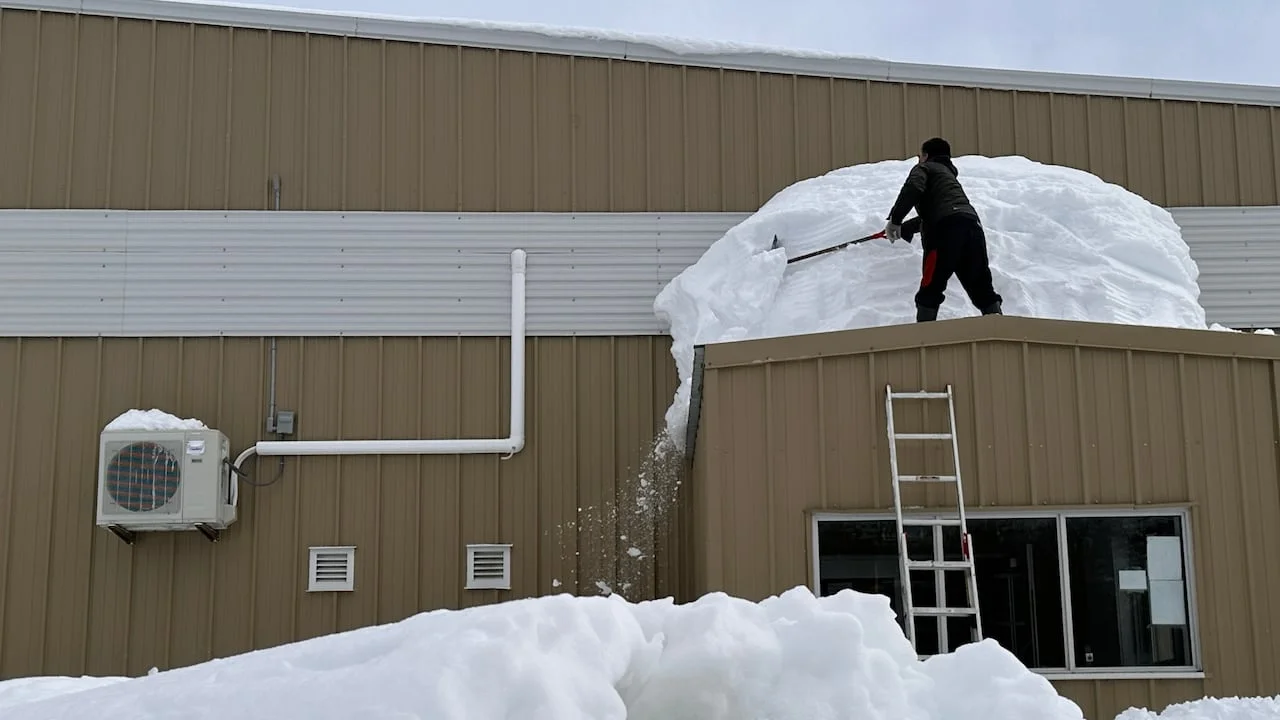
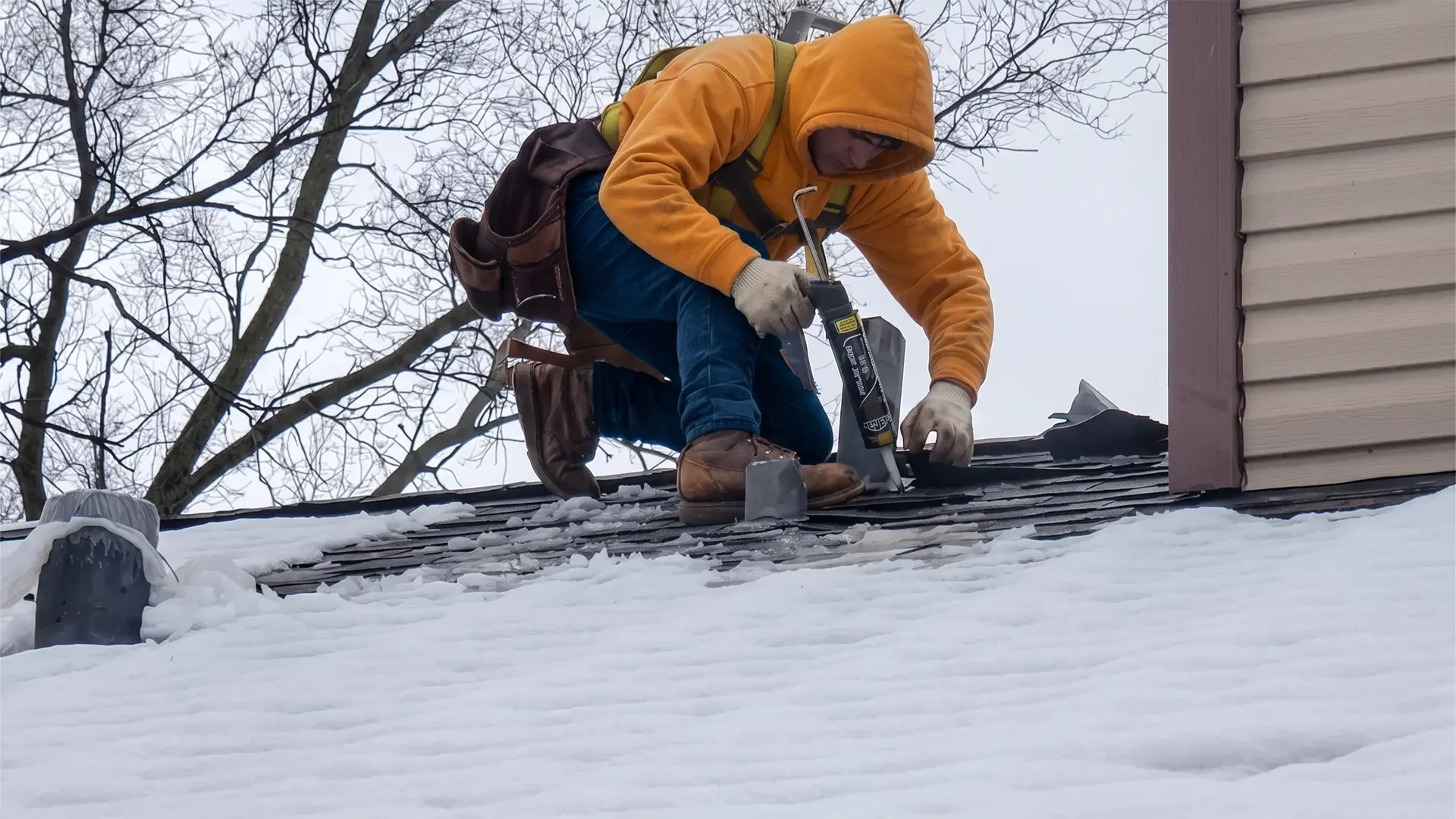
- Never climb onto a snowy or icy roof, or lean a ladder on an icy eave.
- Hire a professional for steep, tall, or complex roofs.
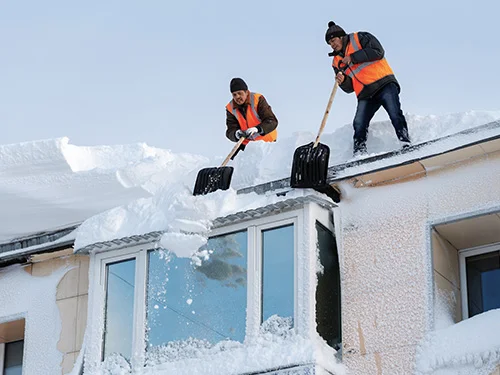
Brian M. LeBlanc Roofing also offers roof snow removal.
Attic Ventilation and Ice Dams: How Much Airflow Does Your Roof Need?
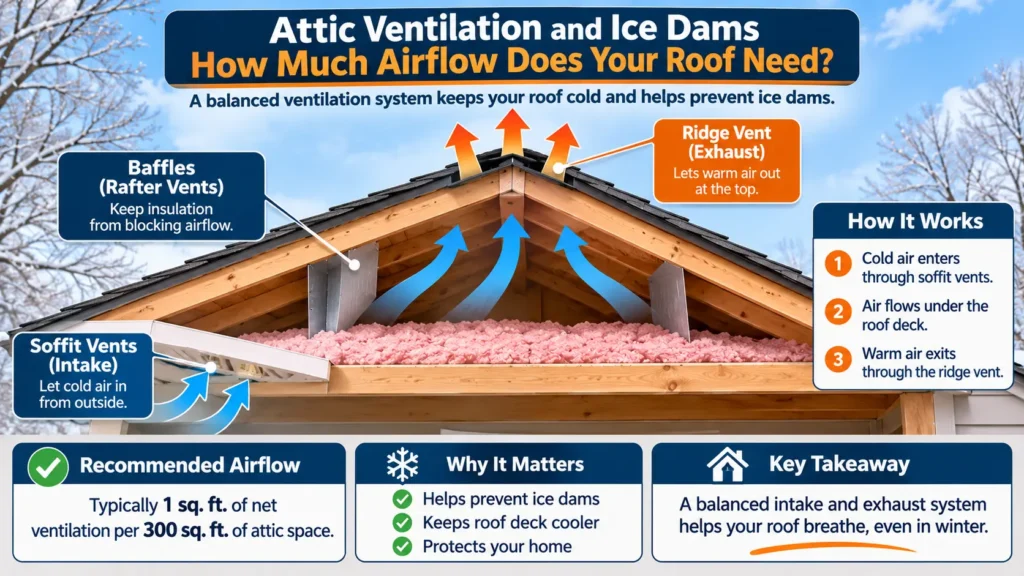
Even a sealed, insulated attic picks up some heat. Good ventilation helps prevent ice dams by flushing that heat out before it warms the roof deck. Think of it as a steady flow of cold air under your roof.
How Intake and Exhaust Work
A balanced system has two parts that work as a team:
- Intake: soffit vents along the eaves let cold outside air in at the bottom.
- Exhaust: a continuous ridge vent along the peak lets warm air out at the top.
Cold air enters low, slides under the roof deck, and exits at the ridge. Baffles, also called rafter vents, keep insulation from clogging the intake path.
How Much Ventilation Is Enough?
A common code rule is 1 square foot of net free vent area for every 150 square feet of attic floor. Some codes allow 1 for every 300 when the system is balanced and meets certain conditions. Roughly half the vent area should be low intake and half high exhaust.
The math depends on your vent products and attic size. A roofer should calculate it instead of guessing.
Common Ventilation Mistakes
- Blocked soffit vents: insulation, paint, or debris can seal them shut.
- No baffles: insulation slides forward and chokes off the intake.
- Mixed vent types: ridge vents combined with gable vents or powered fans can pull air from the wrong place.
- Too much exhaust, too little intake: the attic cannot pull in air it has no way to get.
- Fans venting into the attic: bath fans and dryer vents dump heat and moisture where you do not want them.
Some roofs are harder to vent. Cathedral ceilings, dormers, skylights, and low-slope sections leave little room for airflow. These roofs often need a custom plan after an attic inspection.
How to Prevent Ice Dams in Gutters
Gutters rarely cause ice dams, but they can make them worse. A clogged gutter holds water that freezes into a solid block. The weight of that ice can pull the gutter off the house.
- Clean in late fall: clear gutters and downspouts after the leaves drop to help prevent ice dams. If mature trees surround your home, plan a second cleaning.
- Check the pitch: gutters should slope gently toward the downspouts.
- Keep downspouts open: make sure they drain freely and carry water away from the foundation.
- Consider gutter guards: they reduce debris, though ice can still form on top of them.
- Add heat cables as a backup: self-regulating cables run in a zigzag along the roof edge and through gutters and downspouts.
- Install cables safely: follow the manufacturer’s instructions and plug them into a GFCI outlet.
Heat cables treat the symptom. If warm air still pours into your attic, the cause remains. Fix air leaks, insulation, and ventilation first.
What Not to Do When You Have an Ice Dam
When water drips through the ceiling, it is tempting to grab a tool. Please don’t.
- Do not chip ice with a hammer, axe, or shovel. It cracks shingles and strips granules.
- Do not throw rock salt on the roof. It works poorly in deep cold, can stain shingles, corrodes metal, and harms plants.
- Do not climb onto an icy roof. The risk is not worth it.
If a dam is already leaking, move belongings out of the way and let the water drain. Then call a pro. Professionals often use low-pressure steam, which melts ice without pounding the shingles.
Roof Ventilation Cost and Other Ice Dam Prevention Costs
Every roof is different, and we do not quote a price without seeing your home. These published national ranges show what it can cost to prevent ice dams. They are not a quote for your roof.
Roof Ventilation Cost
Angi’s 2025 data lists a typical ridge vent installation at about $300 to $650. Soffit vents run roughly $315 to $465, and gable vents about $60 to $150 each. Your total depends on these factors:
- Roof length and pitch: a longer ridge or a steeper roof takes more time.
- Vent type and count: your attic’s airflow math sets how many vents you need.
- Soffit work: cutting new intake vents or clearing blocked ones adds labor.
- Baffles and attic access: tight, cramped attics cost more to work in.
- Timing: adding a ridge vent during a roof replacement is usually more efficient, since the roof is already open.
Ice Dam Removal Cost
One insurance-industry guide puts removal at about $1,200 per event on average. Large dams on complex roofs can top $4,000.
The Boston Globe reported in February 2026 that one Massachusetts company charged $1,000 per hour with a two-hour minimum. Prices can climb when demand spikes, which is another reason to prepare in the fall.
Insulation and Air Sealing Cost
Angi lists attic insulation at about $1,700 to $2,500 as a national average. Air sealing and insulation fix the root cause, so they often offer the best long-term value.
Heat Cable Cost
Published 2025 cost guides put heat cable installation at about $500 to $4,600, depending on roof size and layout. Cables also add to your electric bill while they run.
Why Choose Brian M. LeBlanc Roofing
Brian M. LeBlanc Roofing is a licensed, insured, GAF-certified roofing company based in Leominster, MA. We serve homeowners and businesses throughout Central Massachusetts and Southern New Hampshire, including Leominster, Fitchburg, Gardner, Lunenburg, Worcester, Marlborough, and surrounding communities.
Here is what separates us from general contractors and national chains:
- Comprehensive roof inspections: Every roofing project begins with a detailed inspection to identify leaks, storm damage, ventilation issues, flashing failures, and other roofing concerns before work begins.
- Dedicated project manager: Every customer is assigned a dedicated project manager who oversees the project from inspection through final walkthrough, providing clear communication and personalized recommendations.GAF-certified roofing expertise: Our team is trained and certified by GAF and follows manufacturer installation standards to build roofing systems designed for long-term performance in New England weather.
- Licensed and insured: We are fully licensed and insured, giving homeowners confidence that every roofing project meets professional and safety standards.
- Industry-leading warranty protection: We install complete GAF roofing systems backed by up to a 50-year limited manufacturer’s warranty and a 10-Year Superior Craftsmanship Guarantee on labor.
- Experienced roofing professionals: Brian M. LeBlanc Roofing has more than 20 years of construction experience, supported by a highly trained team committed to quality workmanship and customer satisfaction.
- Transparent roofing process: From the initial consultation to the final quality inspection, we keep homeowners informed with detailed proposals, project updates, and quality assurance at every step.
Conclusion: Fix the Heat, Not Just the Ice
Ice dams look like an ice problem, but heat causes them. Seal the leaks, add insulation, balance ventilation, protect the eaves, and keep gutters flowing. Do these five things to prevent ice dams all winter.
For more details, connect with us on Facebook, Instagram, YouTube, and Google Business Profile.
Contact us today to schedule your inspection or get a free quote.
FAQ: How to Prevent Ice Dams in Carlisle, MA
1. How do you prevent ice dams in Carlisle, MA?
Keep your roof cold. Seal attic air leaks, add insulation, balance ventilation, install ice and water shield at the eaves, and rake snow after storms. Heat cables are a backup, not a cure.
2. What causes ice dams on a roof?
Heat escaping into the attic melts snow on the roof. The water runs to the cold eave and refreezes. Over time, the ice builds into a dam.
3. Does attic ventilation prevent ice dams?
Yes, it helps prevent ice dams. Balanced soffit intake and ridge exhaust vents flush out warm air before it melts roof snow. Ventilation works best with sealed air leaks and good insulation.
4. How much does roof ventilation cost?
Angi's 2025 data lists ridge vents at about $300 to $650 and soffit vents at about $315 to $465. Your cost depends on roof length, vent type, and attic access. Ask for a written estimate.
5. How do you prevent ice dams in gutters?
Clean gutters and downspouts in late fall, check the pitch, and keep downspouts draining. Heat cables can keep a channel open at problem spots. Fix attic heat loss first.