Quick answer: If your roof leaks in winter, stay away from wet electrical fixtures first. Contain the water with buckets, move your belongings, and take photos. Never climb onto the icy roof. Call a licensed emergency roofer, then report the damage to your insurer.
A roof leak in the middle of a Massachusetts winter feels like an emergency, because it is one. This guide explains what to do if your roof leaks in winter in Harvard, MA, one step at a time. Keep it open on your phone while you work.
Your First 24 Hours, Hour by Hour
Use this timeline as your checklist. You do not need to be perfect. Just keep moving through the steps in order.
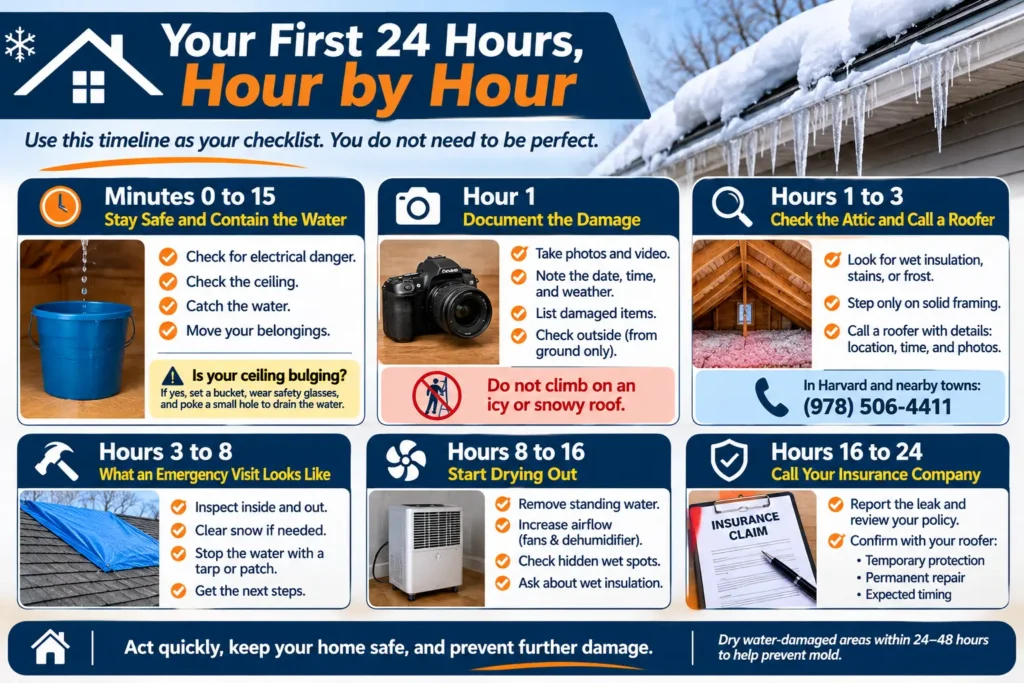
Minutes 0 to 15: Stay Safe and Contain the Water
Safety comes before everything else. Do these four things first:
- Check for electrical danger. Do not touch fixtures, fans, or outlets near dripping water. If you can reach the breaker panel without standing in water, shut off power to that room. If you are unsure, stay out and call an electrician.
- Check the ceiling. A sagging ceiling can collapse. Keep people and pets out of that room. If it falls or wires show, leave the house and call 911.
- Catch the water. Place buckets or large bins under each drip. Lay towels or plastic sheeting around them.
- Move your belongings. Pull furniture, rugs, and electronics away from the wet area. Cover anything you cannot move with plastic.
Is your ceiling bulging?
A bulge is a pocket of trapped water. If it sits away from lights and wiring, set a bucket underneath. Wear safety glasses, stand to the side, and poke one small hole at the lowest point so the water drains into the bucket.

Hour 1: Document the Damage
Take proof before you clean up. Photos help your insurance claim and help your roofer find the source.
- Take wide shots and close-ups of the ceiling, walls, and floors.
- Record a short video that shows the drip and its location in the room.
- Write down the date, the time, and the weather when you first noticed the leak.
- List damaged items and keep receipts for anything you buy to contain the leak.
Then check the outside from the ground only. Look for icicles, a thick ridge of ice along the edge, missing shingles, and sagging gutters. If you are unsure what you see, read the warning signs of ice dam roof damage.
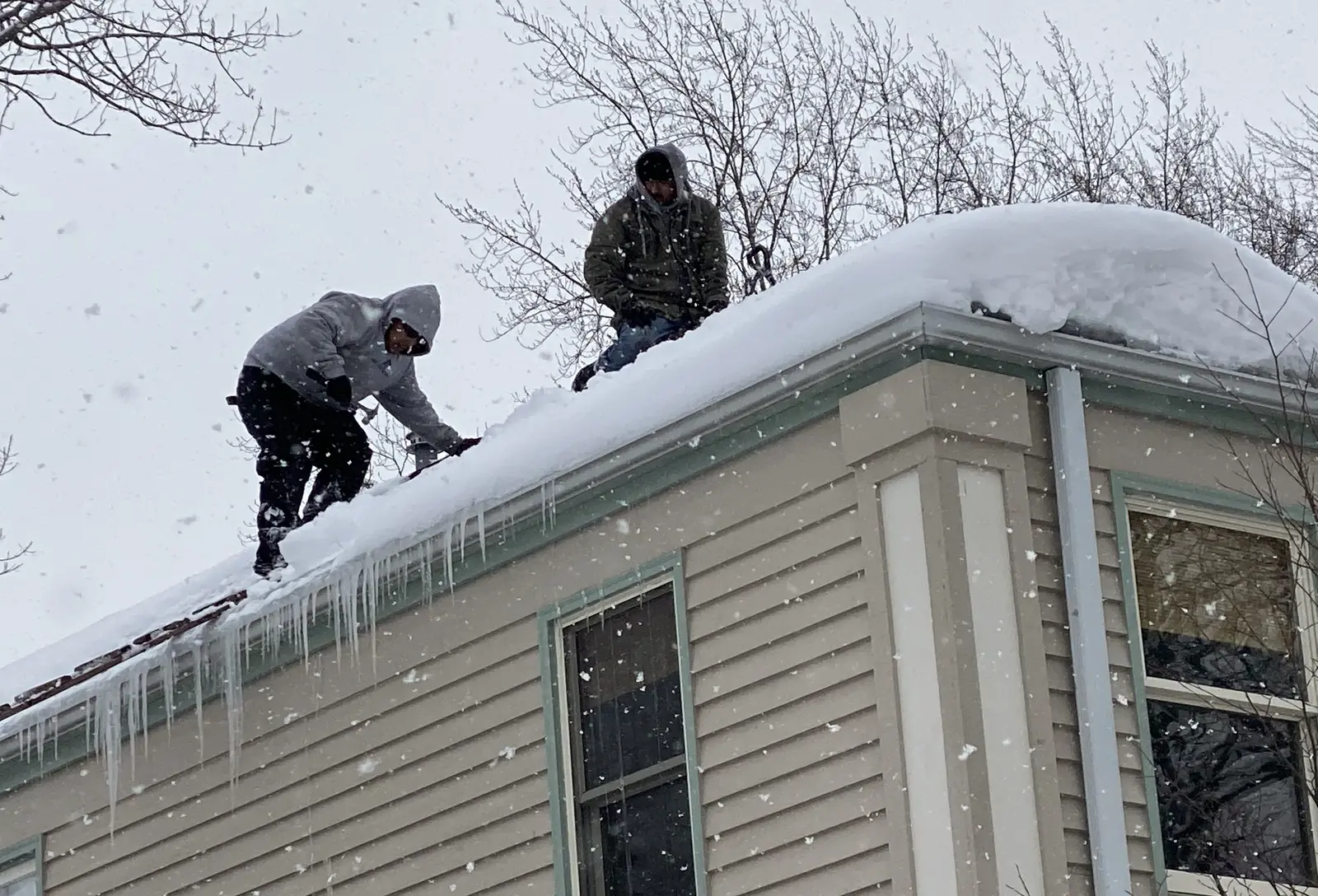
Do not climb onto an icy or snowy roof.
Massachusetts safety guidance warns homeowners not to get on the roof or chip at ice dams. Falling ice can cause serious injury. For safer options, see how to remove snow from a roof safely.
Hours 1 to 3: Check the Attic and Call a Roofer
If the attic is safe to reach, bring a flashlight and look for:
- Wet or flattened insulation
- Dark stains or drips on the roof deck, rafters, or nails
- Frost on nail tips or on the underside of the roof boards
- Daylight coming through anywhere
Step only on solid framing, never on bare insulation. If you see water near wiring, back out right away.
Now call a roofer that offers 24/7 emergency roof repair. Have these details ready:
- Where the leak is and when it started
- How much snow or ice is on the roof
- The approximate age and type of your roof
- The photos and video you just took
In Harvard and nearby towns, you can reach Brian M. LeBlanc Roofing at (978) 506-4411. The team is available around the clock for active leaks and storm damage.
Hours 3 to 8: What an Emergency Roof Visit Looks Like
A good roofer does not just patch the wet spot. Here is what to expect during a roof repair appointment:
- Inspect inside and out. The crew checks the attic, ceiling, roof surface, flashing, vents, and gutters to find the true entry point.
- Clear a safe work area. Professional roof snow removal may be needed on the problem area first.
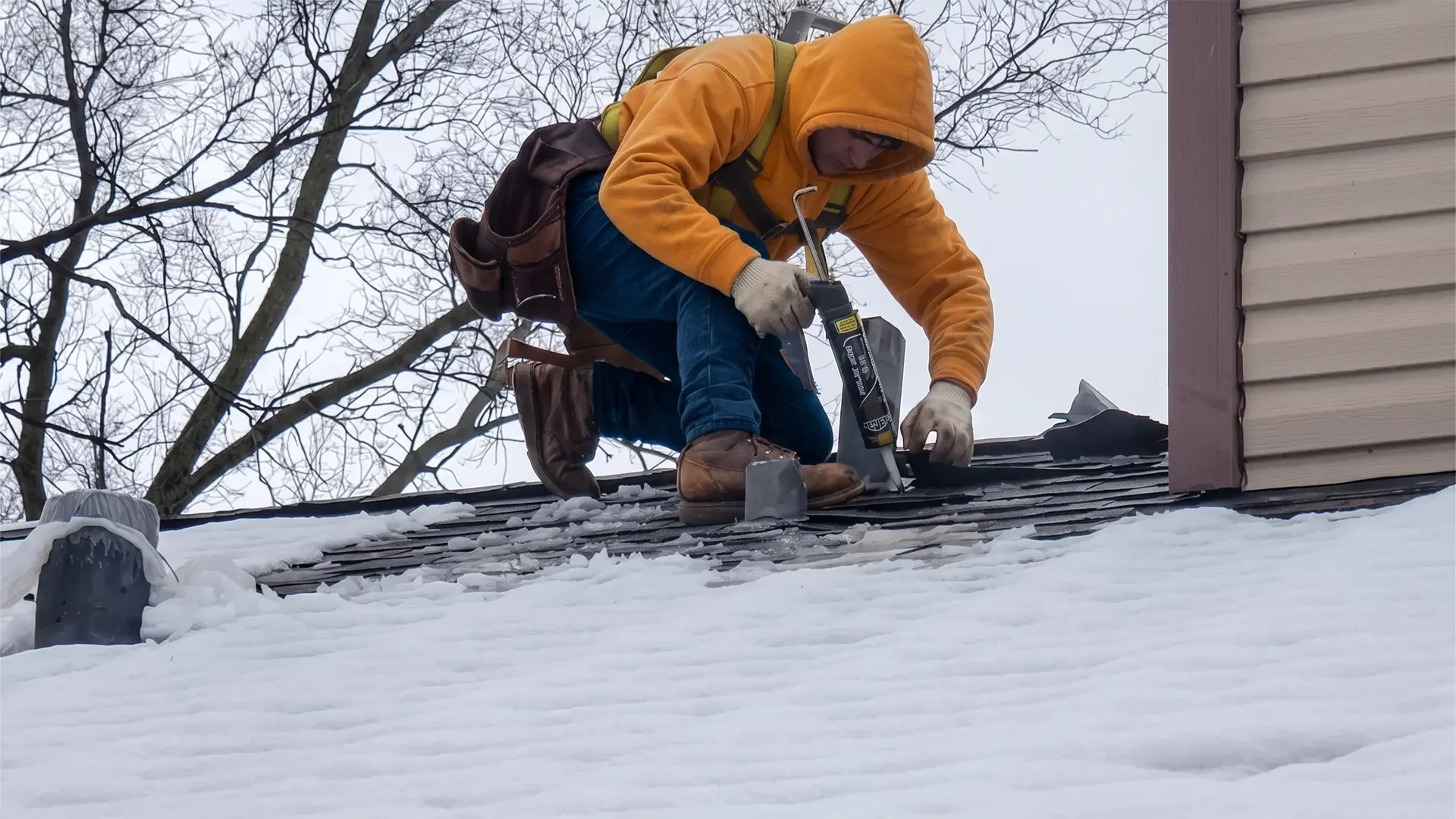
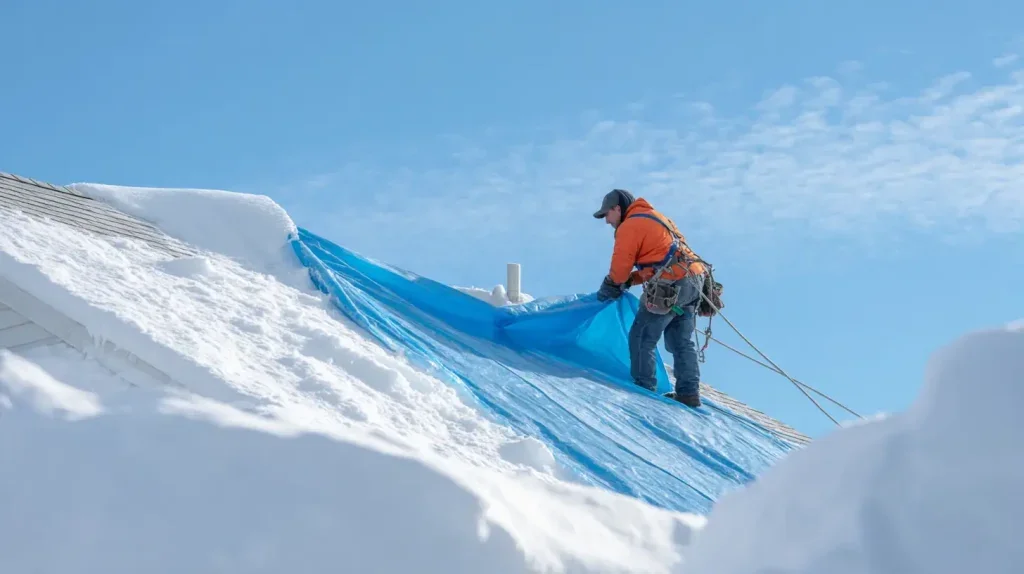
- Stop the water. This usually means an emergency tarp or a temporary patch. A tarp sheds water past the eaves and buys time. It is not the final fix.
- Explain the next steps. You should hear what was found, what was done, and what a permanent repair involves.
Why can some repairs not be finished in January? Asphalt shingles rely on a heat-activated sealing strip. In very cold weather, that strip may not bond well.
Shingle makers generally want temperatures near or above 40°F for proper sealing. So winter emergency work focuses on keeping your home dry. Permanent repairs and full roof replacements often wait for milder days.
Thick ice dams are different. Specialists can melt them with low-pressure steam. That is safer for shingles and gutters than chipping the ice.
Hours 8 to 16: Start Drying Out
- Remove standing water. Mop up, empty buckets before they overflow, and swap out soaked towels.
- Increase airflow. Run fans and a dehumidifier in the affected rooms. Open closet doors on exterior walls.
- Look for hidden wet spots. Check upstairs ceilings, closets, and window corners. Soft or crumbly drywall means water has been there a while.
- Ask about wet insulation. Soaked insulation dries slowly in cold weather. Ask your roofer whether it should be removed.
Speed matters here. The EPA advises drying water-damaged areas within 24 to 48 hours to prevent mold. A musty smell is often the first warning sign.
Hours 16 to 24: Call Your Insurance Company
Report the leak to your homeowners insurer, and read your policy or ask your agent. Many standard policies may cover sudden interior water damage from an ice dam. They often do not pay to remove the ice or snow itself. For more detail, read our guide on whether home insurance covers roof damage in Ayer, MA.
Before the day ends, confirm three things with your roofer:
- What temporary protection is in place, and how long it should last
- What the permanent repair will be
- When that repair can safely happen, given the forecast
Why Do Roofs Leak in Winter in Harvard, MA?
Central Massachusetts winters are hard on roofs. Heavy snow, deep cold, and fast warm-ups push water into places it should never go. Most winter leaks come from a short list of causes.
Ice Dams
Ice dams are the top cause of winter leaks in Massachusetts. Here is how one forms:
- Heat escapes from your living space into the attic and warms the roof deck.
- Snow on the upper roof melts and runs downhill.
- The eave stays colder because no warm attic sits beneath it. The water freezes there.
- Ice builds into a ridge. New meltwater pools behind it and backs up under the shingles.
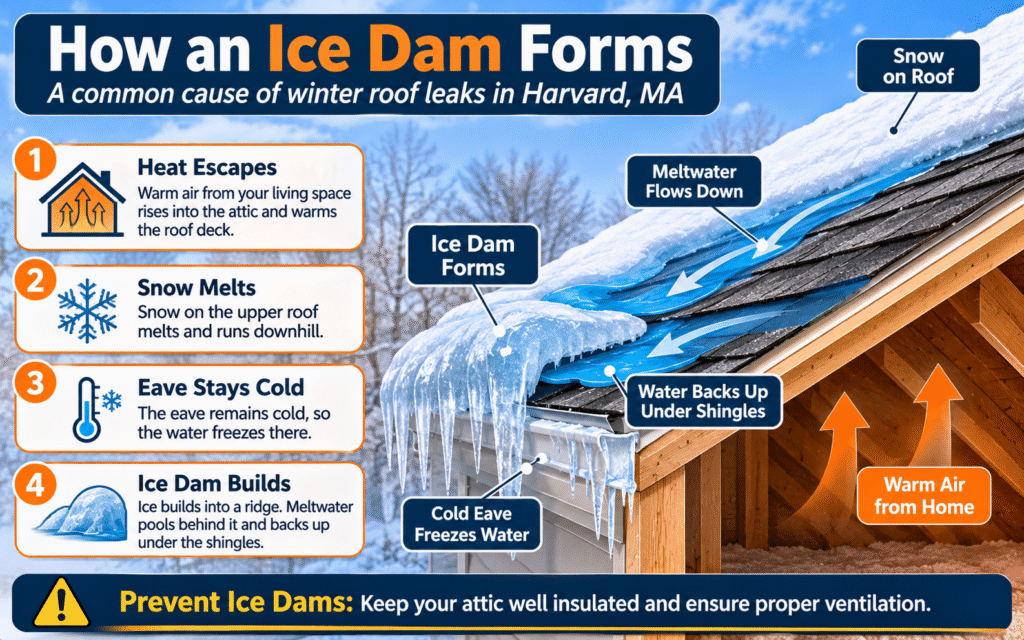
Shingles shed water that flows downhill. They are not built to hold back a pool of water. So the water finds a gap, and the leak shows up inside.
Why Does a Roof Leak When the Snow Melts?
Snow acts like a slow sponge. It holds water against the roof for days. Then one warm afternoon turns it all to liquid at once.
Every weak spot gets tested at that moment. Common weak spots include:
- Cracked, curled, or missing shingles
- Loose or rusted flashing around chimneys, skylights, vents, and valleys
- Exposed or backed-out nails
- Worn sealant around pipes and roof vents
- Clogged gutters that push water back under the first row of shingles
Water often travels along rafters before it drips through your ceiling. The stain may sit several feet from the real opening. That is why a roofer checks the roof and the attic together.
Our post on roof damage after snow melt in Massachusetts covers prevention.
Attic Condensation: The Leak That Is Not a Leak
Sometimes the roof is fine. Warm, moist air rises into a cold attic and turns to water on the roof deck. You may see damp insulation or frost on nails with no actual roof leak.
The fix is different in that case. It usually means better ventilation and air sealing, not a roof patch. Compare your roof ventilation options before you decide.
What Should You Never Do When Your Roof Leaks in Winter?
- Do not climb onto the roof. Ice, snow, and hidden edges make falls far too easy.
- Do not chip at ice dams. Hammers and shovels can crack shingles and tear flashing.
- Do not ignore a small stain. A tiny spot in January can become a soft ceiling by March. See how a small roof leak gets worse by spring.
- Do not wait for spring. Cold weather slows drying, so moisture lingers in the attic and walls. Here is what happens if you delay roof repair.
- Do not hire the first stranger who knocks after a storm. Choose a licensed local company you can verify.
How to Fix a Roof Leak in Winter: Temporary vs. Permanent
You stop the water first. Then you fix the cause when conditions allow. These are two separate jobs.
Temporary Fixes for Winter Emergencies
- Emergency tarping over the leaking section
- Removing snow or ice from the problem area
- Small, careful patches at damaged shingles or flashing when conditions allow
- Containing water inside with buckets, plastic, and a controlled drainage path
Permanent Fixes When the Weather Allows
- Replacing cracked, missing, or curled shingles
- Resealing or replacing flashing around chimneys, skylights, vents, and valleys
- Repairing rotted roof decking
- Adding ice and water shield, a sticky waterproof membrane, at eaves and valleys
- Improving attic insulation, air sealing, and ventilation to stop ice dams
That last item matters most. If heat keeps leaking into the attic, the ice dam returns every cold snap. A lasting fix often pairs roof repair with attic upgrades.
How Much Does Emergency Roof Repair Cost?
No reputable roofer can give a real price without seeing your roof. Emergency roof repair cost depends on the situation. These factors matter most:
- Size of the damaged area. A small tarp costs less than a large section of roof.
- Roof height and pitch. Steep, tall roofs take more crew time and safety gear.
- Snow and ice load. Heavy snow and thick ice must be cleared before work starts. See our roof snow removal cost guide for Townsend, MA.
- What failed. A few shingles, a chimney flashing, and rotted decking are very different repairs.
- Time of the call. After-hours and storm-surge calls often cost more across the industry.
- Interior damage. Wet insulation and drywall add to the total, apart from the roof work.
- Temporary versus permanent work. An emergency tarp now usually means a second repair later.
Prices can climb fast in a storm. The Boston Globe reported that one Minnesota-based ice dam company charged $1,000 per hour with a two-hour minimum during a surge in calls. That is one national company, not a typical rate for every roofer.
How to keep costs under control:
- Call at the first sign of a leak, not after the ceiling fails.
- Ask for a written, itemized estimate that separates emergency work from permanent repairs.
- Ask whether the temporary fix is credited toward the final repair.
- Keep every photo and receipt for your insurance claim.
How to Choose an Emergency Roofer Near Me in Harvard, MA
When water is coming in, the first search result is tempting. For a longer checklist, see how to choose a roofing contractor. A few quick questions protect you:
- Are you licensed and insured in Massachusetts? Ask for the Home Improvement Contractor and construction supervisor license numbers.
- Do you offer true 24/7 emergency service? Some companies answer only during business hours.
- Will you inspect both the roof and the attic? This is how a roofer finds the real source.
- Can you explain what is temporary and what is permanent? You should never be surprised later.
- Will you give me a written, itemized estimate? Vague quotes lead to surprise charges.
- Do you back your work with a warranty? Ask about both materials and labor.
Why Choose Brian M. LeBlanc Roofing
Brian M. LeBlanc Roofing is a licensed, insured, GAF-certified roofing company based in Leominster, MA. We serve homeowners and businesses throughout Central Massachusetts and Southern New Hampshire, including Leominster, Fitchburg, Gardner, Lunenburg, Worcester, Marlborough, and surrounding communities.
Here is what separates us from general contractors and national chains:
- Comprehensive roof inspections: Every roofing project begins with a detailed inspection to identify leaks, storm damage, ventilation issues, flashing failures, and other roofing concerns before work begins.
- Dedicated project manager: Every customer is assigned a dedicated project manager who oversees the project from inspection through final walkthrough, providing clear communication and personalized recommendations.GAF-certified roofing expertise: Our team is trained and certified by GAF and follows manufacturer installation standards to build roofing systems designed for long-term performance in New England weather.
- Licensed and insured: We are fully licensed and insured, giving homeowners confidence that every roofing project meets professional and safety standards.
- Industry-leading warranty protection: We install complete GAF roofing systems backed by up to a 50-year limited manufacturer’s warranty and a 10-Year Superior Craftsmanship Guarantee on labor.
- Experienced roofing professionals: Brian M. LeBlanc Roofing has more than 20 years of construction experience, supported by a highly trained team committed to quality workmanship and customer satisfaction.
- Transparent roofing process: From the initial consultation to the final quality inspection, we keep homeowners informed with detailed proposals, project updates, and quality assurance at every step.
Conclusion: Stay Calm, Stay Safe, and Act Early
Protect your family first, contain the water, and document the damage. Then have a licensed roofer find the true source of the leak. Not ready to call? You can request a free estimate online.
For more details, connect with us on Facebook, Instagram, YouTube, and Google Business Profile.
Contact us today to schedule your inspection or get a free quote.
Frequently Asked Questions About Winter Roof Leaks
1. What should I do first if my roof leaks in winter?
Stay away from wet electrical fixtures and shut off power to that room if you can do it safely. Place buckets under drips, move belongings, and take photos. Then call a licensed roofer with 24/7 emergency service, and do not climb onto the roof.
2. Is a winter roof leak an emergency?
Yes, treat it as urgent. Cold weather slows drying, so water lingers in your attic and walls. Active dripping, a bulging ceiling, or water near electrical fixtures needs attention right away.
3. Can a roof be repaired in freezing weather?
Emergency repairs usually can. Tarping, snow and ice removal, and careful patching are all possible. Many permanent repairs and full replacements are better done when temperatures let shingles seal properly.
4. How do I fix a roof leak in winter?
Stop the water first with interior containment and a professional emergency tarp or patch. Then schedule a permanent repair when the weather allows. A roofer should also check the attic, because insulation and ventilation problems often cause the leak.
5. Why does my roof leak when the snow melts?
Snow holds water against the roof, then releases it all at once during a warm spell. That exposes weak spots like damaged shingles, loose flashing, or ice dams that back water up under the roofing.