
Repair your gutters when damage is isolated, the metal is straight, and the system is under 15 years old. Replace them when failures appear in three or more places, the system is 20-plus years old, or the fascia board behind it has rotted.
Every Leominster homeowner faces the same question eventually. Water is escaping somewhere, and the gutter repair vs replacement decision comes down to cost and timing. Get it wrong, and you either waste thousands or pay for the same fix four times. This guide gives you a clear way to decide.
What You'll Learn
- The three-question test that settles most decisions in five minutes
- Nine signs you need new gutters, plus four problems that only need repair
- Real 2026 gutter repair and replacement costs in Central Massachusetts
- The 50 Percent Rule contractors use to decide
- Why fascia rot flips a repair into a replacement
- Whether one company should handle both your roof and gutters
Why Gutters Fail Faster in Central Massachusetts
A gutter in Leominster does not age like a gutter in Georgia. Our freeze-thaw cycle runs from November through March. Water enters a seam and freezes overnight. The ice expands and pries that seam open a little wider.
Then it thaws and repeats. A single winter can run that cycle dozens of times. Pooling water accelerates every other failure. Once pitch is lost, water sits at the eave, and that is the same mechanism behind ice dam roof damage on the roof above.
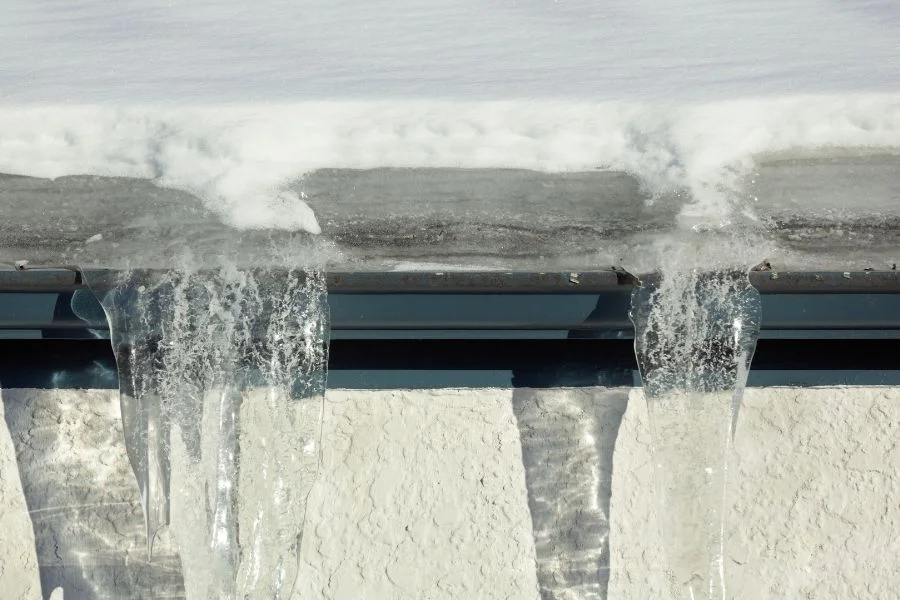
Weight is the second problem. Wet snow and ice can add hundreds of pounds to one gutter run, which is why how much snow a roof can hold matters at the roof edge too. That load pulls hangers out of the fascia and drops the gutter out of pitch.
Tree cover is the third factor. Homes across Lunenburg, Sterling, Lancaster, and Holden sit under mature oak and maple. Debris clogs the outlets and water backs up over the front lip. The eave then stays wet all winter. This is why local systems often reach the end of life around 18 to 20 years. Every spring we trace the same failures back to roof damage after snowmelt along the gutter line.
The Three-Question Test
Answer these three questions honestly before going further.
- How old is the system? Under 10 years: leans repair. Over 20 years leans replacement.
- Is damage in one place or many? One bad seam is a repair. Failures at three or more separate points usually mean the system is finished.
- Have you already paid to fix this? If the same area failed twice after repair, the problem is the system.
Two or three “replacement” answers mean you have your decision. If you have already been through this cycle on the roof itself, our roof repair vs roof replacement guide follows the same logic.
Signs You Need New Gutters (And Signs You Only Need a Repair)
Most articles give one list. That is why they are not useful. You need two. If you want a shorter version first, we also cover how to know if your gutters need replacement in a separate post.
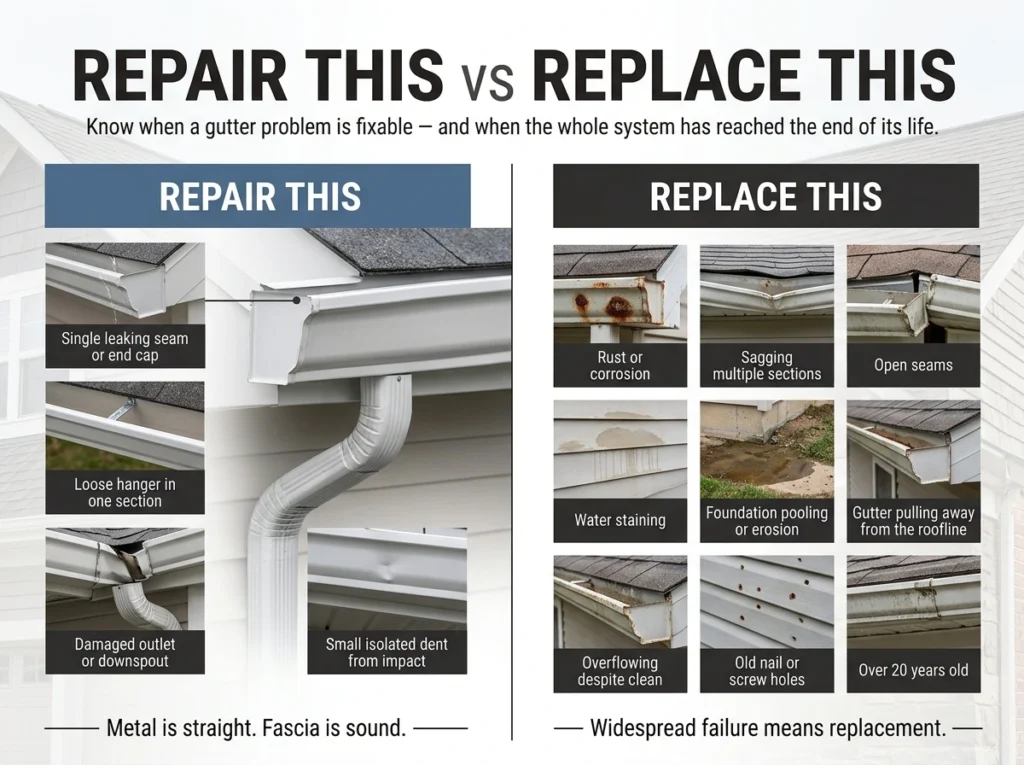
Four Problems That Usually Only Need Repair
- A single leaking seam or end cap. Sealant fails long before aluminum does.
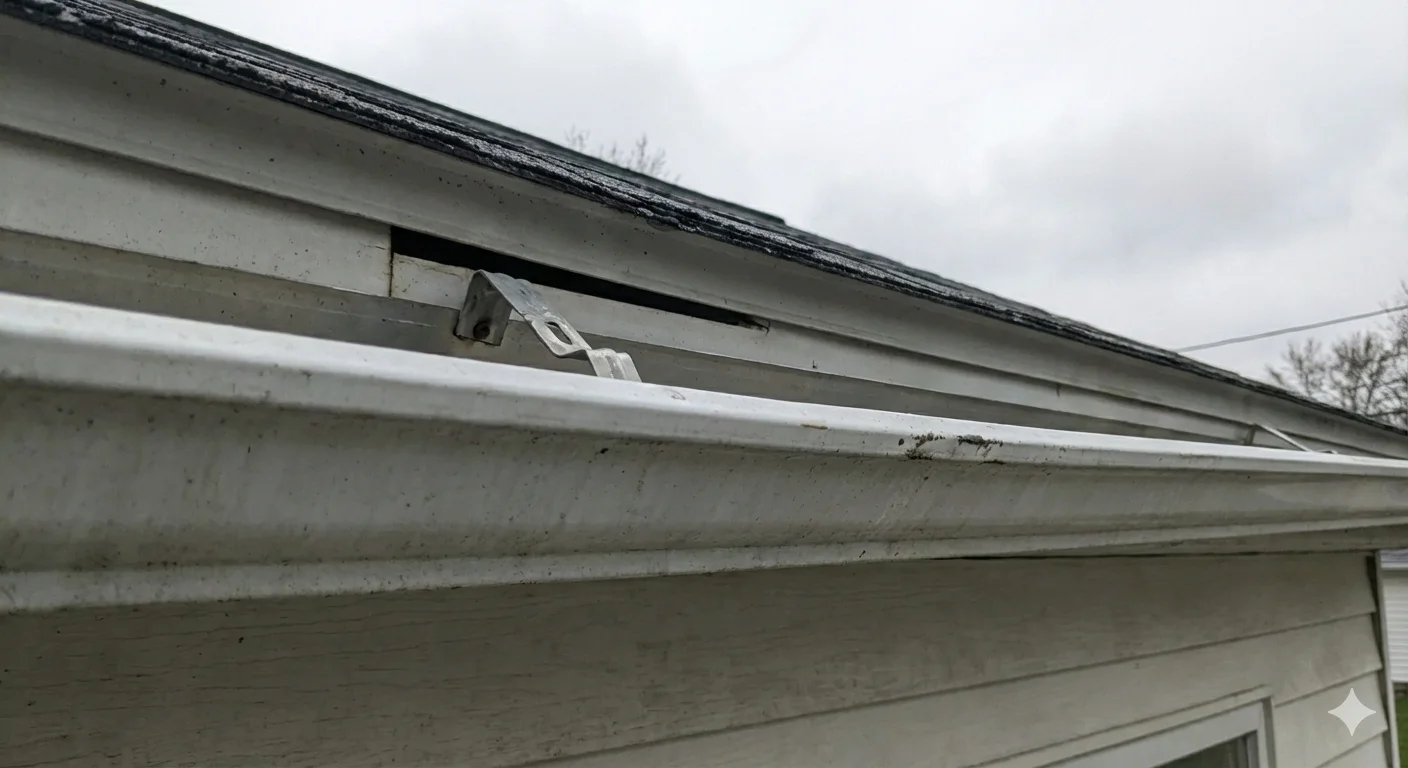
- Loose hangers in one section. If the fascia is solid, resetting hangers restores pitch.
- A damaged outlet or downspout. Downspouts are the cheapest component to swap.
- Isolated impact damage. A limb dented eight feet? Replace those eight feet only.
The common thread is simple. The metal is straight, correctly sized, and the wood behind it is sound.
Nine Signs You Need New Gutters
- Rust or corrosion in multiple locations. The protective coating has failed.
- Sagging across more than one section. Hangers and fascia have likely failed together.
- Open seams on a sectional system. Every joint is a future leak.
- Water stains or peeling paint on siding below. Water is escaping regularly.
- Pooling or erosion at the foundation. This is a structural risk, not cosmetic.
- Gutters pulling away from the roofline. Usually a fascia problem underneath.
- Constant overflow even after cleaning. This is a capacity failure you cannot repair.
- Nail and screw holes across the run. Old spike systems leave fascia riddled with holes.
- The system is 20 years or older. You are managing a countdown, not a problem.
A professional look at the roof edge starts with a proper inspection, and roof inspection cost is lower than most homeowners expect.
Quick Comparison Table
Factor | Repair | Replace |
System age | Under 15 years | 20 years or older |
Damage spread | One location | Three or more locations |
Fascia condition | Solid and sound | Soft, rotted, or full of holes |
Repair history | First time | Already fixed two or more times |
Overflow when clean | No | Yes — capacity problem |
Typical cost | Roughly $175 to $700 | Low-to-mid four figures |
Expected life gained | 2 to 5 years | 18 to 20 years |
Warranty | Usually none | Workmanship warranty included |
The Hidden Factor Behind Most Replacements
This is where homeowners get surprised. Gutters do not hang from your roof. They hang from the fascia, the flat trim board along the eave.
Years of overflow keep that wood wet. Wet wood rots, and rotted fascia will not hold a fastener. New gutters on rotted fascia will sag again within two seasons.
A proper inspection checks three things behind the gutter:
- Fascia condition. Soft wood must be replaced first.
- Soffit and ventilation. A blocked soffit vent feeds ice damming, which is why soffit, ridge, and box ventilation belongs in this conversation.
- Drip edge. This flashing directs roof water into the gutter, and we explain what drip edge is and why you need it in full.
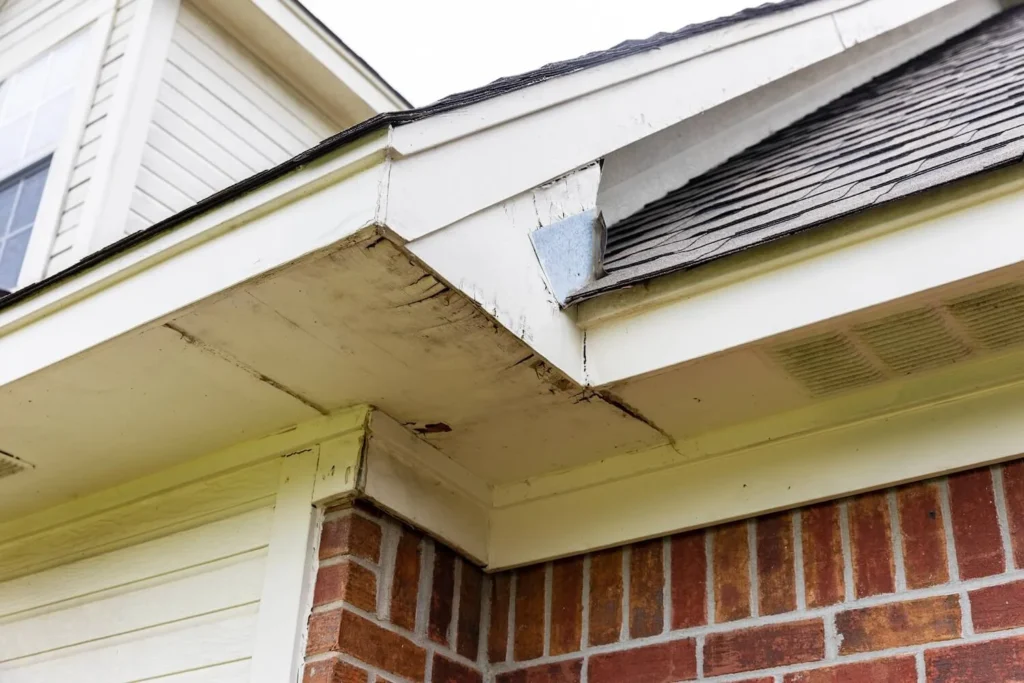
Without drip edge, water wicks behind the gutter and rots fascia regardless of gutter quality. Correct all three during replacement. Doing it later means removing gutters you just paid for, and what happens if you delay roof repair applies just as directly to a failing gutter line.
How Much Does Gutter Repair Cost in Massachusetts?
Costs vary by home, but here is the 2026 picture for Central Massachusetts.
Typical Repair Costs
Most gutter repairs fall between roughly $175 and $700. Resealing a seam or resetting hangers on a single-story ranch sits at the low end and falls under general roof repair work. Two-story access, longer damaged sections, or added fascia work push the number higher.
Typical Replacement Costs
Full seamless aluminum replacement on an average single-family home commonly lands in the low-to-mid four figures. Copper costs considerably more. Larger homes, complex rooflines, and fascia replacement raise the total.
Seven Factors That Drive Your Price
- Linear footage of your eaves. This is the biggest single factor.
- Home height and access difficulty. Two-story work needs more setup time.
- Material choice. Aluminum is standard here. Copper is premium.
- Gutter size. Six-inch costs more than five-inch and carries more water.
- Fascia and drip edge work. These fall under roofing accessories and are the most commonly unbudgeted line item.
- Downspout count and routing. More corners mean more material and labor.
- Debris removal and disposal.
We do not quote numbers sight unseen. You get a written, itemized figure after a free inspection, the same way we handle roof inspections and estimates on every job.
Is It Cheaper to Repair or Replace Gutters?
Repair is always cheaper today. That is not the real question. The question is what you will have spent in ten years. Contractors use two rules to decide.
The 50 Percent Rule
If a repair quote exceeds half the replacement cost, replace instead. You would be spending replacement money on a system that keeps its original age and weaknesses.
The Three-Repair Rule
If you have paid for three repairs on the same system, stop repairing. Three repairs is not bad luck. It is end of life.
Run the Math on Your Own Home
A $400 repair every two years costs roughly $2,000 across a decade. At the end of that decade, you still own 30-year-old gutters and probably rotted fascia.
One replacement in year one costs more upfront. It includes new hangers, new drip edge, and a workmanship warranty. There is one more cost to count. Failed gutters cause wet basements, foundation settling, rotted trim, and ice dams.
Those repairs cost far more than gutters ever will. Storm-related failures are a separate question, so check whether home insurance covers roof damage before you pay out of pocket.
Roofers and Gutters: Should You Hire One Company for Both?
For most Massachusetts homes, yes. A gutter is not a standalone product. It is the bottom edge of your roof’s water management system.
Drip edge, ice and water shield, roof pitch, soffit ventilation, and gutter capacity all interact. That is why roof replacement and gutter work belong together.
Five Advantages of Using One Contractor
- No finger-pointing. One company is responsible if water gets behind the edge.
- Fascia carpentry handled in-house. Gutter-only companies often subcontract or skip it.
- Correct sequencing. Gutters come off before the roof and return after drip edge goes on, and what to expect during a roof repair appointment shows how we stage that work.
- Real savings. Doing both at once avoids paying twice for setup and disposal.
- One warranty conversation instead of two coverage documents.
Before you hire anyone for either trade, read how to choose a roofing contractor in Central Massachusetts.
The One Exception
If your roof is new, your fascia is sound, and you need straightforward gutter work only, a gutter specialist is a reasonable choice.
Choosing the Right Replacement System
For most Massachusetts homes, yes. A gutter is not a standalone product. It is the bottom edge of your roof’s water management system.
Drip edge, ice and water shield, roof pitch, soffit ventilation, and gutter capacity all interact. That is why roof replacement and gutter work belong together.
Materials Compared
- Aluminum. The right answer for most Central Massachusetts homes. Rust-proof, cost-effective, factory finish.
- Copper. Long-lasting and attractive on historic homes. Significantly more expensive.
- Steel. Strong under snow load, but rusts once the coating is compromised.
- Vinyl. Avoid it here. Vinyl grows brittle in deep cold and cracks under ice weight.
Seamless vs. Sectional
Sectional gutters join every few feet. Every joint is a place winter can pry open. Seamless gutters are formed on site in one continuous run per side. The only joints sit at corners and outlets.
For our freeze-thaw climate, seamless is the durable choice. If clogging is your real complaint, decide first whether gutter guards are worth it in Massachusetts.
Five-Inch vs. Six-Inch
Five-inch is the default size. Six-inch carries roughly 40 percent more water. Choose six-inch if your roof drains a large surface area to one run, has a steep pitch, or has valleys concentrating runoff.
If gutters overflow right after cleaning, undersizing is your real problem. No repair fixes that.
Why Choose Brian M. LeBlanc Roofing
Brian M. LeBlanc Roofing is a licensed, insured, GAF-certified roofing company based in Leominster, MA. We serve homeowners and businesses throughout Central Massachusetts and Southern New Hampshire, including Leominster, Fitchburg, Gardner, Lunenburg, Worcester, Marlborough, and surrounding communities.
Here is what separates us from general contractors and national chains:
- Comprehensive roof inspections: Every roofing project begins with a detailed inspection to identify leaks, storm damage, ventilation issues, flashing failures, and other roofing concerns before work begins.
- Dedicated project manager: Every customer is assigned a dedicated project manager who oversees the project from inspection through final walkthrough, providing clear communication and personalized recommendations.GAF-certified roofing expertise: Our team is trained and certified by GAF and follows manufacturer installation standards to build roofing systems designed for long-term performance in New England weather.
- Licensed and insured: We are fully licensed and insured, giving homeowners confidence that every roofing project meets professional and safety standards.
- Industry-leading warranty protection: We install complete GAF roofing systems backed by up to a 50-year limited manufacturer’s warranty and a 10-Year Superior Craftsmanship Guarantee on labor.
- Experienced roofing professionals: Brian M. LeBlanc Roofing has more than 20 years of construction experience, supported by a highly trained team committed to quality workmanship and customer satisfaction.
- Transparent roofing process: From the initial consultation to the final quality inspection, we keep homeowners informed with detailed proposals, project updates, and quality assurance at every step.
Conclusion
Here is the entire guide in three lines. Repair when damage is isolated, the metal is straight and correctly sized, the fascia is solid, and the system is under 15 years old.
Replace when failures are widespread, the system is 20-plus years old, repairs have already failed twice, the fascia is soft, or gutters overflow when clean. When you are unsure, the deciding factor is almost always the wood behind the gutter. You cannot assess that from the ground.
For more details, connect with us on Facebook, Instagram, YouTube, and Google Business Profile.
Contact us today to schedule your inspection or get a free quote.
Frequently Asked Questions
1. Should I repair or replace my gutters?
Repair your gutters when the damage is isolated and the system is less than 15 years old. Replacement may be better when there are failures in three or more places, the system is more than 20 years old, or the fascia has rotted.
2. How much does gutter repair cost in Massachusetts?
Most gutter repairs in Massachusetts cost roughly $175 to $700. The final price depends on the home’s height, accessibility, length of the damaged section, and whether fascia repairs are also needed.
3. Is it cheaper to repair or replace gutters?
Gutter repair is usually less expensive upfront, but repeated repairs can cost more over time. If repair costs exceed about half the cost of replacement, replacing the gutters may be the more cost-effective long-term option.
4. How long do gutters last in Massachusetts?
Aluminum gutters typically last around 18 to 20 years in Central Massachusetts. Freeze-thaw cycles, ice buildup, snow, and other harsh weather conditions can shorten their lifespan.
5. What are the signs you need new gutters?
Common signs include widespread rust, sagging sections, open seams, siding stains, water pooling near the foundation, gutters pulling away from the roofline, frequent overflow, and a gutter system that is more than 20 years old.